
By Pamela Paparu1, Venansio Tumuhaise5, Paul Aseete4, Allan Nkuboye1, Warren Arinaitwe2, Dennis Ong’or2, Ayuka Fombong3, Nepomuscene Ntukamazina2, Jean Claude Rubyogo2, Clare Mukankusi2, Otim Michael1, Fred Kato2
1National Agricultural Research Organisation (NARO)
2Alliance of Bioversity International and CIAT/PABRA
3 International Centre of Insect Physiology and Ecology (icipe)
4Makerere University, Kampala
5Kyambogo university, Kampala
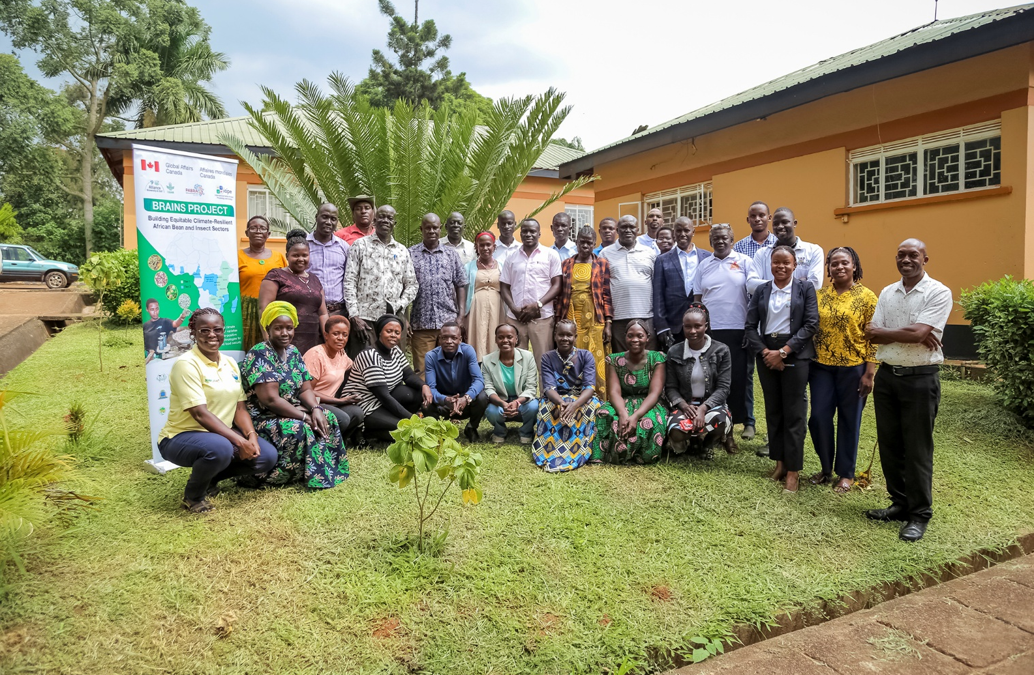
A pile of organic waste may not look like much but hidden within it is the potential to produce animal feed, restore soils, and create thriving rural businesses. This is the promise of Black Soldier Fly (BSF) farming, an emerging climate-smart enterprise that is gaining momentum among farmers in Uganda. That promise came to life during a three-day training on BSF enterprise establishment and management held at the Kabanyolo Climate-Smart Agriculture Education Centre (CAEC) from 28–30 May 2026, where farmer groups from Kaberamaido, Isingiro, and Serere districts learned how to transform organic waste into valuable agricultural products while building profitable and sustainable enterprises.
Organized under the Building Equitable Climate-Resilient African Bean and Insect Sectors (BRAINS) Project and supported by the Uganda Climate Smart Agricultural Transformation Project (UCSATP), the training equipped farmers, trainers, and agricultural officers with the technical knowledge and business skills needed to establish and manage profitable BSF enterprises. The event brought together 25 participants, including farmer leaders, trainers of trainers (ToTs), and district agricultural officers—representing 11 enterprises already engaged in BSF production or preparing to commercialize the technology. The training was facilitated by Ento Organic Farm Uganda Ltd, with technical support from experts from the National Agricultural Research Organisation (NARO), Kyambogo University, and the Ministry of Agriculture, Animal Industry and Fisheries (MAAIF).
A solution hiding in plain sight
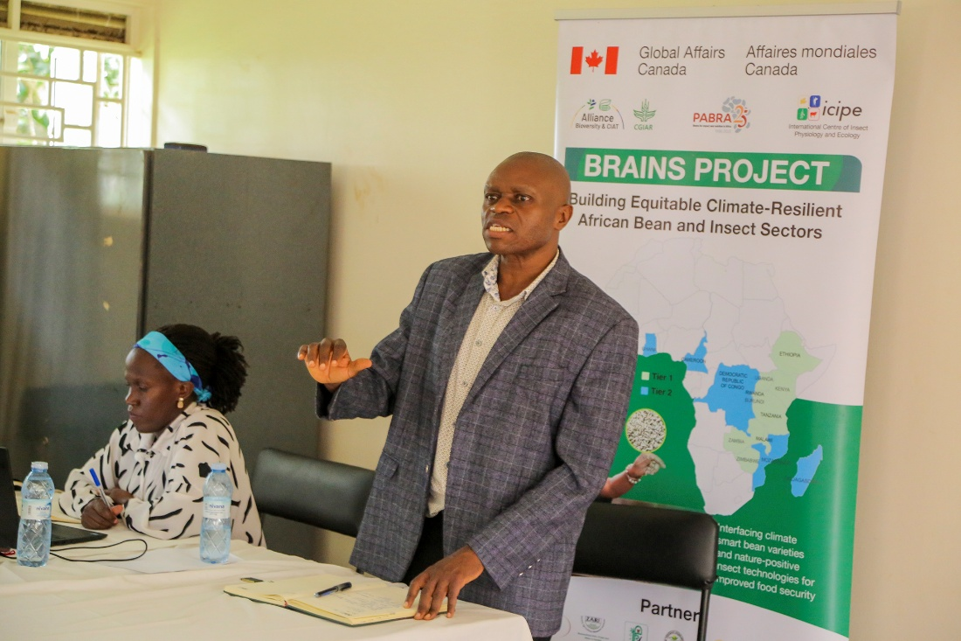
Mugonza from UCSATP addressing the Participants
Speaking during the training, Mr. Julius Mugonza, UCSATP Coordinator for Beneficial Insects, highlighted the multiple benefits of BSF farming across agricultural value chains.
“Black Soldier Fly technology provides farmers with a sustainable source of protein for poultry, fish, and livestock feeds, while also producing frass — a nutrient-rich organic fertilizer that improves soil health,” he explained.
Unlike conventional waste management systems where organic waste becomes a disposal challenge, BSF farming turns waste into useful products. The larvae feed on organic materials, including market waste, food leftovers, brewery waste, chicken manure, and other agricultural by-products, converting them into high-value protein feed and organic fertilizer. Beyond reducing waste, BSF enterprises are creating employment opportunities, particularly for young people and rural households seeking alternative income sources.
Understanding BSF farming business
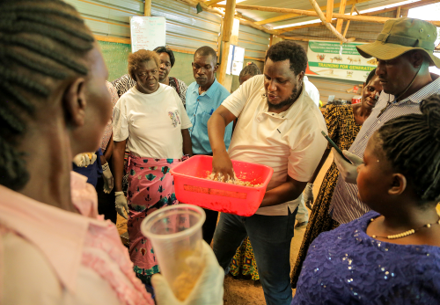
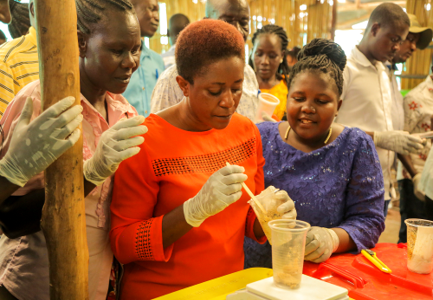
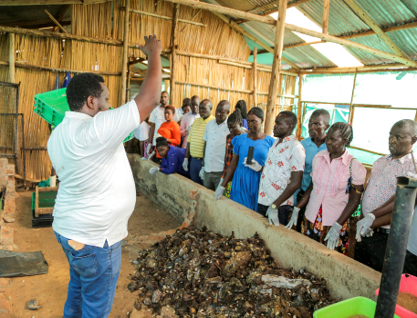
Practical session at Ento Organic Farm Ltd BSF Facility
A major focus of the training was helping farmers understand the biology behind successful BSF production. Participants learned about the four stages of the BSF life cycle: eggs, larvae, pupae, and adult flies. The larval stage is the most commercially important because the larvae consume organic waste rapidly and accumulate nutrients, making them suitable for animal feed production.
Trainers explained that small quantities of BSF eggs can generate significant production volumes. For example, 20 grams of eggs can produce approximately 20 kilograms of larvae, while one kilogram of young larvae can develop into 22–30 kilograms of mature larvae under proper management. However, participants were reminded that successful production depends on proper feeding, moisture management, harvesting, and post-harvest handling.
“Feed quality determines the quality of your larvae,” trainers emphasized, encouraging farmers to combine different organic waste sources to achieve balanced nutrition and better yields. The training also explored opportunities for value addition, including BSF oil, cosmetics, soap, and biofuel production.
From farming technology to profitable enterprise
Recognizing that technical skills alone are not enough to build successful businesses, the training included sessions on enterprise development and financial management.
Dr. Paul Aseete guided participants through key business planning areas, including feasibility studies, market assessment, SWOT analysis, financial projections, operational planning, and record keeping.
Participants were encouraged to view BSF farming as a business that requires proper planning, investment, and gradual expansion. One message that stood out during the session was: “Do not carry an elephant at once.” The advice encouraged emerging entrepreneurs to start small, learn from experience, and scale their businesses strategically rather than expanding too quickly without proper systems in place.
Farmers share success stories
For many participants, the strongest evidence of BSF’s potential came from farmers already using the technology. Hajjat Loy Twesigwe from Omuka Agro Tourism Farm in Isingiro District shared how integrating BSF production had transformed her farm’s economics. Before adopting BSF technology, the farm spent approximately UGX 4 million per week on animal feed. After introducing BSF production, the weekly feed cost reduced to about UGX 600,000 (USD162).
She also highlighted the increasing demand for BSF products, noting that she receives orders from customers within Uganda and even from neighbouring Democratic Republic of Congo. Similarly, Mr. Martin Eyanu, a fish farmer from Serere District, explained how BSF larvae had helped reduce feed costs while improving profitability in his poultry and fish enterprises. Their experiences demonstrated how BSF can become an important component of integrated farming systems.
Learning through practical experience
The training went beyond classroom discussions, with participants taking part in hands-on sessions where they constructed BSF breeding units, installed egg-laying structures known as “eggies,” handled eggs, managed hatchlings, and practiced larval production techniques.
Participants also visited Ento Organic Farm’s commercial facilities, where they observed large-scale BSF production systems in operation. The practical approach helped bridge the gap between theory and application, giving farmers confidence to establish their own enterprises.
On the final day, participants visited Solo Poultry Farm and BSF Facility in Kasangati, where they saw how BSF production had been integrated into a broader circular farming system involving poultry, piggery, and waste management.
What started as a solution to poultry waste challenges had evolved into a profitable enterprise producing protein feed while reducing environmental pollution.
Beyond animal feed: Using BSF frass to improve bean production
While much attention has focused on BSF larvae as an alternative protein source, researchers are also highlighting another valuable product from the system—frass fertilizer. Frass is the organic residue produced after BSF larvae feed on waste. Rich in nutrients and organic matter, it has potential to improve soil fertility and crop productivity.
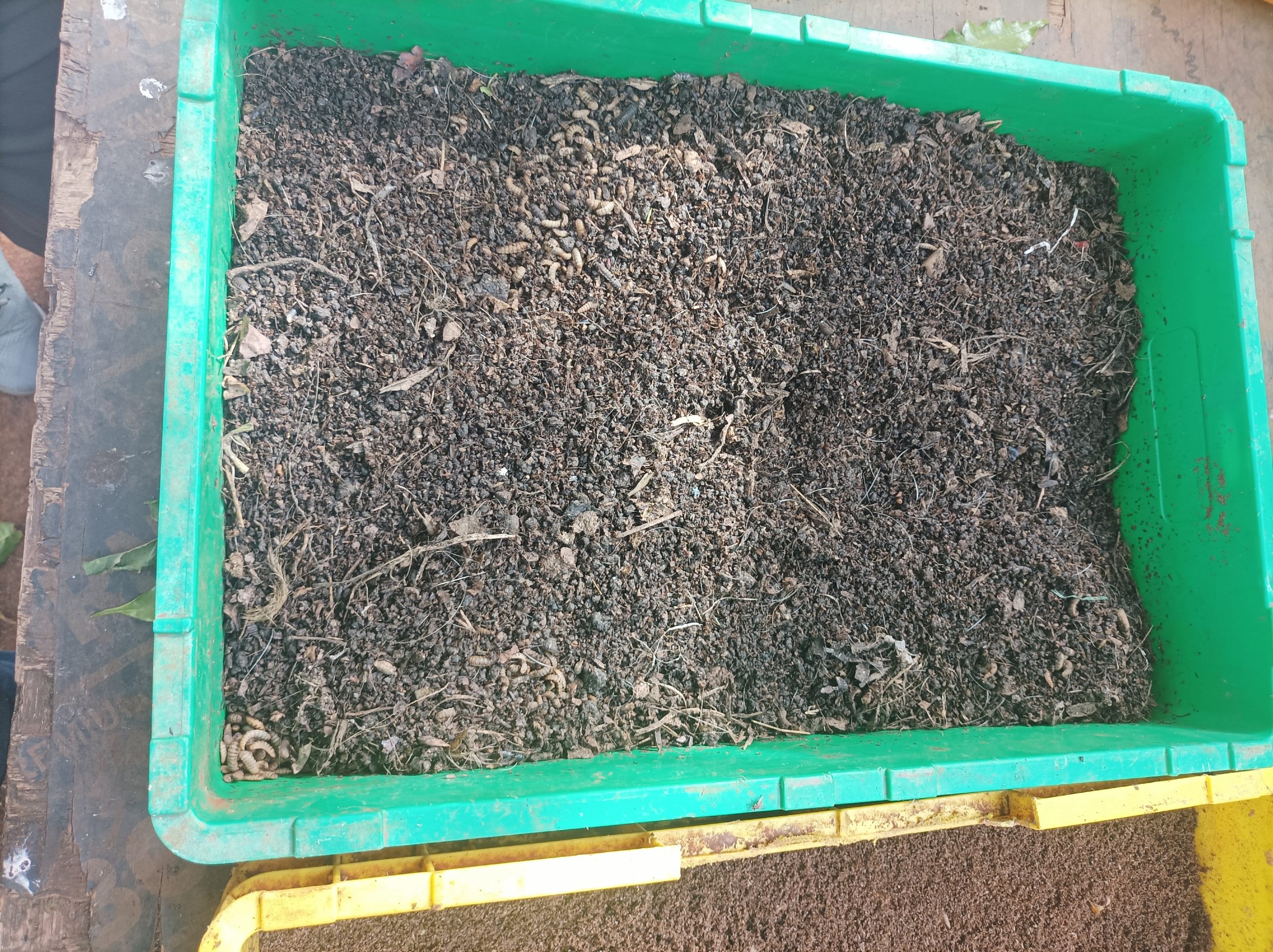
A sample of frass fertilizer
Field trials conducted in bean-growing areas of Mayuge, Kaberamaido, Soroti, and Isingiro districts have shown promising results. Application of frass improved crop vigor and contributed to better soil conditions compared to untreated plots.
Researchers found that frass can improve moisture retention, increase organic matter, and support beneficial soil microorganisms—important factors for climate-resilient bean production.
Creating a circular farming future
Farmers were encouraged to integrate BSF production with crop enterprises such as bean farming. Under this approach, household and market waste can feed BSF larvae, while the resulting frass can be returned to farms as organic fertilizer.
Meanwhile, crop residues from bean production can contribute to broader nutrient recycling systems.
This circular approach reduces waste, lowers production costs, and creates multiple income streams for farming households.
Building a stronger BSF industry
At the conclusion of the training, participating farmer groups expressed optimism about expanding their enterprises with continued support from UCSATP and other partners.
Most groups represented during the training have between 15 and 18 members and expressed commitment to applying the knowledge gained. A key outcome of the meeting was the agreement to establish a BSF Multi-Stakeholder Platform under Ento Organic Farm Uganda Ltd to promote collaboration, knowledge sharing, market development, and industry growth.
As interest in BSF technology continues to increase, farmers are discovering that what was once considered waste can become a valuable resource. From reducing livestock feed costs to improving soil fertility and creating new businesses, Black Soldier Fly farming is proving that sustainable agriculture is not only about producing more, but rather making better use of what farmers already have. For Uganda’s farmers, the future may lie not just in the fields, but also in the waste streams that have long been overlooked.