By Yvonne Munyangeri, and Eliud Birachi
When Diane Mukamuremyi left her secure job selling imported nutritional supplements, many people thought she was taking an enormous risk. She had a university degree in Food Science, a stable income, and a promising career ahead of her. Yet every day, as she travelled through her community, she saw a different reality unfolding around her. Mothers worried about feeding nutritious meals to their children. Iron deficiency remained common among women. Young people struggled to find meaningful employment, while smallholder farmers often had no dependable market for the crops they worked so hard to produce. Those experiences stayed with her.
“The products we sold were good,” Diane reflects, “but I kept asking myself why we couldn’t create equally nutritious foods using crops grown by our own farmers.”
That question would change the course of her life. In 2016, Diane made the bold decision to resign from her job and start a business that would produce nutritious foods from locally available crops. Together with her business partner, Samuel Uwihanganye, she founded Rainbow Health Food Ltd with personal savings of just RWF 500,000. Their resources were limited. They bought raw materials from local markets, hired milling services from a nearby processor, and began producing Monti Composite Flour, selling between 100 and 200 kilograms each month to families in their neighborhood. The business was small, but the vision was anything but.
Diane believed that nutritious food should be affordable, locally produced, and capable of improving lives while creating opportunities for farmers. She simply needed the right ingredients, and the right partnerships, to make that vision a reality.
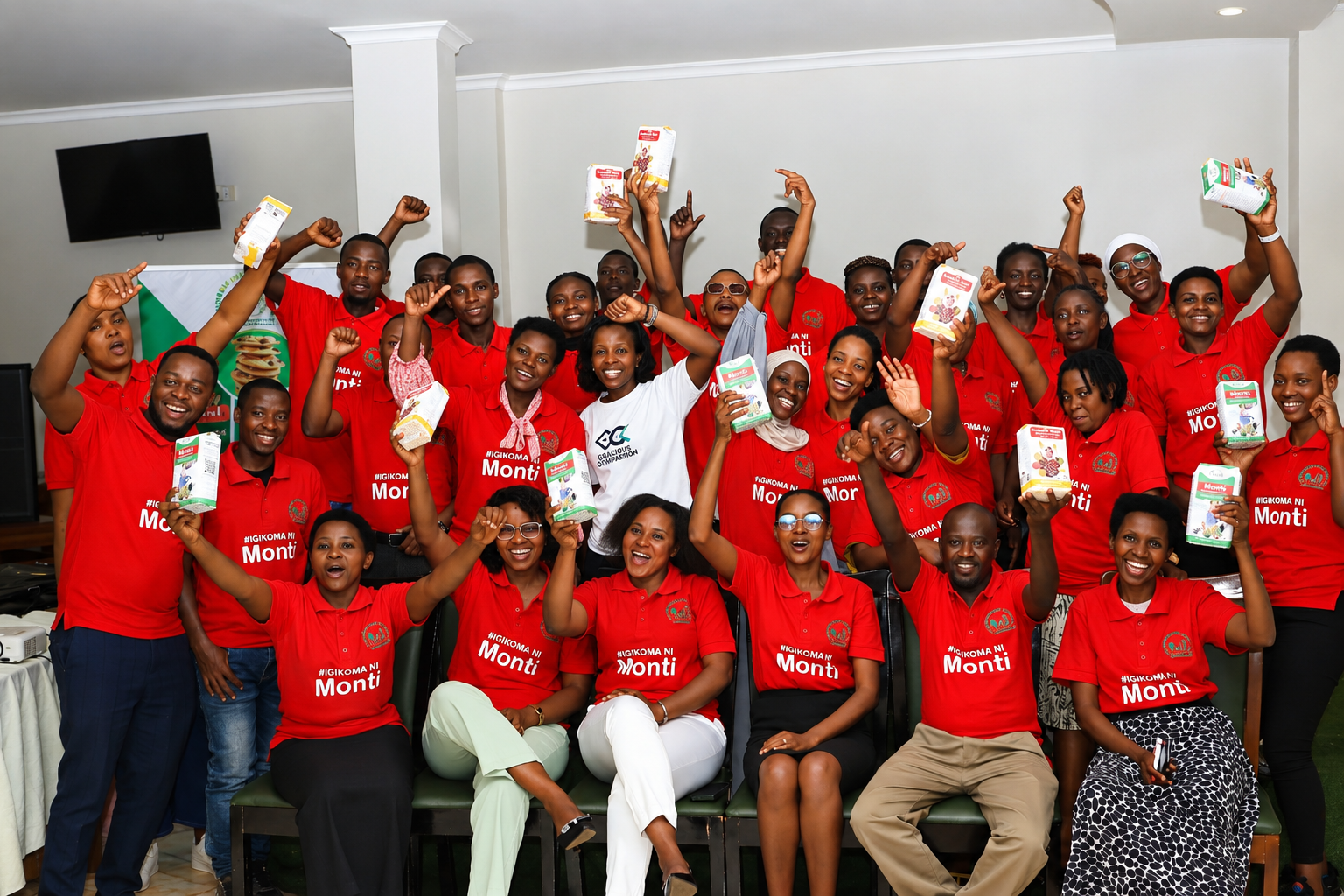
Agents of change: Promoters of Monti 7 in 1 Composite Flour with Hight Iron Beans
A breakthrough came during a meeting organized by the Global Alliance for Improved Nutrition (GAIN), where Diane met scientists from the Pan-Africa Bean Research Alliance (PABRA). It was there that she first learned about biofortified high-iron beans, specially bred to contain higher levels of iron while retaining the qualities farmers and consumers already valued.
For Diane, everything suddenly clicked. She immediately saw the potential of these beans to address one of Rwanda’s most persistent nutrition challenges while creating demand for crops that local farmers could produce. Through collaboration with PABRA’s nutritionists and food technologists, she received practical training in product formulation and food processing, enabling Rainbow Health Food Ltd to develop a new generation of nutritious products. The result was three innovative bean-based composite flours; Monti Super 5-in-1 Composite Flour, Monti 7-in-1 Composite Flour, and Monti Premium Composite Flour, designed to provide affordable, nutrient-rich food for children, women, and families.
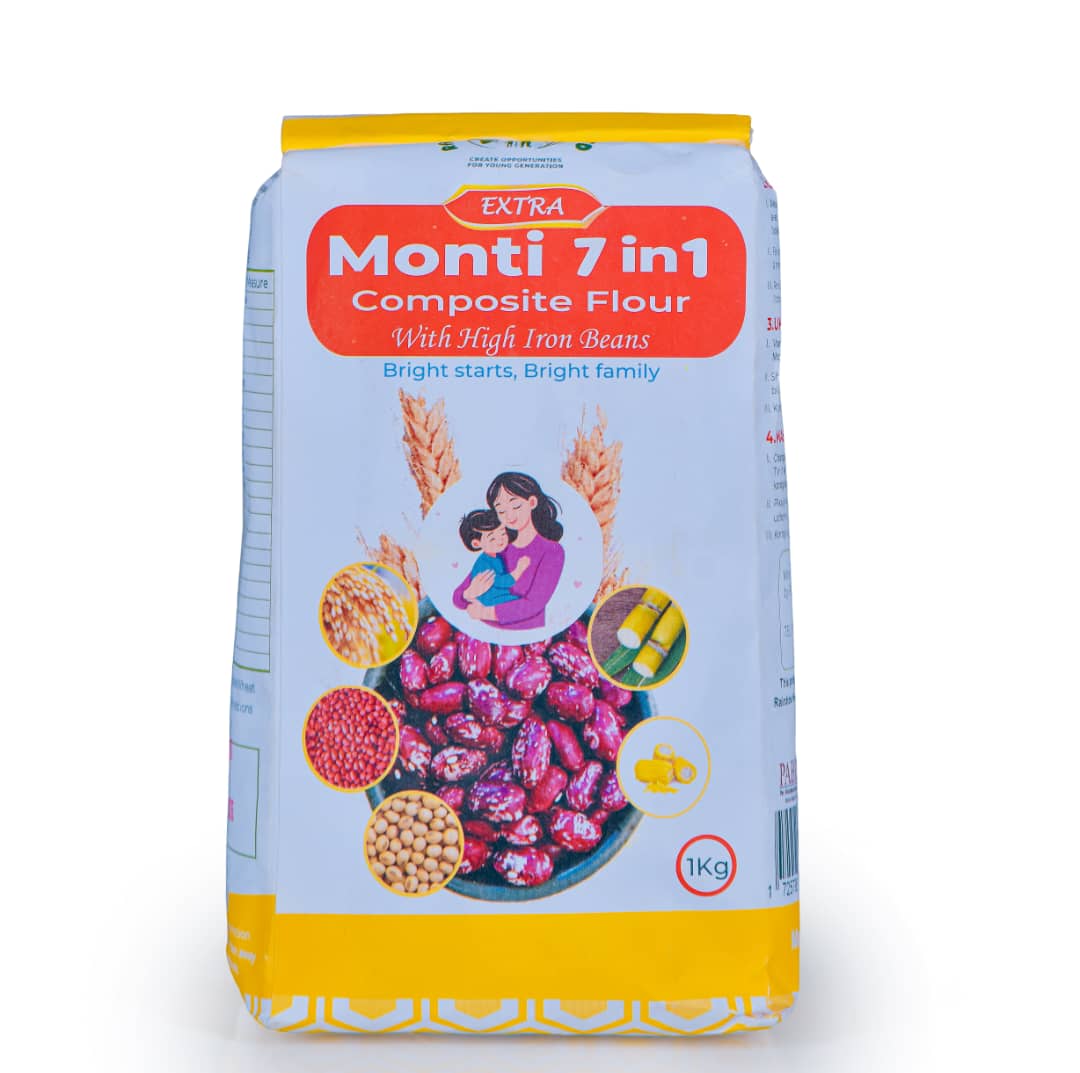
Monti 7-in-1 bean flour pack
That partnership became a turning point, not only for Diane but also for the business she was determined to build. As demand for the products grew, so did the company’s ambitions. With continued support from PABRA, the Rwanda Agriculture and Animal Resources Development Board (RAB), development partners, financial institutions, and other collaborators, Rainbow Health Food Ltd strengthened its production systems, invested in food-grade processing equipment, improved quality standards, and expanded its marketing and distribution networks.
What began as a neighborhood enterprise gradually evolved into a nationally recognized nutrition business. Today, Rainbow Health Food Ltd produces between three and five metric tons of bean-based composite flour every month, and its Monti products can be found on the shelves of more than 120 supermarkets across Rwanda. Behind every packet sold is a value chain that stretches far beyond the factory floor.
The company now works directly with more than 650 smallholder farmers organized under a contracted cooperative. Farmers receive quality high-iron bean seed, training in Good Agricultural Practices, and the assurance of a ready market through contract farming arrangements. Beyond its own supply chain, Rainbow Health Food Ltd has also contributed to training more than 9,000 farmers in Rwanda’s Western Province, helping them improve both the productivity and quality of high-iron bean production.
For Diane, however, success has never been measured by production volumes alone. She wanted the business to create opportunities for people who are often left behind, particularly women and young people. Today, Rainbow Health Food Ltd has engaged 67 women and youth as sales agents, bringing nutritious foods closer to communities while generating reliable incomes. Across the company’s permanent workforce, 70 percent of employees are women and youth, reflecting Diane’s belief that entrepreneurship should create opportunities for others as it grows.
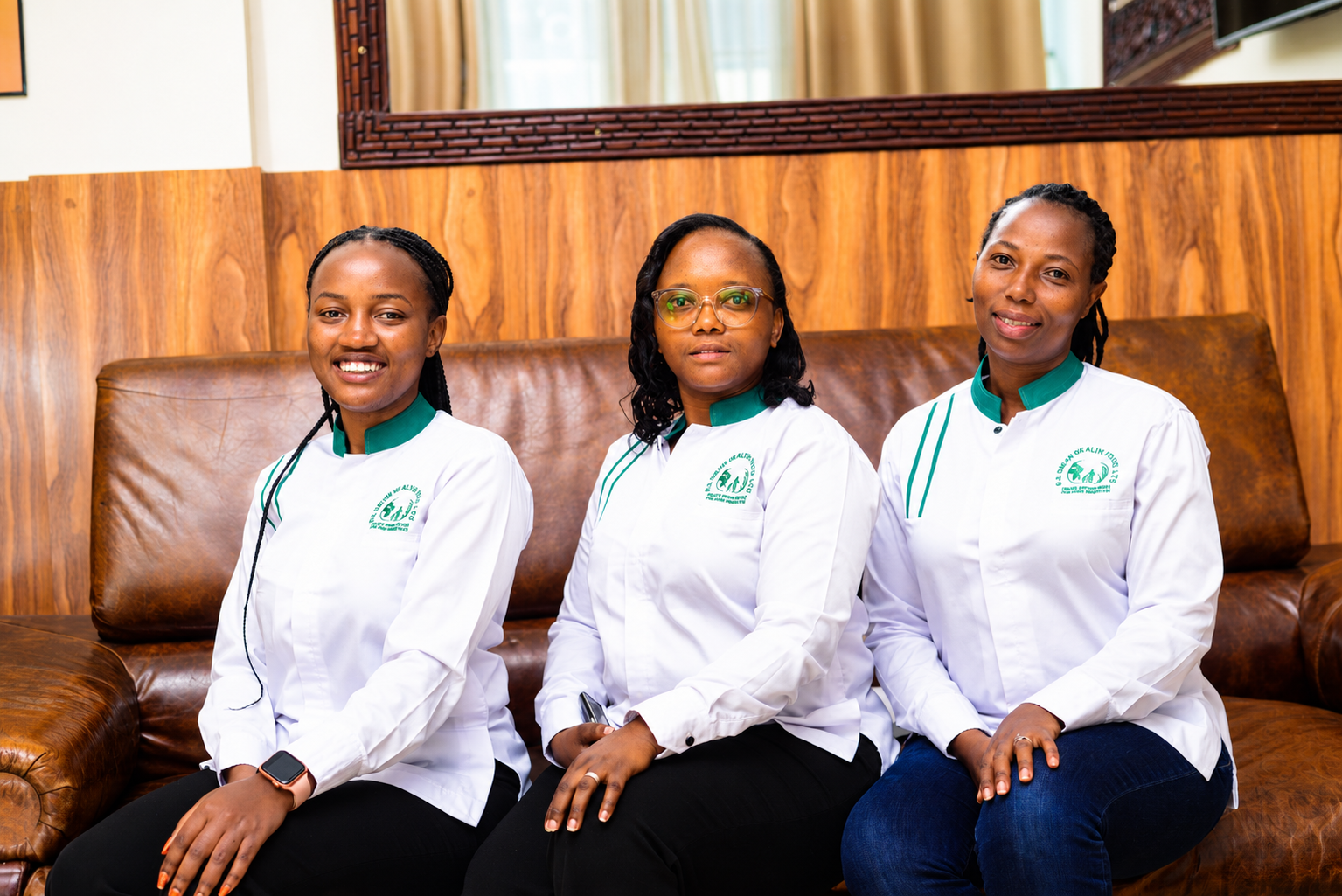
Diane (in the middle) with other 2 members of her staff
The company has also become a place of learning. Students, aspiring entrepreneurs, women’s groups, and farmer organizations regularly visit Rainbow Health Food Ltd to see how locally grown crops can be transformed into high-quality, nutritious food products that meet commercial standards while addressing public health challenges.
Perhaps the impact Diane values most is the one that cannot be measured in sales figures alone. Over the years, Rainbow Health Food Ltd has supported vulnerable households affected by child malnutrition, helping seven families restore their children’s nutritional health through access to affordable, nutrient-rich foods. For Diane, these stories are a reminder of why she started the business in the first place, not simply to manufacture flour, but to give families healthier futures.
Looking back, leaving the security of a stable career was not a gamble after all. It was the first step toward a journey that has transformed lives, strengthened livelihoods, and reshaped Rwanda’s nutrition landscape. Today, Diane is recognized not only as a successful entrepreneur but also as a champion of nutrition-sensitive agribusiness, proving that when science, innovation, and strong partnerships come together, locally grown crops can become powerful solutions to local challenges. Through Rainbow Health Food Ltd, she has connected farmers to reliable markets, created meaningful employment for women and youth, and made nutritious, high-iron bean products accessible to thousands of families. For Diane, high-iron beans are far more than an agricultural commodity; they represent healthier children, empowered women, thriving farming communities, and the promise of a future where homegrown innovation nourishes both people and prosperity.