
By David Muhawenimana, Janviere Umurungi, and Yvonne Munyangeri
The old way takes time. Planting by hand. Threshing by hand. Shelling maize by hand. Season after season, the work becomes heavier especially for schools with larger school gardens
Today, the same work is getting a technological boost. Across Karongi, Rusizi and Nyamasheke districts, schools have received 90 seed planters and 45 multi-crop threshers to make everything from planting to threshing quicker and more efficient.
This gesture is part of the Scaling Sustainable School Feeding Innovations (3SFI) Project, implemented by the Alliance of Bioversity International and CIAT through the Pan-Africa Bean Research Alliance (PABRA), in partnership with local government institutions mainly the Ministry of Education (MINEDUC), Ministry of Agriculture and Animal resources (MINAGRI), the Rwanda Agriculture Board (RAB), districts and schools and with financial support from the Swiss Agency for Development and Cooperation (SDC). The real opportunity lies in using technology to make school gardens more productive, less labor-intensive and more relevant to students’ lives.
At GS Gihundwe and JillBarham School in Rusizi District, headteachers Naason Munyemana and Pastor Joel Niyigena see the machines as a way to make school gardening less demanding while improving what ends up on students’ plates.
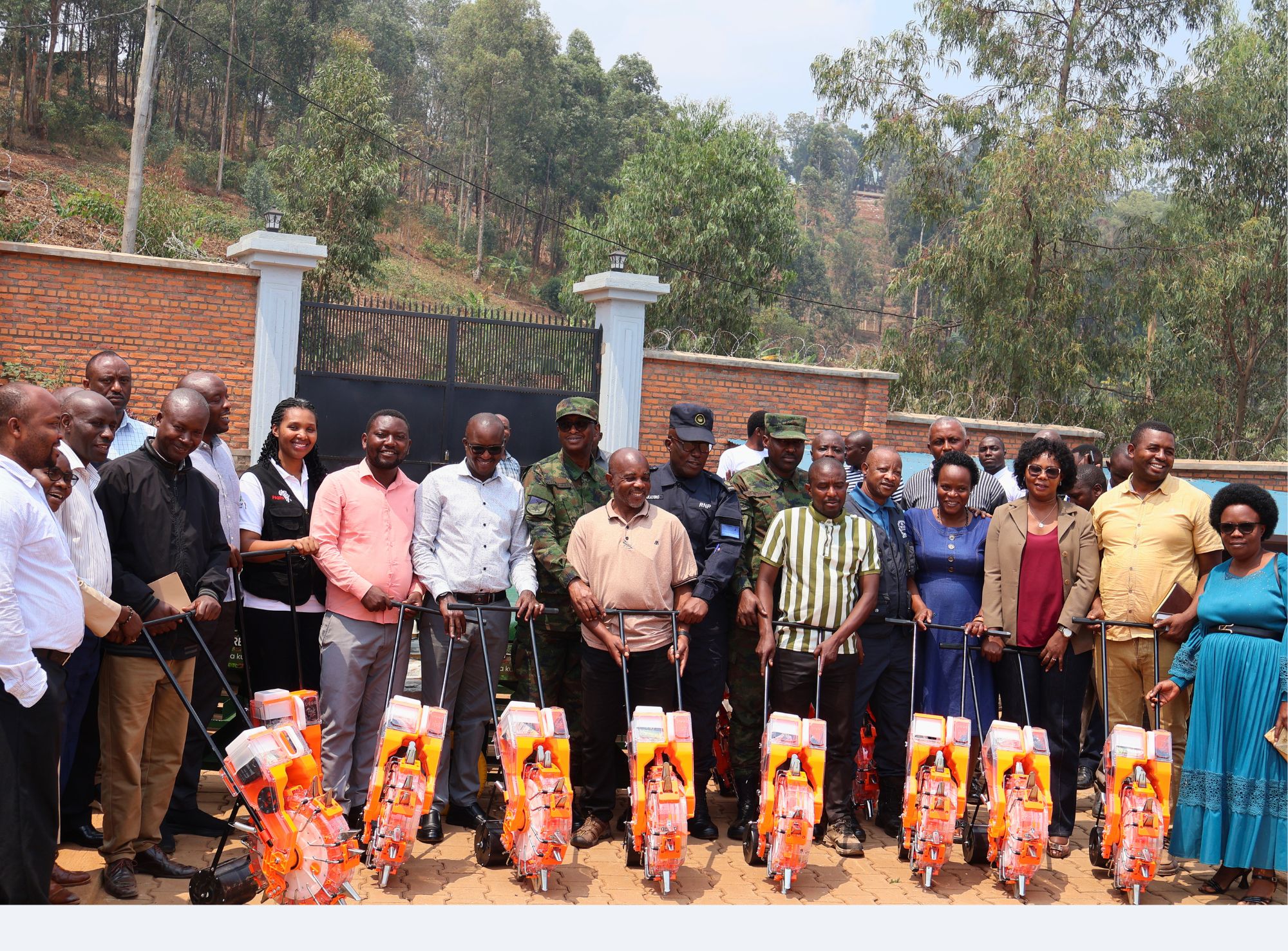
School headteachers join local government officials and project partners for a group photo following the handover of 30 seed planters and 15 multi-crop threshers to beneficiary schools in Rusizi District, under the 3SFI project.
Their focus is particularly on high-iron beans. The logic is that, if schools can plant more efficiently, manage their crops better and process their harvest faster, they have a better chance of producing nutritious food consistently.
“These machines will make it easier for us to grow high-iron beans and will improve the quality of the meals we provide for our students,” said Munyemana. “We promise to manage these machines well and train our school gardeners to use them properly.”
For Pastor Kamana Louis, headteacher of Ecole Secondaire Tyazo in Nyamasheke District, the value is easy to understand. Planting and threshing by hand take time, money and a lot of effort. With the new machines, he expects those jobs to become quicker and less demanding, giving schools a better chance of getting their harvest safely from the field to the store and eventually to the kitchen.
“With these machines, that work will move faster, and we will need fewer workers [which is also cost-effective]. It’s also proof that agricultural work is important and valuable everywhere,” he said.
For Nikuze Marie Louise, acting headteacher of ES Bugarama, the seed planter could open up more possibilities than simply making planting easier. It could allow the school to put more land to work. And that matters when a school is trying to grow more food for its students. The thresher completes the picture. Because getting a crop out of the ground is only part of the job; how quickly and efficiently it is processed can determine how much of the harvest is ultimately available for meals. More efficient planting. Better processing. Less food lost along the way.
“Equipment like this would have been very difficult for a school to purchase on its own, that is why we are committed to caring for it properly, together with CIAT and our leadership, who never stop bringing us good things,” Nikuze explained.
From the nutrition point of view, the machines mean more than faster farm work. According to Deputy Mayor in charge of Social Affairs Athanasie Mukankusi, they can help schools produce more food, handle their harvests better and, ultimately, put more nutritious meals on students’ plates. During the handover in Nyamasheke, Mukankusi linked the production of iron-rich beans to Rwanda’s efforts to tackle malnutrition and stunting.
“We are waging a war against malnutrition and stunting in children, and these iron-rich beans are meant to help us in that fight. Agriculture deserves attention at every stage, using modern approaches. We cannot simply expect things to happen as we wish, we must stay engaged and seek advice whenever challenges arise,” said Mukankusi.
She further urged schools to let learners observe the machines in action and understand how they work, turning the school garden into a practical classroom where agricultural technology is experienced firsthand rather than learned about only in theory.
“By the time a student graduates and goes on to build a livelihood in agriculture, they already carry knowledge gained from school,” she added.
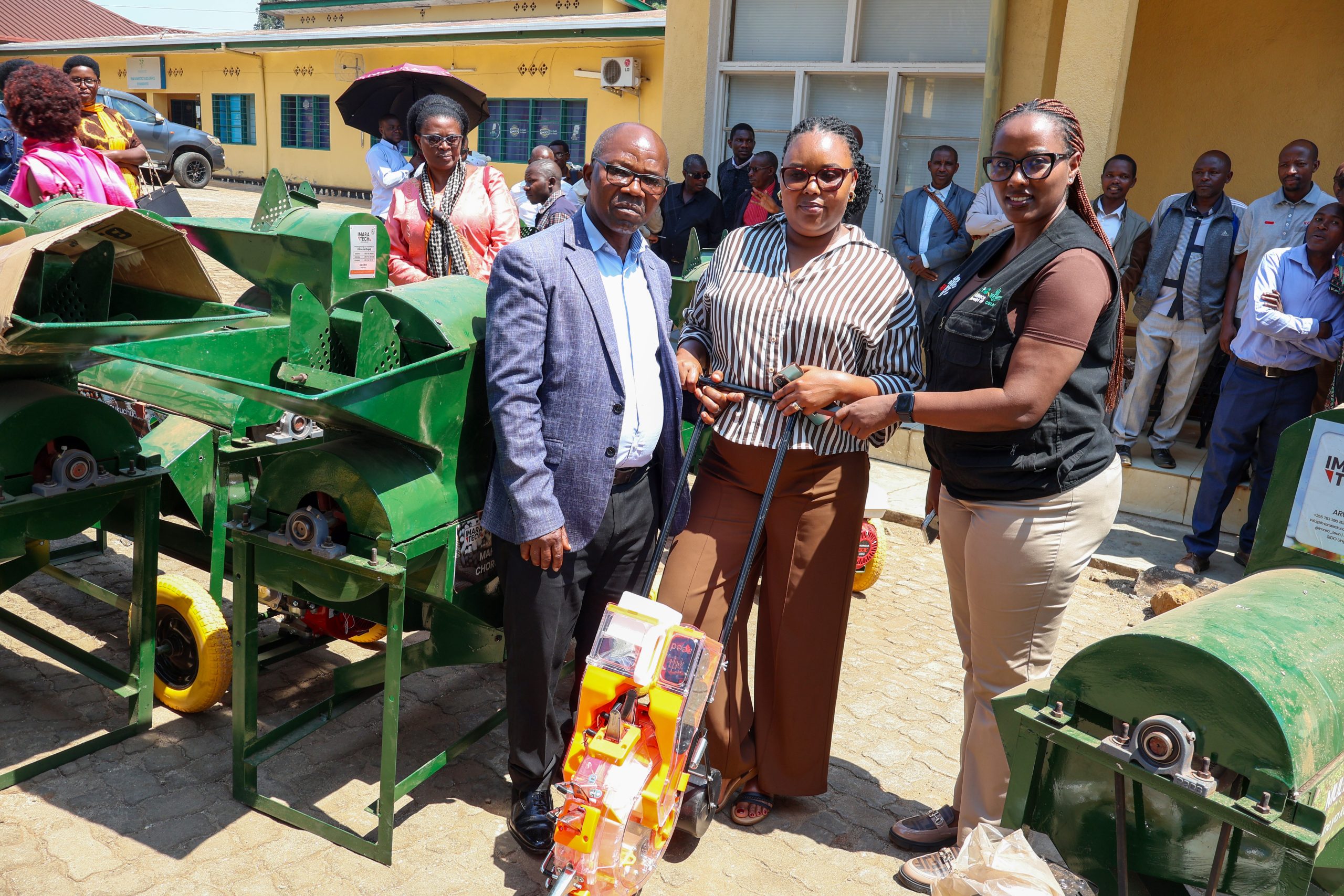
Deputy Mayor Mukankusi Athanasie (center) handing over a seed planter to Pastor Kamana Louis (left), headteacher of Ecole Secondaire Tyazo, during the 3SFI equipment handover in Nyamasheke District.
While 135 machines alone will not solve nutrition challenges or transform school agriculture, they point to a broader shift in how schools are approaching food production. After receiving a thresher and a planter, Father Emmanuel, Head teacher at Saint Paul Muko school in Bugarama, highlighted that he has already made plans to increase the land allocated to high ion bean production. “At our school, we have already made plans to increase the land on which we will grow beans in the next season. These machines will help us in efficiently and quickly produce our beans by reducing the labor cost” he added. Threshers and planters delivered to schools will not only be useful to schools but also to schools neighboring farming communities, farmer cooperatives and parents who are engaged in improved bean production to fight malnutrition in the three districts. School gardens are becoming more than places to grow food; they are increasingly spaces for more efficient production, better post-harvest management, improved nutrition and practical agricultural learning.
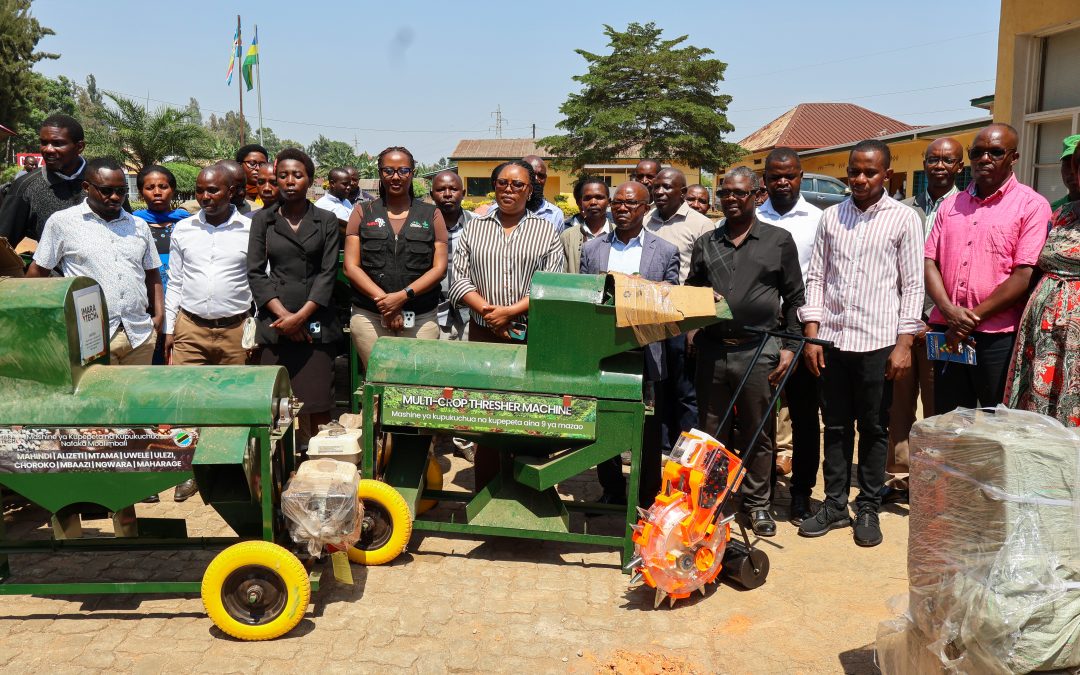
Cover Image: Participants pose for a group photo after the handover of 45 agricultural and post-harvest processing equipment to schools in Nyamasheke District.