
By David Muhawenimana, Brionne Mushirarungu, Lisa Butera Uwase, Justine Umutoni, Janviere Umurungi
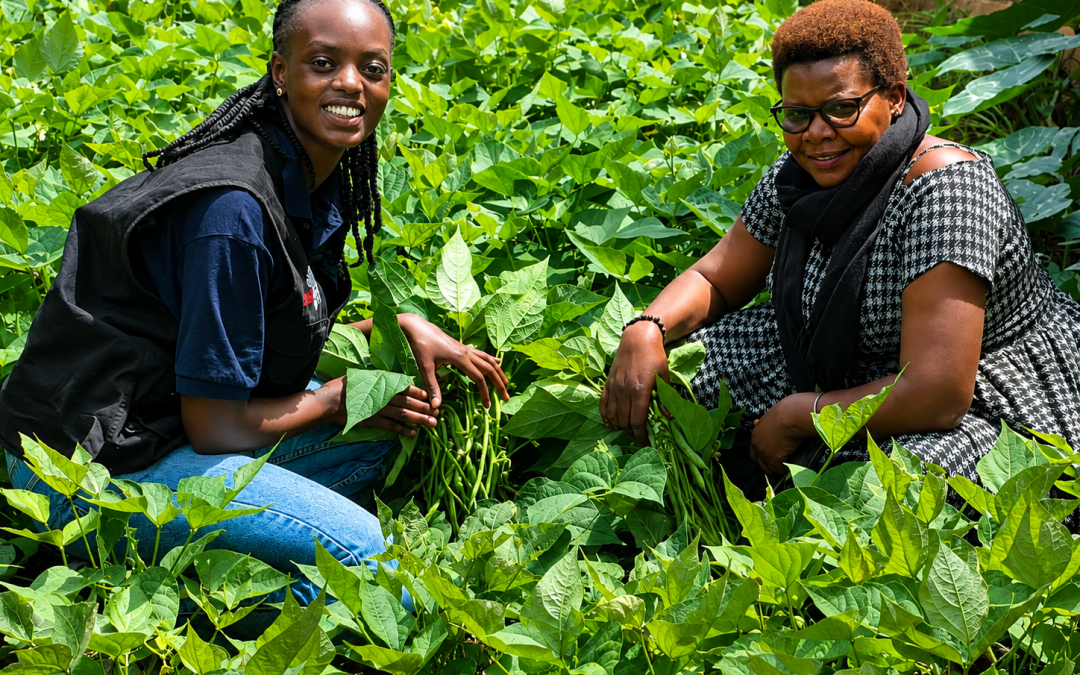
The story starts with a handful of bean seed. At GS Kayanga in Rwanda, the school received just 600 grams of seed. The first harvest produced 15 kilograms. School representative Hycinthe Nyirahabumugisha recalls that teachers kept five kilograms for replanting and shared the other 10 kilograms with ten parents. The next harvest was 48 kilograms. It may sound as a simple story, but it captures what is happening in school gardens across Rwanda. It began in a small plot behind a classroom, but it is increasingly finding its way onto children’s plates, into parents’ fields and, eventually, into the wider community.
Today, high-iron beans are becoming part of school meals and farmers’ fields, while also changing conversations about nutrition. Iron deficiency and stunting remain significant barriers to children’s development across the country. But some of the responses are being grown only a few metres from the classrooms.
The Sustainable School Feeding Innovations (SSFI) project, implemented by the Alliance of Bioversity International and CIAT through the Pan-Africa Bean Research Alliance (PABRA), with support from the Clifford Chance Cornerstone Initiative is helping schools put some of those solutions into practice.
Working across Kigali, Rwamagana and Kayonza, the initiative has reached 273 schools, trained 500 teachers and established 142 demonstration plots. But the numbers tell only part of the story.
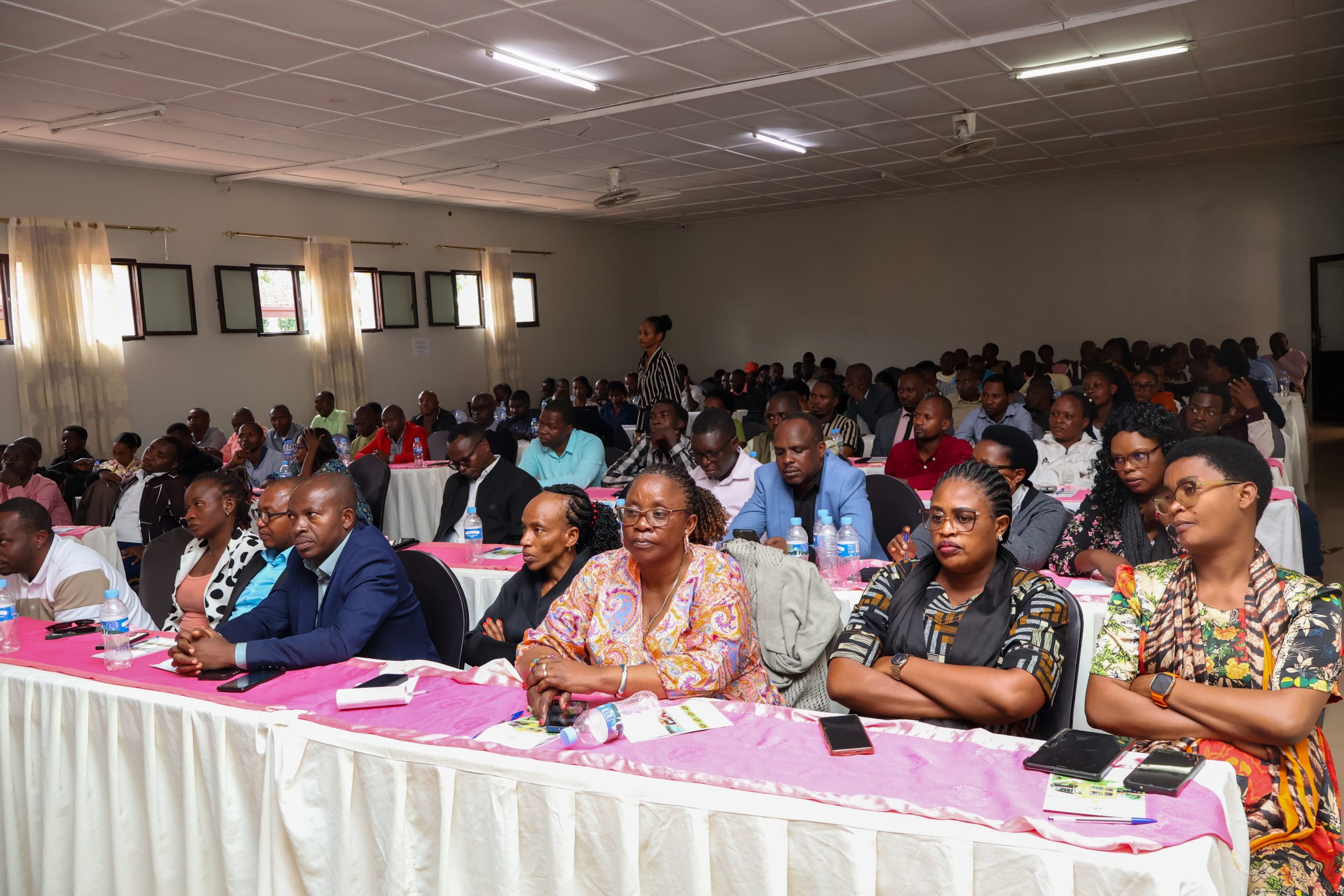
The third reflection workshop was held in Rwamagana district, uniting school representatives from Rwamagana and Kayonza Districts
Yields that rewrote the benchmark
Rwanda’s average climbing bean yield remains below one ton per hectare, despite the crop’s potential to produce more than four tons per hectare. In some SSFI schools, farmers and teachers are showing what is possible. At EP Kamuyange, bean yields reached 4,320 kilograms per hectare, more than double the national average. GS Rusheshe harvested 2,940 kilograms per hectare, while EP Biryogo produced 2,280 kilograms on an equivalent basis.
Across 120 demonstration plots harvested during Season A of 2024/25, most schools exceeded 1.2 tons per hectare. The results point to something quite practical: improved seed, better agronomic practices and hands-on training can make a considerable difference to what farmers get from their fields.
At EP Butamwa, school representative Honoré Ishimwe and his team started with 600 grams of seed just as GS Kayanga. They kept planting, season after season, and watched each harvest grow. When the seed was spreading, so was the knowledge.
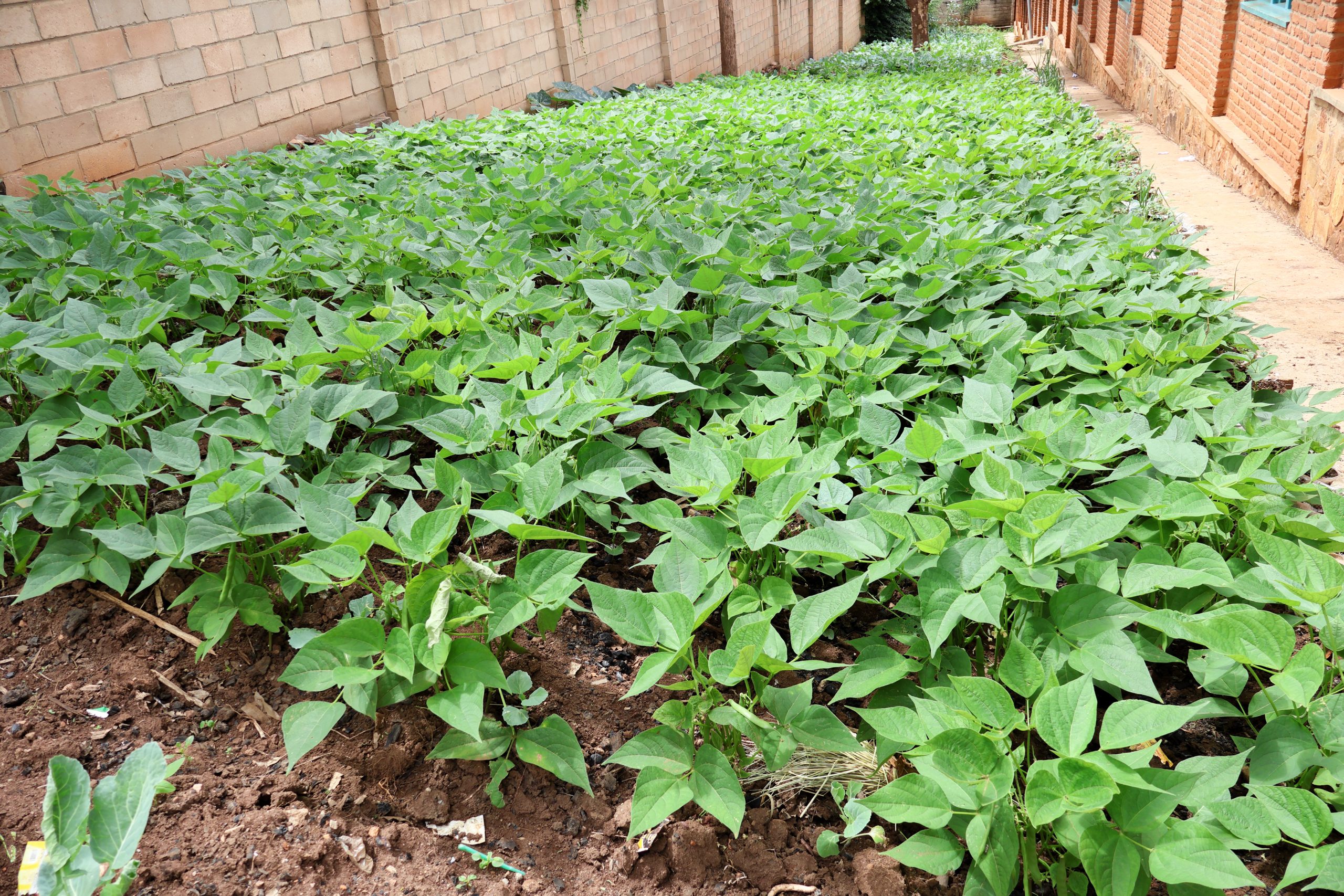
Schools used their small land to multiply seeds and share them with their respective neighbouring communities
When the beans reach the children
The bigger question, however, is what happens after the harvest. At EP Kamuyange, one student was battling malnutrition. When the school harvested its first crop of high-iron beans, teachers added the beans to the child’s special meal plan.
“One month later, health workers confirmed that the student had recovered and moved out of the red zone,” said Straton Barute, a trained teacher at EP Kamuyange.
At FAWE Gahini Girls School in Kayonza, teachers also introduced high-iron beans after noticing signs of malnutrition among learners. The beans became part of the daily school meals. Teachers then began noticing changes in the health and wellbeing of their students.
For program coordinator Vincent Iyakaremye, the difference was visible. “By incorporating these high-iron beans into our daily meals, we observed a positive change in the health of our students,” he said.
These experiences are giving the school gardens a purpose beyond teaching children how to grow crops. The gardens are becoming part of the schools’ response to the nutritional needs of their learners.
From the school garden to the community
It did not stop at the school fence. Teachers who had previously known little about common bean production began using what they learned to train people in their communities. One teacher turned the knowledge into a small business, selling high-iron beans at 2,000 RWF per kilogram.
Some schools also began earning money from surplus harvests and putting the proceeds back into the school, buying learning materials and other resources. Farmers and teachers who grew high-iron beans began gaining recognition as local sources of knowledge on bean production. On top of that, the children were carrying what they learned home. Their parents were planting improved bean varieties in their own fields. That growing interest also caught the attention of national institutions.
SSFI brought together the Ministries of Education (MINEDUC), Agriculture and Animal Resources (MINAGRI), the City of Kigali, the Rwanda Agriculture and Animal Resources Development Board (RAB), the World Food Program and private-sector partners to look at how lessons from the project could strengthen Rwanda’s school feeding program. Something that had started with school gardens was now part of a wider conversation about food, nutrition, agriculture and education.
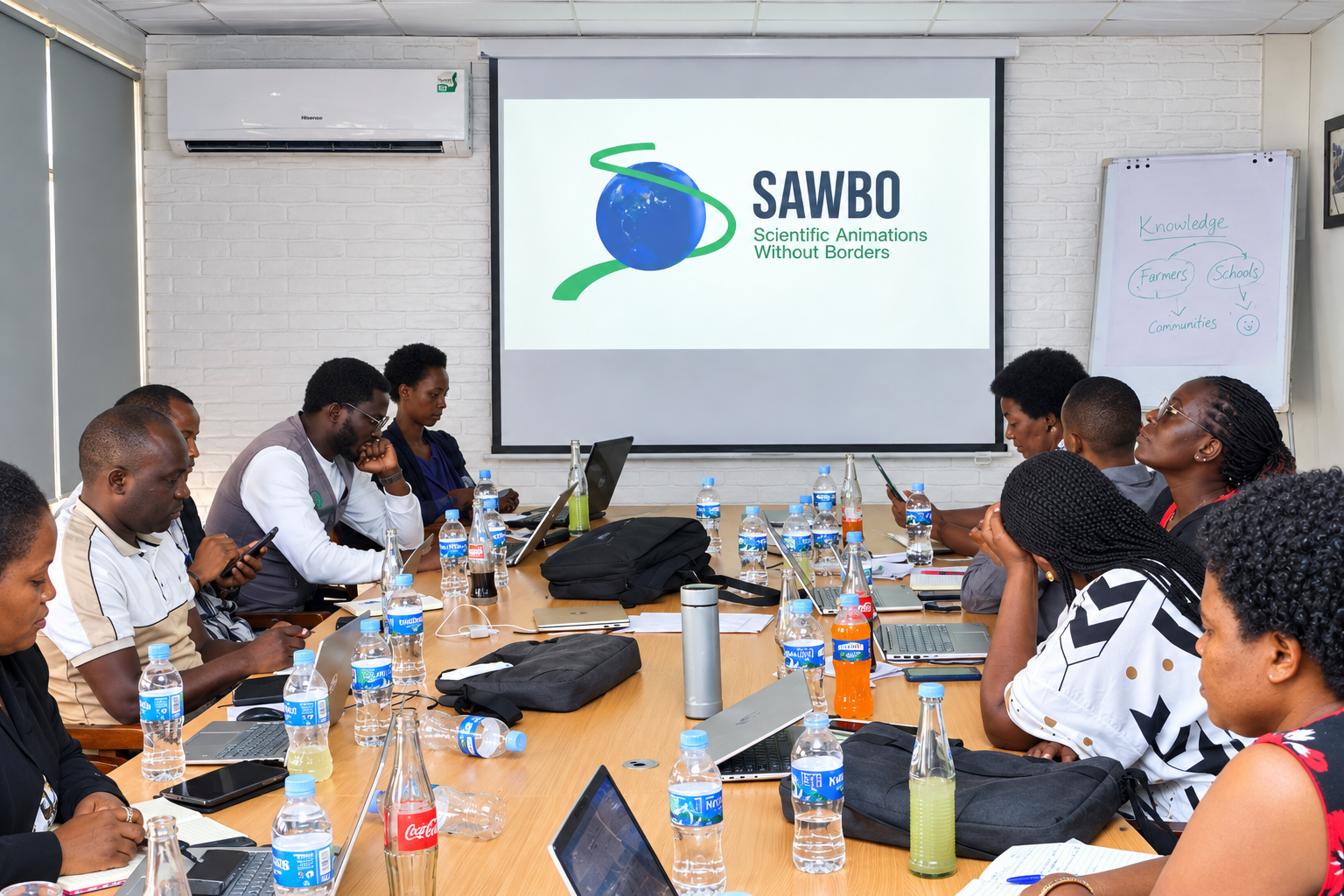
Farmers learn improved farming practices through engaging SAWBO animations
With the Project lessons going beyond school gardens, at EP Kamuyange, head teacher Barute took the sharing of knowledge a step further. Through the project, schools received SAWABO digital animation flash drives containing material recorded in Kinyarwanda. Barute used the animations to train farmer promoters in Nduba sector. The formal training may have ended, but the material continued to be used.
“I have been using SAWABO animations since the 2024B season to this date. This knowledge should be shared with other schools beyond Kigali and with all farmers,” he said.
Perhaps what is happening is one of the clearest signs of what the SSFI project set out to achieve: children get more nutritious meals, teachers gain farming knowledge, students take those lessons home, parents plant improved seed, and farmer promoters pass the knowledge on to others. Some of those farmer promoters had never worked with high-iron beans before, but today they are now taking the knowledge into their villages and training fellow farmers.
Jean Baptiste Rutiyomba, a farmer promoter from Sha Cell, has no intention of stopping. “I will definitely continue to share this information,” he said.
A model that is moving
The SSFI experience is now being taken further through the Scaling Sustainable School Feeding Innovations in Rwanda (3SFI) Project, which is expanding into Karongi, Nyamasheke and Rusizi districts and extending its benefits to hundreds of thousands more children.
The strength of the approach lies in its simplicity. Schools received seed and training, but they did not simply keep the knowledge for themselves. Teachers passed it to students. Students took it home. Parents planted. Farmers shared what they learned with others. For instance, when ten parents received seed from GS Kayanga’s first harvest, they multiplied the seed further. A small school garden had become a starting point for something much bigger, and the process is continuing across Rwanda for even greater reach.