
By Janviere Umurungi, Blanche Murera, Merci Cyurimpundu, and Justine Mutoni
You can give a plant the best seed and fertilizer, but if the soil is too acidic, you may still be setting it up to struggle. That is the challenge facing many farmers in Rwanda, where soil acidity affects more than 45% of the country’s arable land. Now, through the Scaling Sustainable School Feeding Innovations (3SFI) Project, which is strengthening school feeding by combining agriculture, nutrition education and community engagement, schools in the Western Province are receiving agricultural lime to help turn the situation around.
An often-overlooked ingredient
A school garden harvest is shaped well before the first seed goes into the ground. That is the thinking behind a season of preparation in the country’s districts of Karongi, Nyamasheke and Rusizi, led by the 3SFI project. This season, schools are receiving three complementary inputs to prepare their gardens for planting: bean seed, foliar fertilizer and, for those with acidic soils, agricultural lime.
While farmers pay considerable attention to seed and fertilizer, the condition of the soil in which crops grow can determine whether those investments deliver the expected results. Aluminum and manganese can reach levels that are toxic to plant roots, while essential nutrients such as phosphorus become less available for crops to absorb. Applying agricultural lime helps reduce soil acidity, creating better conditions for crops to establish, absorb nutrients and grow.
The scale of the challenge is considerable. A 2024 study by researchers from the International Maize and Wheat Improvement Center (CIMMYT) and the Rwanda Agriculture and Animal Resources Development Board (RAB) found that more than 45% of Rwanda’s arable land has acidic soils.
Lime, however, is not an overnight solution. It needs to be applied correctly and worked into the soil, with quantity and timing guided by soil assessments and agronomic advice. The potential returns make the effort worthwhile. In a survey of 261 Rwandan households, researchers estimated that applying lime increased bean yields by approximately 450 to 520 kilograms per hectare, with benefits that could last several cropping seasons. For schools with acidic soils, addressing this underlying problem is an important step towards getting more from the land they cultivate.
Preparing the ground for planting
Supported by the Swiss Agency for Development and Cooperation (SDC), the project is implemented by the Alliance of Bioversity International and CIAT through the Pan-Africa Bean Research Alliance (PABRA), in collaboration with the Government of Rwanda.
Beyond supplying agricultural inputs, the intervention is helping schools understand what their gardens need to produce a good harvest. It also equips teachers and learners with practical agricultural skills they can apply in their school gardens and, potentially, in their own communities.
This season, the support took three forms, with each input directed towards a particular need. Bean seed was distributed to 332 schools, while 170 kilograms of foliar fertilizer went to 96 schools cultivating more than 0.3 hectares of land. Agricultural lime, meanwhile, was supplied to 25 schools across 13 sectors of Nyamasheke District, where soil acidity presents a particular challenge to crop production.
The distribution recognizes that schools do not all face the same agricultural conditions. While seed provides the starting point for production, fertilizer supports crop development, and lime helps address soil conditions that could otherwise limit the harvest.
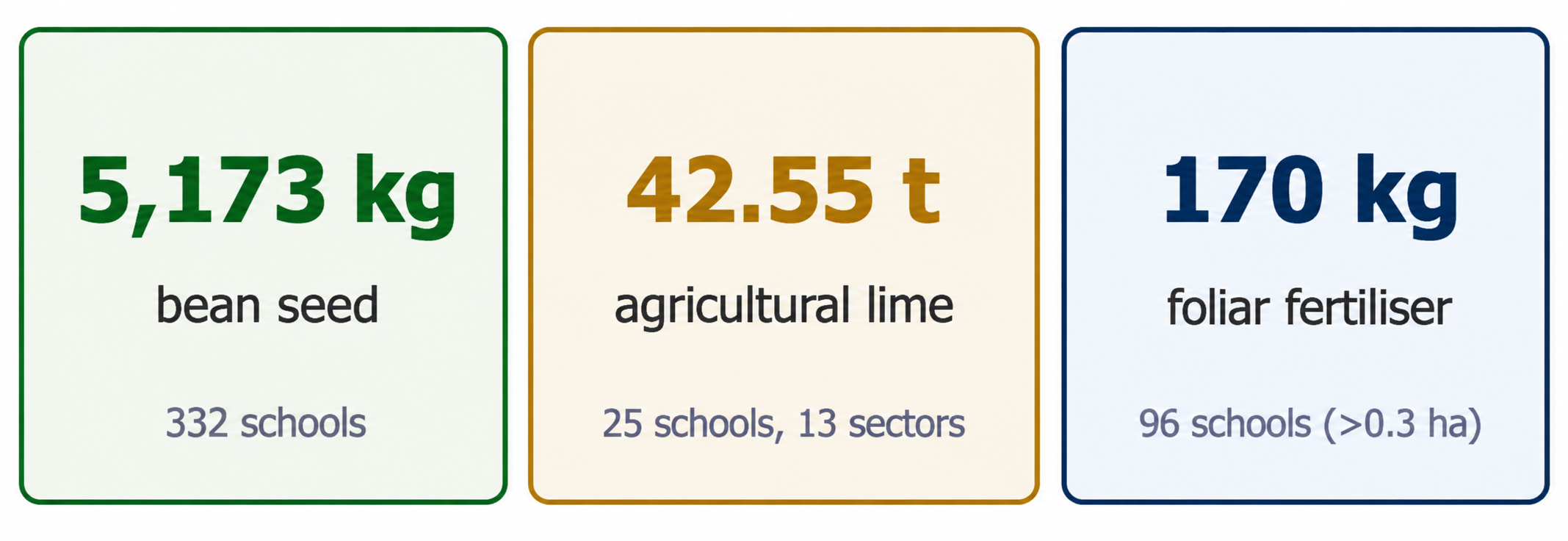
Supporting school gardens with the right inputs: 5,173 kg of bean seed, 42.55 tons of agricultural lime and 170 kg of foliar fertilizer distributed to schools
Seed for a nutritious harvest
Just over five tons of bush and climbing bean seed were prepared and distributed to schools, with varieties suited to different growing conditions. Some schools also planted seeds saved from previous harvests, building on earlier production.
At GS Gihundwe, in Rusizi for instance, storekeeper Viateur Ndagijimana said the school planted bush beans on one plot and climbing beans on another: “We received 50 kgs of climbing bean seeds from CIAT. Last season we planted bush beans, so this season we planted 20 kg of bush bean seed on one part of the land and 50 kg of climbing bean seed on the other. We also received two packs of fertilizer, which will help our students by giving us high yields.”
The choice of beans is strategic. The 3SFI is promoting iron-biofortified varieties, developed through conventional breeding to contain higher levels of iron than ordinary common beans. Iron is essential for children’s growth and development. Its deficiency can impair cognitive and physical development, making iron-rich beans an important addition to efforts to improve the nutritional quality of school meals.
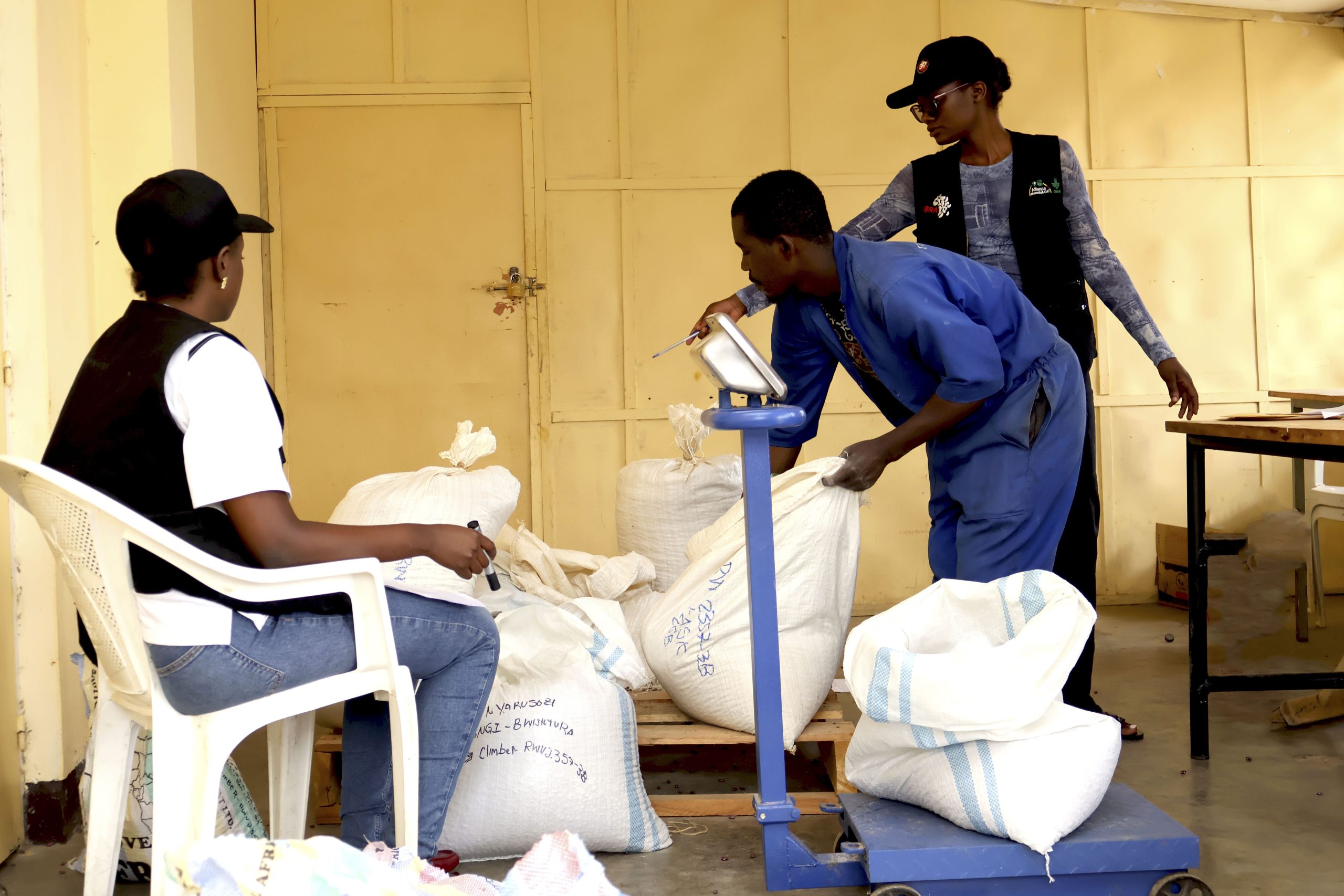
Every kilogram counts: CIAT staff weigh and pack high-iron bean seed before it leaves for the schools
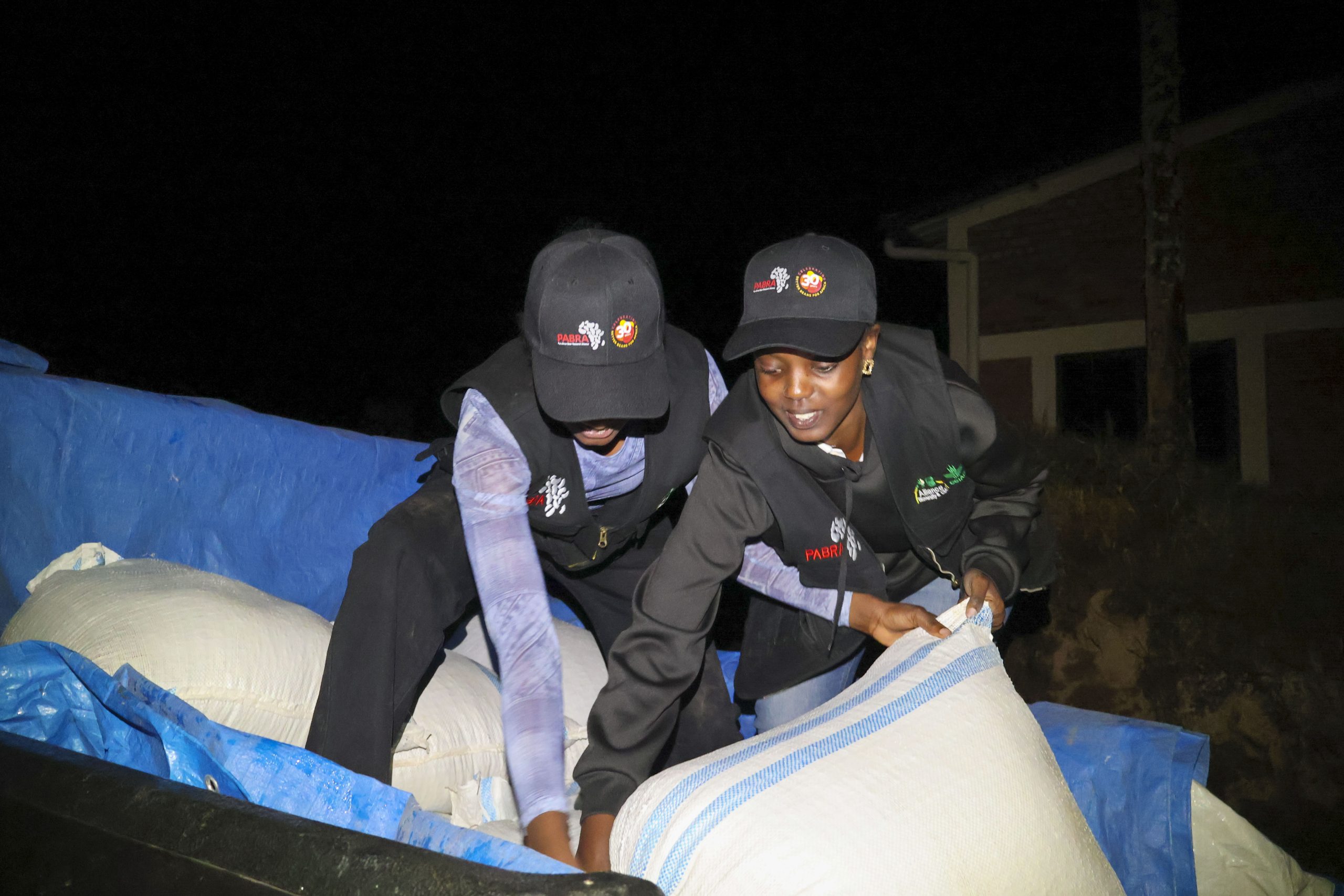
Loading continues after dark as staff lift bags of seed onto the truck for the road
A boost for the leaves
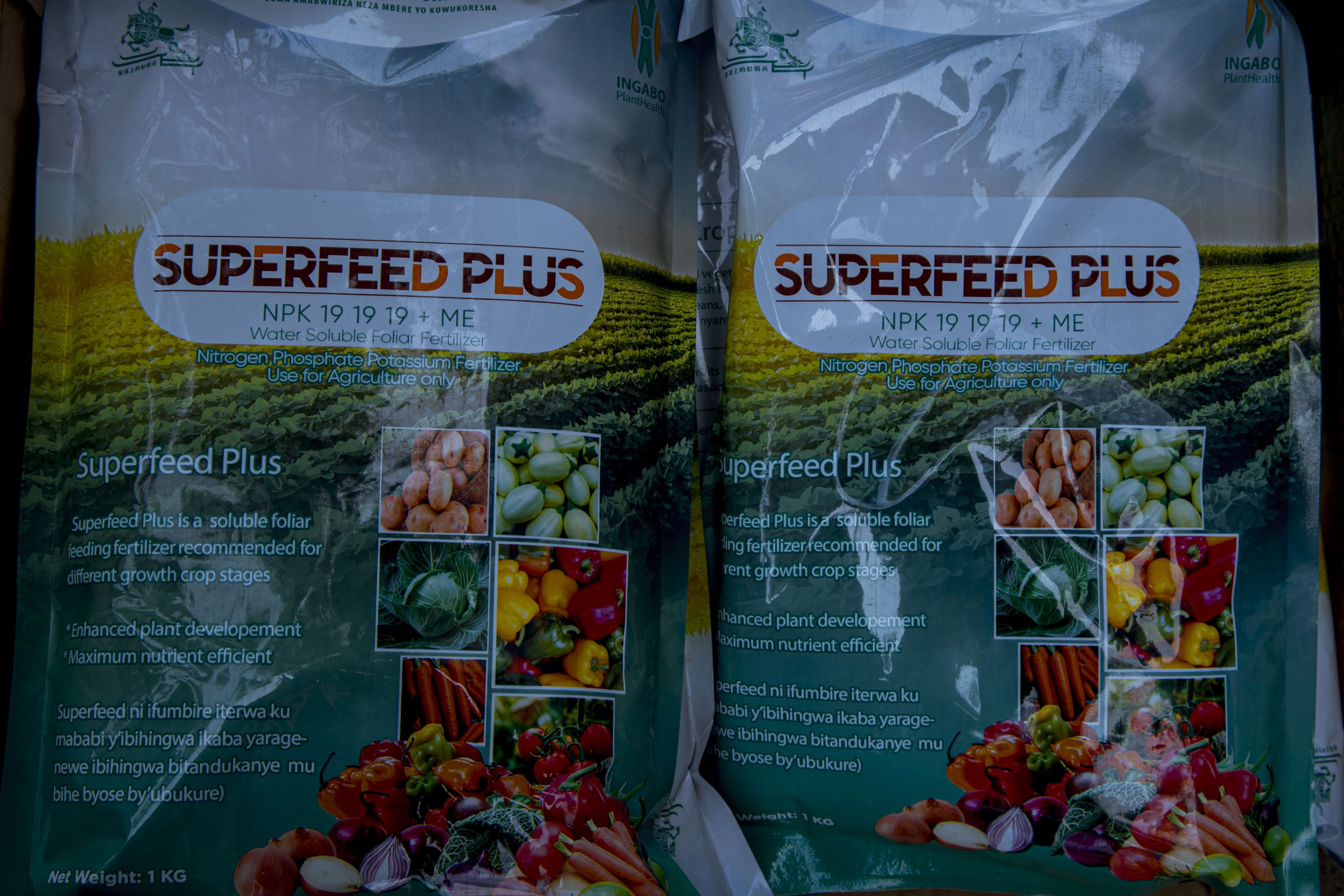
Small packs, big role: foliar fertilizer for schools with larger plots
Seed was only part of the package. For schools cultivating larger plots, the project added foliar fertilizer to support crop development as the beans grow. Unlike fertilizers applied to the soil, foliar fertilizers are applied directly to plant leaves, allowing crops to absorb nutrients through their foliage. This season, 170 kilograms were distributed to 96 schools with more than 0.3 hectares of land.Together with the seed, the fertilizer is expected to support crop establishment and development as schools work towards a successful harvest.
From delivery to the field
At EAV Ntendezi in Ruharambuga Sector, Nyamasheke, the next step is to put the inputs and training into practice. The school received 2.4 tons of agricultural lime alongside its bean seed, giving it an opportunity to address soil acidity while preparing for the planting season.
Head teacher Leonce Ndashimye said the school had also increased the quantity of bean seed available for planting this season: “We are happy and thankful to receive this high-iron bean seed. We received 50 kg, which was added to 60 kg, so this season we are planting 110 kg. We also received 2.4 tons of lime. We will use all the practices we learned in the trainings to grow high yields, because we have everything we need.”
The school’s experience highlights the importance of combining inputs with practical knowledge. Having lime available is one thing; applying it in the right quantities and at the appropriate time is another. The training is intended to help schools make the most of what they have received.
Across the three districts, the focus now shifts to the fields. The inputs have reached the schools, but their value will ultimately be measured by how they are used, how the crops perform and what the gardens produce.
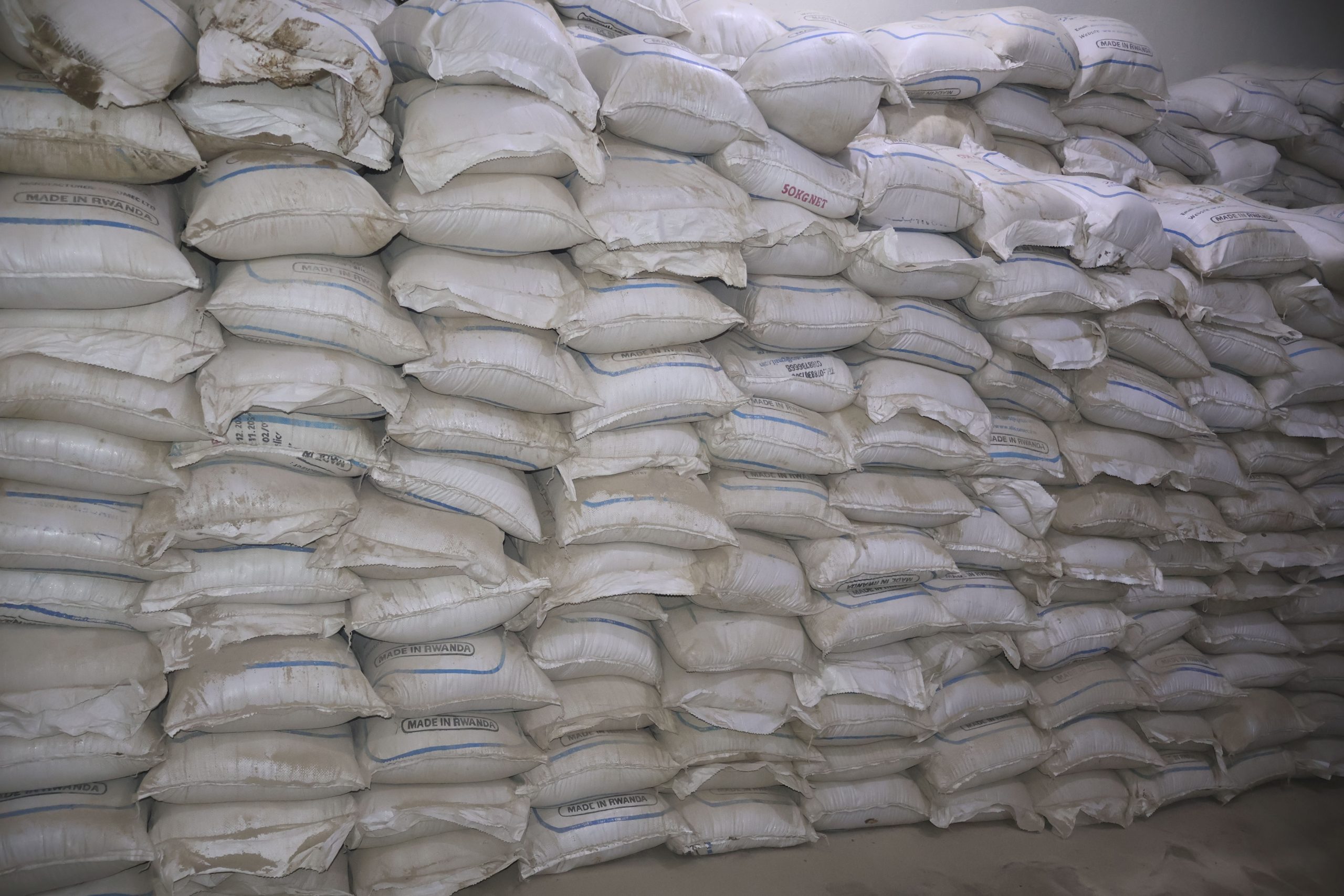
Waiting for the road: lime stacked in store before it goes out to the schools
Looking ahead to harvest
For some schools, the value of growing iron-biofortified beans is already evident from previous harvests. At TTC Rubengera in Karongi, learners have tasted the beans, and the school is now looking to grow more of them as part of its efforts to improve the nutritional quality of meals.
Bursar Placide Bamporineza recalls the response from learners and explains why the school wants to gradually replace its ordinary bean varieties with the iron-rich alternatives.
“The beans are very tasty, and you can see how happy the students are when they eat them. I am very happy to be feeding children these high-iron beans because they provide important nutrients for their health. That is why we are planting them again this season, with the aim of gradually replacing the ordinary beans we have been growing with these new, iron-rich varieties.
“From our previous harvest, we were able to prepare meals with high-iron beans for 806 students and 40 staff members on three occasions. The number of times we served the beans depended on the quantity we harvested.”
The experience at TTC Rubengera offers a glimpse of what school gardens can contribute when agricultural production and nutrition come together. The quantity harvested determines how often the beans can feature on the menu, making consistent production an important part of sustaining the initiative.
For the schools in Karongi, Nyamasheke and Rusizi, the coming season will provide another opportunity to build on this work. Seed is in the stores, foliar fertilizer has reached schools with larger plots, and more than 42 tonnes of lime are being put to work on soils that need it.
As the rains approach, attention turns to planting, proper application of lime, timely weeding and the care needed to take the crops through to harvest. Following the season will also be important in understanding how the different inputs perform, how much schools harvest and what challenges they encounter. The sacks loaded onto that truck are now headed for the school gardens, carrying the promise of better harvests, more nutritious meals and healthier soils for the learners who depend on them.
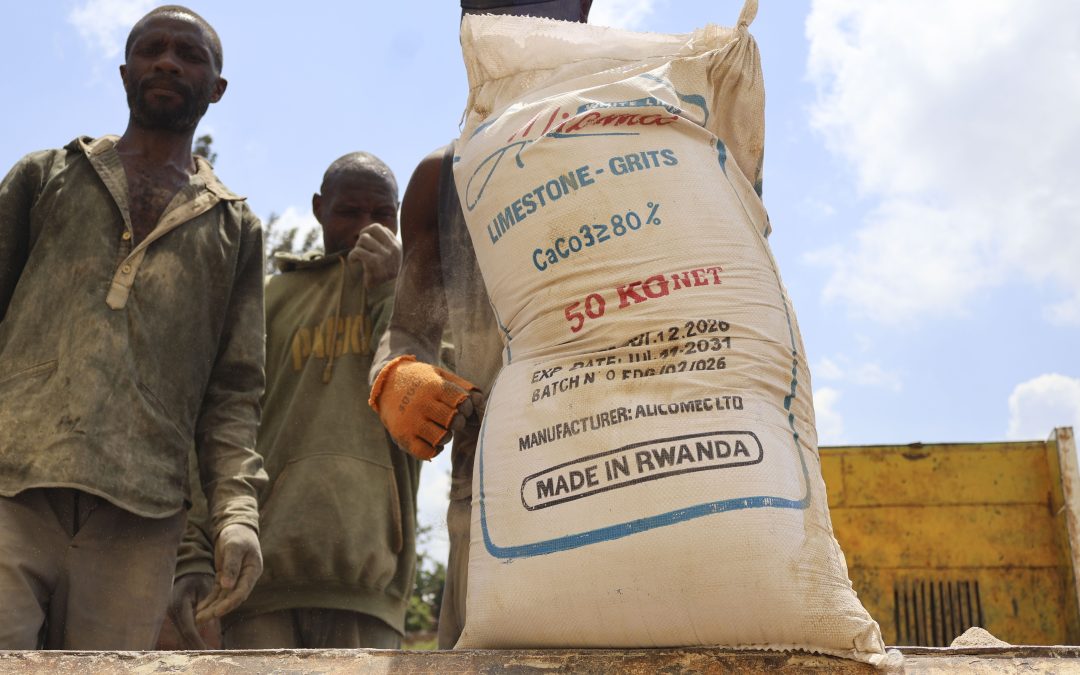
Cover Image: A 50- kilogram bag of limestone begins its journey to the school gardens