By Andrew Kabwama, Fred Kato, Winnyfred Amongi, Allan Male and Roy Odama
Not all beans offer the same nutritional value. While common beans are an important source of protein, fiber and essential minerals, their iron and zinc content varies across varieties. Identifying those with higher nutritional value is therefore an important part of developing better beans for farmers and consumers.
For bean breeders, however, screening hundreds or even thousands of breeding lines for their nutritional content can be a demanding process. Conventional laboratory methods, particularly wet chemistry, are often time-consuming, labor-intensive and expensive, making large-scale nutritional analysis difficult. A faster and more reliable way of measuring micronutrient content can therefore make a significant difference in how quickly breeders identify promising lines.
At the National Agricultural Research Laboratories (NARL) in Kawanda, Uganda, the Alliance of Bioversity International and CIAT has established a micronutrient analysis platform to help address this challenge. Set up in 2019, the facility supports the Pan-Africa Bean Research Alliance (PABRA) and its network of breeding partners by providing faster, more affordable analysis of iron and zinc in common beans.
A faster way to measure nutritional value
An Energy Dispersive X-ray Fluorescence (EDXRF) Spectrometer, the ARL Quant’X from Thermo Scientific is the heartbeat of this platform. The technology offers a faster alternative to conventional laboratory methods, allowing researchers to screen large numbers of bean samples without the lengthy processes associated with wet chemistry.
The process begins with dry bean seeds, which are ground into a fine, uniform powder using a Retsch Mixer Mill MM 400. Special zirconium oxide grinding jars and balls are used to avoid contamination and ensure consistent samples.
The prepared samples are then placed in the EDXRF machine, which directs X-rays onto the bean powder. The elements in the sample respond by emitting fluorescent X-rays, which the instrument detects and measures to establish the type and concentration of minerals present.
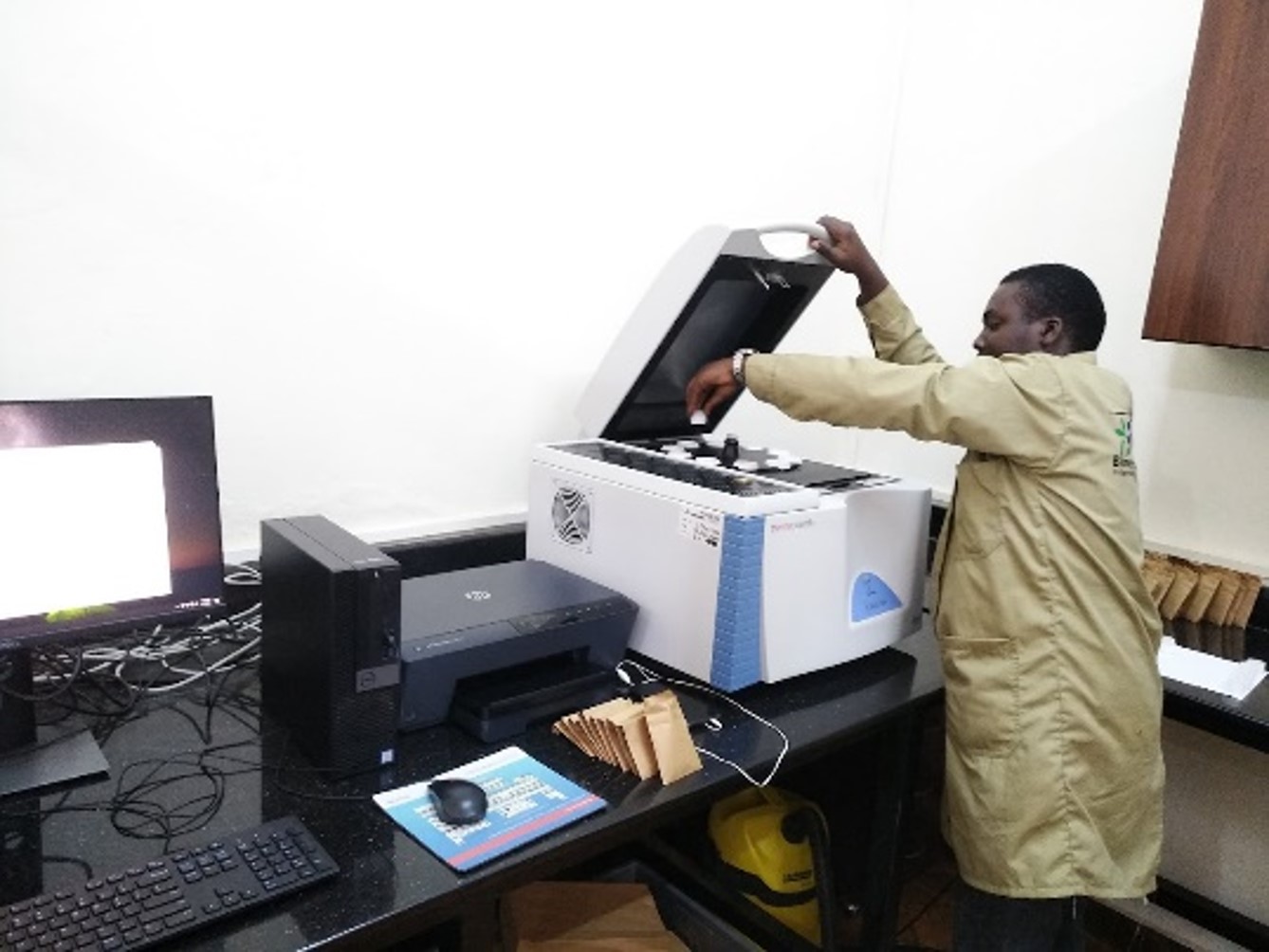
A technician loads prepared bean flour samples into the EDXRF spectrometer for analysis
The process is remarkably quick, taking approximately one minute to analyze a particular element in each sample. The machine can detect trace elements at concentrations below one part per million (ppm), while requiring relatively little sample preparation. Its non-destructive approach also allows samples to be retained for further use.
For breeders working with large collections of bean lines, this means less time spent waiting for nutritional results and more opportunities to screen and identify promising material for further breeding.
Supporting the search for iron- and zinc-rich beans
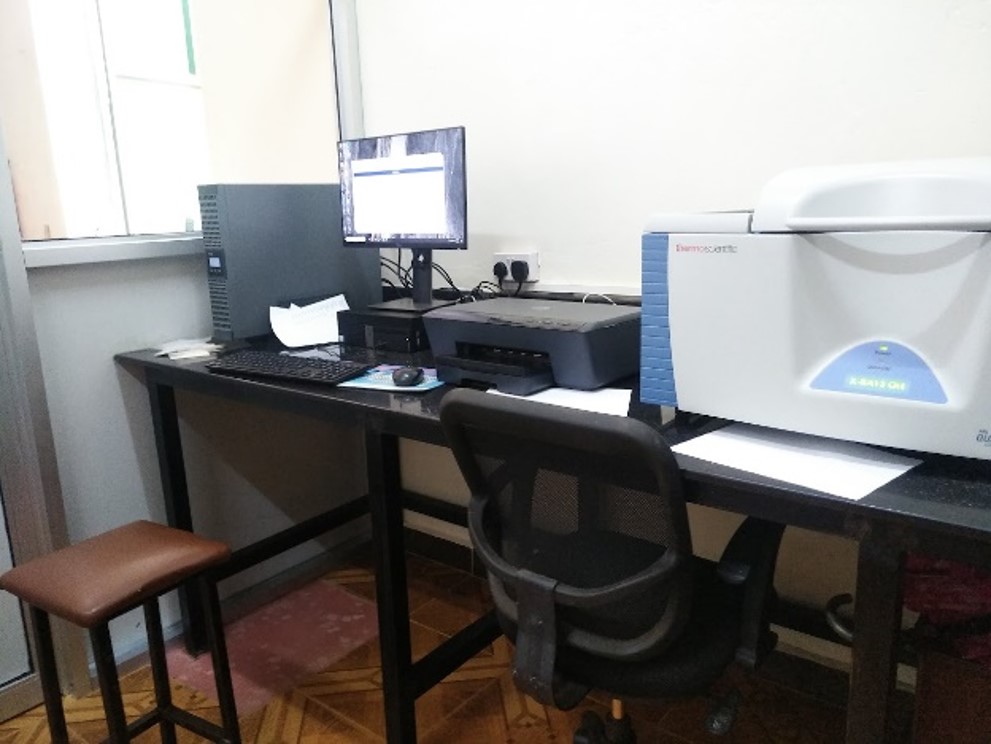
A complete set of an EDXRF machine connected with its accessories and ready for analysis
Since its establishment, the platform has become an important resource for several bean breeding and research initiatives, helping researchers assess the nutritional qualities of different breeding lines and varieties.
One of its key contributions is the analysis of regional bean trials coordinated through the Eastern and Central Africa Bean Research Network (ECABREN). These trials are distributed across member countries each year, allowing breeders to evaluate how different bean lines perform under diverse growing conditions. The platform adds another important measure to this assessment by providing micronutrient data, helping researchers identify lines that combine good agronomic performance with higher nutritional value and potential for release across different environments.
The facility also supports the Alliance’s bean breeding program in Kawanda, routinely analyzing the iron and zinc content of advanced breeding lines. This helps ensure that varieties selected for further development and possible release are assessed not only for their performance in the field but also for their nutritional qualities.
Another important area of work is the Rapid Cooking Bean Project (RCBP), which focuses on developing beans that cook faster while retaining high levels of iron and zinc. Through micronutrient analysis, the platform helps researchers evaluate the nutritional characteristics of the lines being developed, supporting the search for beans that offer both convenience and improved nutrition.
Beyond breeding, the facility has contributed to impact assessment research under the Strengthening Impact Assessment in the CGIAR (SPIA) initiative. By providing reliable micronutrient data, it has supported evidence-based assessments of biofortification efforts and their contribution to improving the nutritional quality of food.
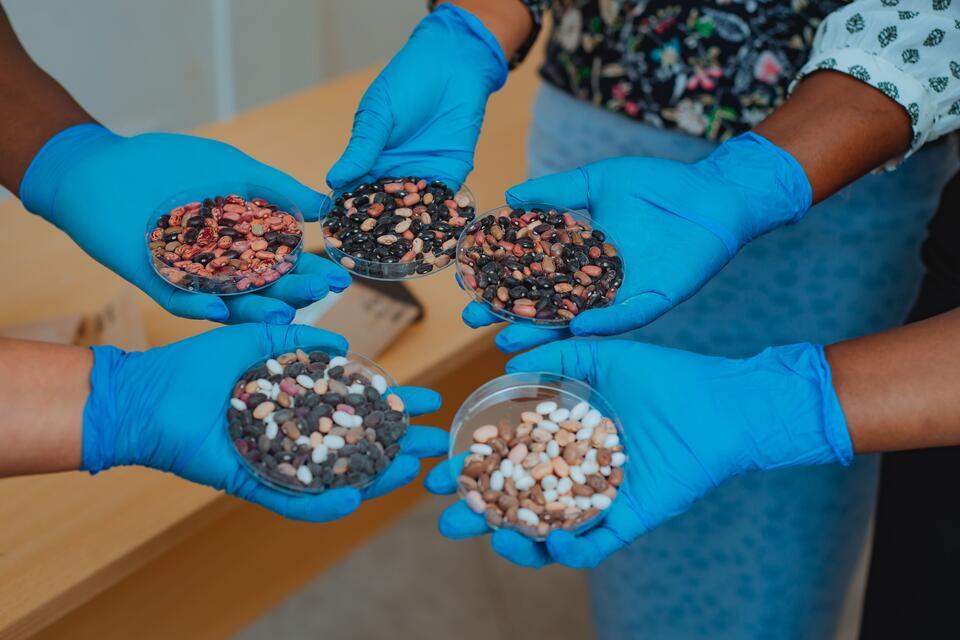
The Rapid Cooking Bean Project uses advanced breeding techniques to develop common bean varieties that cook at least 30% faster and contain 15% more iron and 10% more zinc than traditional varieties
Building the next generation of bean researchers
The platform’s contribution extends beyond ongoing breeding programs. It has also become a resource for postgraduate students undertaking research in bean improvement and nutrition, supporting MSc and PhD studies in Uganda and beyond.
By providing access to specialized equipment and analytical services, the facility gives emerging agricultural scientists an opportunity to work with modern research tools and strengthen their understanding of crop nutritional quality. This role in research and training helps build the scientific capacity needed to sustain bean improvement efforts across the region.
Better data, better beans
The ability to measure iron and zinc quickly and reliably is an important part of developing more nutritious bean varieties. By reducing the time, cost and labor involved in micronutrient analysis, the Kawanda platform is helping breeders screen more material and make better-informed selections. While EDXRF provides a rapid assessment of iron and zinc concentrations in bean seeds, the amount of iron present does not necessarily reflect how much can be absorbed and utilized by the human body. This makes assessing iron bioavailability an important step in developing nutritionally improved bean varieties. To complement these efforts, Alliance-CIAT is partnering with experts at the Robert W. Holley Center for Agriculture and Health in Ithaca, New York, USA, to assess iron bioavailability in common beans.
As demand grows for beans that deliver both good agricultural performance and improved nutrition, access to reliable analytical tools will remain important. The platform provides that support, helping ensure that nutritional qualities are considered alongside yield, disease resistance and other important breeding traits.
Ultimately, its value lies not just in the technology it houses, but in the breeding decisions it helps inform and the more nutritious bean varieties those decisions can help bring to farmers and consumers.
Cover Image: Technician prepares ground common bean samples for micronutrient analysis