
By Sylvia Kalemera, Justus Ochieng, Radegunda Kessy, and Terry Ikunda
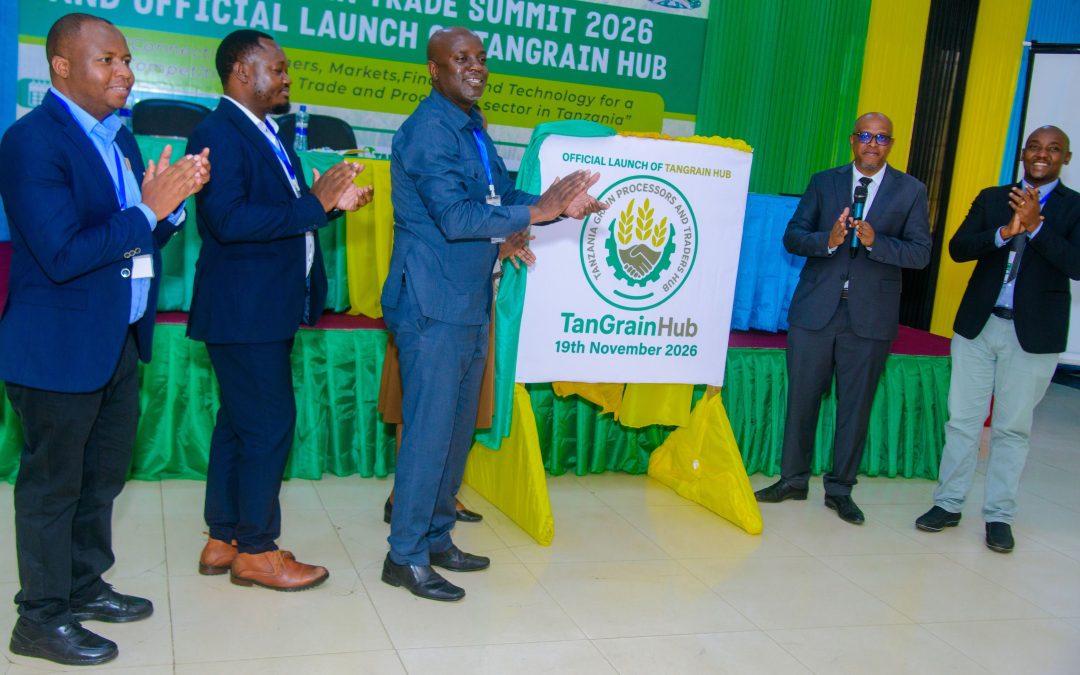
Tanzania has taken an important step towards transforming its grain sector with the official launch of the Tanzania Grain Traders and Processors (TanGrain) Hub. The launch was officiated on behalf of the Minister of Industry and Trade, Hon. Dr. Judith Salvio Kapinga, by the Ministry’s Director of Trade Development, Sempeo Manongi, on 19th November 2026 in Dodoma. Manongi said that the ministry is committed to advancing the country’s economy by encouraging grain traders and processors to move away from selling raw materials and towards processed or value-added products. The representatives from the Ministry of Trade emphasized scaling consistent, high-quality “Made in Tanzania” grain products to tap into regional and continental markets—specifically the EAC, SADC, and AfCFTA https://www.instagram.com/reels/Df-fAghMjSj/. This aligns with Tanzania Vision 2050 launched in 2023.
“Above all, the success of the Hub should be measured by tangible result; new business opportunities secured, increased volumes of value-added grain, reduced post-harvest losses, and members who benefitted,” said Manongi.
TanGrain Hub has been established as an outcome of the Accelerated Variety Turnover for Open-Pollinated Crops in Tanzania (ACCELERATE) Project, funded by the Gates Foundation and led by the Alliance of Bioversity International and CIAT through The Pan-Africa Bean Research Alliance (PABRA), in collaboration with Tanzania Agricultural Research Institute (TARI), The International Maize and Wheat Improvement Center (CIMMYT) and Tanzania Official Seed Certification Institute (TOSCI) in Tanzania.
ACCELERATE recognizes a fundamental reality: increasing agricultural productivity requires more than developing and disseminating improved varieties. Farmers need a variety with reliable and remunerative markets for their produce, which in turn will call for seed demand. Therefore, traders, processors, and other market actors play a critical role in stimulating demand for improved varieties, creating market-driven incentives, and encouraging farmers to fast adopt and continuously replace older varieties with improved ones. Through ACCELERATE project, efforts seek to increase varietal turnover of improved open-pollinated crops in Tanzania of common beans, sorghum, and groundnuts. ACCELERATE’s efforts were highly appreciated by the TANGRAIN board chairperson, Lazaro Mwakipesile.
A new approach to collective market and building on existing investments and partnerships
TanGrain Hub is an apex organization that introduces a national, multi-commodity platform that brings together grain traders and processors dealing in a diverse range of cereals and legumes. Unlike many existing commodity-specific organizations, TanGrain recognizes that grain businesses often operate across multiple commodities and therefore need a unified platform that addresses their shared commercial interests and challenges.
One of its key distinguishing features is its ability to facilitate collective supply aggregation and market access. Where large buyers require volumes beyond the capacity of individual traders, TanGrain provides an opportunity for members to coordinate supplies, consolidate volumes, and jointly fulfil larger market orders. This approach can unlock access to bigger regional and international markets, strengthen business relationships, enhance members’ competitiveness, and create commercial opportunities that individual businesses might otherwise miss.
Mwakipesile also emphasized that the Hub was not established to compete with any existing institutions but rather to complement their efforts by providing a common platform for collaboration among grain traders, processors, farmers, financial and insurance institutions, government, and other value chain actors. He highlighted its role in strengthening partnerships, facilitating access to timely market information and business services, enhancing market linkages, promoting quality standards, and engaging with government to create an enabling business environment. Ultimately, TanGrain Hub aspires to bridge the gap between agricultural production, trade, processing, and markets, while creating greater value and expanding business opportunities for all stakeholders in the cereal and legume value chains.
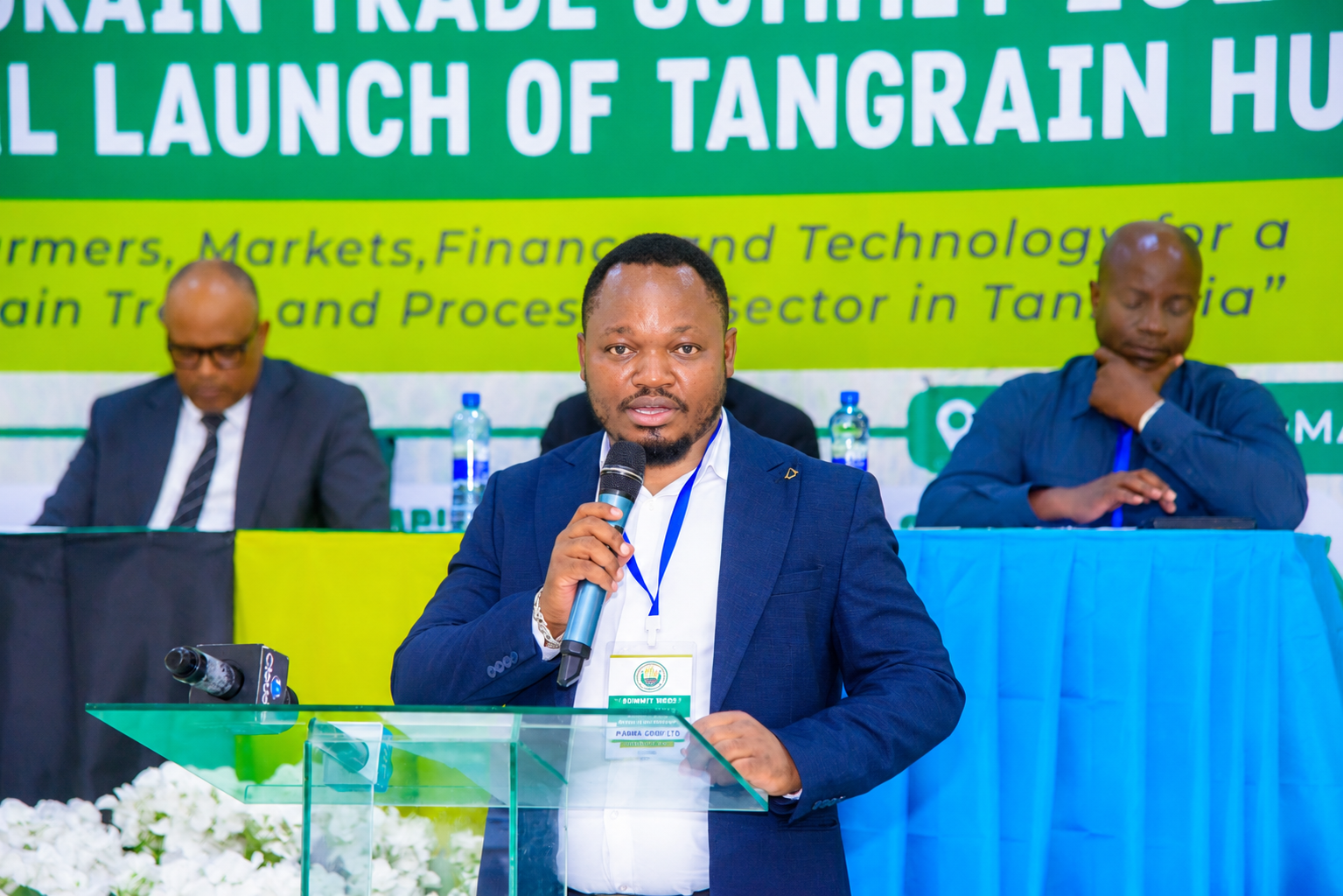
Lazaro Mwakipesile, Operations Manager at Raphael Group and Chairman of the TanGrain Hub Board, delivering remarks on behalf of Hub members
Putting farmers at the center
Grain producers and processors emphasized that quality grain starts with quality seed, highlighting the importance of connecting farmers, seed producers, traders, and processors to improve access to market-preferred varieties and create reliable market opportunities that benefit farmers.
More organized and inclusive grain markets can also create new economic opportunities for women and young people across the value chain, particularly in seed entrepreneurship, produce aggregation, trading, processing, and other agricultural enterprises. In this way, TanGrain Hub can contribute to more inclusive, competitive, and commercially viable agricultural value chains while improving livelihoods.
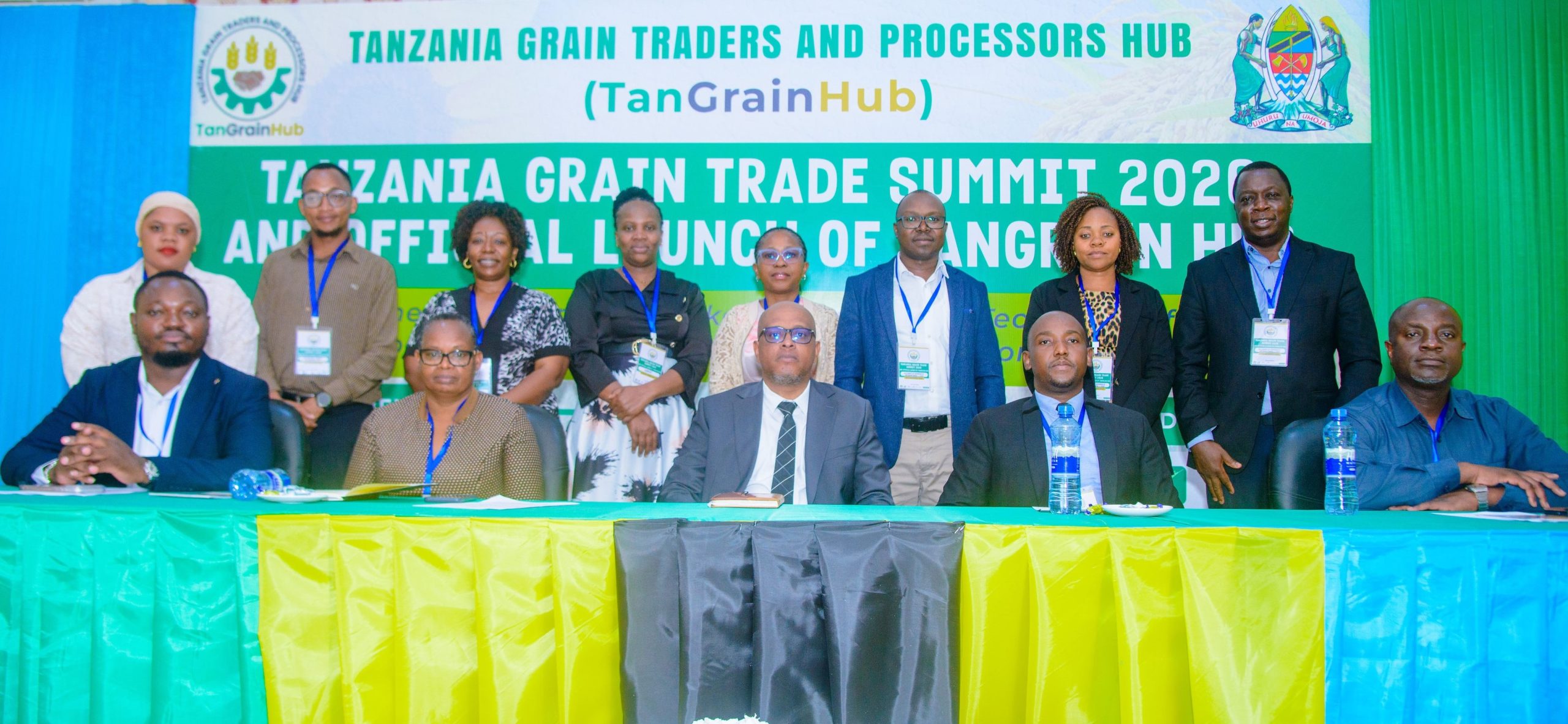
Representatives of development organizations during the launch, including the Alliance of Bioversity International and CIAT/PABRA, CIMMYT, and FAO among others
For the Alliance of Bioversity International and CIAT, through PABRA, the establishment of TanGrain Hub presents an important opportunity to complement and strengthen the efforts of research, development, and scaling organizations working to advance agricultural development, seed systems, and inclusive value chains in Tanzania. It provides a platform for building synergies with partners such as Alliance for a Green Revolution in Africa (AGRA), the Agricultural Markets Development Trust (AMDT), Rikolto, IDH (The Sustainable Trade Initiative), SNV, CGIAR centers, national research institutions, and other development partners to translate agricultural innovations into tangible market and livelihood benefits.
The summit brought together a diverse range of stakeholders, including government ministries responsible for agriculture, livestock, and fisheries; national institutions such as TARI and TOSCI; grain traders and processors; financial institutions; farmer organisations; local and international NGOs; CGIAR centres, including the Alliance of Bioversity International and CIAT and CIMMYT; United Nations agencies such as FAO; and development partners. The summit provided an important platform for dialogue, networking, and identifying practical opportunities for collaboration, investment, and transformation of Tanzania’s grain sector.
From fragmented markets to collective strength, TanGrain Hub marks an important step towards transforming Tanzania’s grain sector. Beyond strengthening trade and commercial linkages, the Hub has significant potential to stimulate demand for improved varieties and quality seed by connecting market requirements with seed production and agricultural research. By linking grain traders and processors with farmers and seed producers, it can create a market pull for preferred varieties, encourage investment in quality seed production, accelerate varietal adoption and turnover, and make seed systems more responsive to market demand.
Explore media coverage of the TanGrain Hub launch through the links below:
https://www.instagram.com/reel/Df9-DfJF7Ts/?evlk=ZmRrdHB0emRtemp0
https://www.youtube.com/live/8ya4f_Qo65Y?si=SgryCzSjh6tHU46I