
By Yohane Chideya, Eliud Birachi, Dennis Ong’or, Jean Claude Rubyogo
In Kenya’s rapidly growing cities, demand for convenient, nutritious food continues to rise. More urban families are looking for affordable meals that save time without compromising quality, yet many of the most nutritious indigenous foods, especially those rich in iron and zinc, remain difficult to access at scale.
Cherubet Foods Ltd, a woman-led agrifood enterprise based in Nairobi, is working to close that gap. The company processes and packages ready-to-eat bean products. It operates a fully in-house production facility and a direct sourcing model that links the factory to farmers including Abosi Top Hill Cooperative members in Bomet and now to the newly linked Ushirikiano Women Group in Kiambogo, Nakuru County. Today, the company employs 40 workers, 97 percent of them women and 60 percent youth.

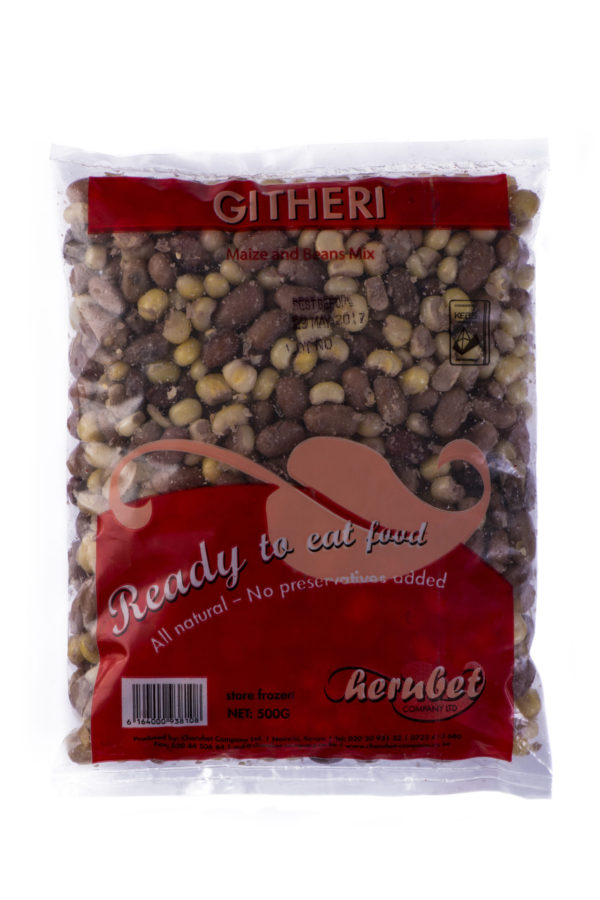
Some of the products by Cherubet
However, even a working enterprise can struggle when the systems behind it are fragile. Despite securing shelf space in more than 126 retail outlets across Kenya, Cherubet’s operations remained fragile. The company had built strong market acceptance, but production systems were not yet stable enough to sustain growth. Utilization of installed capacity stood at only 20 percent, limiting efficiency and profitability. Also, the product portfolio relied heavily on frozen foods, increasing dependence on cold chain logistics and driving energy costs to approximately KES 80,000 per month. These costs constrained margins and made scaling difficult.
Interventions that remarkably changed Cherubet’s production operations.
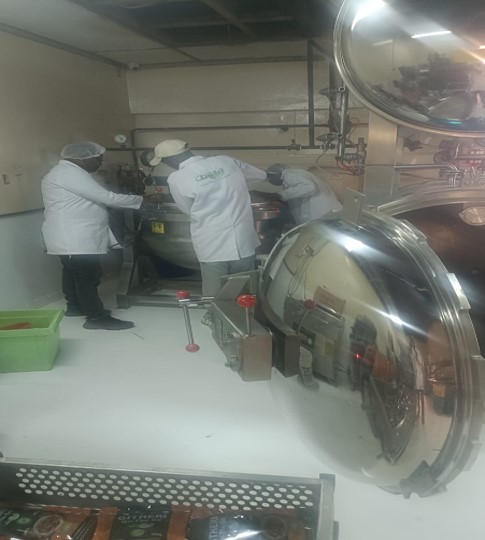
The turning point came with support from the Alliance of Bioversity International and CIAT through Pan-Africa Bean Research Alliance (PABRA). With funding from Sall Family Foundation targeted for women initiatives, PABRA intervened to optimize production and stabilize market for Cherubet. As a result of this intervention, the 126 outlets were activated with now total reach of six major cities. Also, the critical retort process at the heart of Cherubet’s operations was validated. Failures in the retort system were diagnosed and corrected, and the automatic logic was restored to ensure consistent processing. Production was standardized to 400 grams per unit, bringing uniformity and improved cost control. Quality assurance trials recorded zero pouch bursting.
Beyond technical fixes, leadership and management systems were strengthened. Standard operating procedures were embedded across the factory floor, and key performance indicators were introduced to track efficiency, quality, and output in real time.
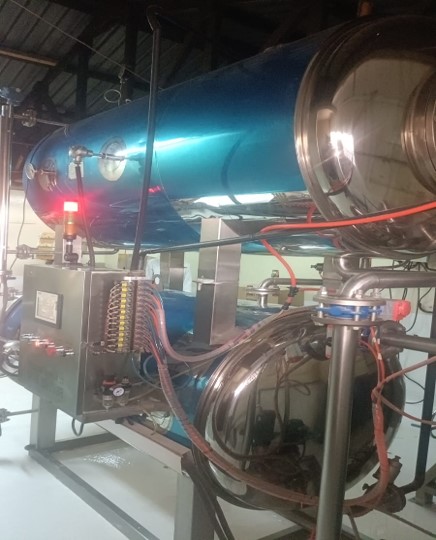
Retort system at Cherubet
With these interventions, Cherubet began to move from uncertainty to stability. The company can now track performance, manage risks, and experience data-driven decision making. “Thanks to CIAT, Cherubet transitioned from high-risk operations to investment-ready, scalable growth,” noted Mary Maritim, the CEO and founder of Cherubet.
What is next for Cherubet?
Going forward, Cherubet will be no longer trying to fix fragile systems. The next step will be to ensure operational scale. As Mary noted, “the market has accepted the product. What’s missing is scaling.” With continued support in production optimization, utilization, once at just 20 percent, is projected to reach 80 percent within four months. Monthly sales are expected to rise from KES 1.5 million (USD 11,700) to KES 5 million (USD 39,000) over the same period. Energy costs are projected to drop from KES 80,000 (USD 625) to KES 40,000 (USD 313), while farmer sourcing is set to double.
With continued partnership, this next phase will demonstrate how targeted support to a women-led enterprise can transform a value chain, create jobs, and deliver nutritious foods at scale. In many ways, the hardest work has already been done. What remains is to scale what is working and to ensure that the benefits reach farmers, workers, and families across Kenya.