
Joachim Madeni¹, Anthony Bujiku¹, Gerald Alex¹, Justus Ochieng², Radegunda Kessy², Atupokile Mwakatwila², Rickards Chima³, Jean Claude Rubyogo², and Lilian Gichuru³
1Tanzania Agricultural Research Institute (TARI), Naliendele, Mtwara, Tanzania
2 The Alliance of Bioversity International and CIAT/PABRA
3International Maize and Wheat Improvement Center (CIMMYT)
Corresponding author: madenijoachim@gmail.com / joachim.madeni@tari.go.tz
Introduction
Groundnut is the most widely grown legume in Tanzania, cultivated predominantly by smallholder farmers and commonly referred to as a “women’s crop” (Ngoma-Kasanda and Sichilima, 2016), reflecting the key role it plays in women’s agricultural livelihoods. Beyond household consumption, groundnut serves as an important cash crop. Because it can be stored in pods and sold quickly when cash is needed, many farmers use it as a form of “savings account.” Groundnut also holds significant value in processing, especially for peanut butter and edible oil production.
Despite its significance, access to quality seed of improved groundnut varieties remains a major challenge in Tanzania and across much of Africa. This persists even though several improved varieties with enhanced disease tolerance and climate resilience have been developed by the Tanzania Agricultural Research Institute (TARI) in collaboration with partners such as the International Crops Research Institute for the Semi-Arid Tropics (ICRISAT) and the International Maize and Wheat Improvement Center (CIMMYT). However, the overall impact of these investments has been limited. Most farmers still rely on recycled seed or informal markets that supply older, low-yielding varieties vulnerable to pests, diseases, and climate stresses.
Adoption of improved groundnut varieties remains low, largely due to an unclear value proposition for farmers, limited promotion and awareness, insufficient data to support adoption decisions, and weaknesses in the seed supply system (Rutsaert et al., 2024).
To address these challenges, the ACCELERATE Project, led by the Alliance of Bioversity International and CIAT in collaboration with TARI, Tanzania Official Seed Certification Institute (TOSCI), and CIMMYT, promotes a Demand-Led Seed System (DLSS) approach. This model strategically engages grain traders and processors as catalysts for seed demand, positioning them as anchor actors to stimulate investment in seed production and adoption.
MAVUNO Improvement for Community Relief and Services
MAVUNO Improvement for Community Relief and Services is a non-governmental organization established in 1993 by rural communities in Tanzania to improve livelihoods through modern farming techniques while safeguarding the environment.
Based in Kagera Region, MAVUNO supports smallholder farmers in Agriculture and food security, Environmental conservation, Apiculture. In recent years, the organization expanded into groundnut oil processing, mainly supplying schools and local markets. To support this value addition, MAVUNO sources groundnut grain primarily from Tanzania’s Lake Zone.
Exposure to Improved Groundnut Varieties Through ACCELERATE Project
Limited access to appropriate varieties, quality seed, and consistent high-quality grain volumes previously constrained MAVUNO’s growth. The firm relied largely on unidentified grain sourced from local markets in Kagera, which often served low-yielding varieties that did not meet processor and market preferences. Through ACCELERATE, MAVUNO was linked to reliable seed sources, including TARI, The Agricultural Seed Agency (ASA), and Dodoma Agriculture Seed Producers Association (DASPA).
Seed Uptake
- 2024/2025 season:
- 1 ton of pre-basic seed sourced from TARI–Naliendele
- Varieties: Naliendele 2016, Tanzanut 2016, Mnanje 2009
- Distributed to 921 smallholder farmers
- 2025/2026 season (planned):
- 1.77 tons of certified seed
- Target production: 500 tons of grain
MAVUNO’s model links seed provision directly to grain production for oil processing and animal feed, strengthening both upstream seed demand and downstream value addition.
Edible Oil Market Opportunity
Tanzania’s annual demand for edible oils is estimated at 650,000 tons, while domestic production stands at only about 290,000 tons, leaving a deficit of nearly 360,000 tons that is largely met through imports (Reuben and Meliyo, 2022). Demand continues to rise steadily and is projected to reach 724,000 tons by 2026.
The country’s five major oil crops are sunflower, sesame, groundnut, palm, and cotton. Expanding domestic production of these crops presents a significant opportunity to reduce import dependence and strengthen national food security.
In response to this growing market gap, Mavuno is investing in groundnut oil processing to supply local institutional markets, particularly schools, with a strong emphasis on quality. The 921 farming households supported in Kagera Region are expected to collectively supply approximately 500 tons of groundnut grain annually. The firm is also planning expansion into Tabora and Kigoma Regions to scale up supply.
Recent research indicates that groundnut oil processors prefer varieties with high oil content and tan-colored seed coats (Ochieng et al., 2023), attributes that align with Mavuno’s varietal selection strategy.
Groundnut oil also offers important health benefits. It is rich in Vitamin E, a major lipid-soluble antioxidant that supports immune function, maintains healthy skin and eyes, promotes heart health, and facilitates proper cellular communication. These nutritional advantages further reinforce the growing demand for quality groundnut oil in Tanzania.
Strengthening Seed Systems
Developing robust seed systems is essential to ensuring sustainable access to high-quality seed. Like many grain purchasers, Mavuno previously sourced groundnut grain from farmers cultivating older improved or local varieties commonly found in the Lake Zone. Because these varieties were largely recycled over multiple seasons, the resulting grain was often of inconsistent and low quality. In addition, many of these cultivars lacked the resilience needed to withstand emerging climate stresses.
Under the ACCELERATE, TARI in collaboration with Mavuno implemented targeted interventions to strengthen sustainable production of quality seed. Ten lead farmers were trained as Trainers of Trainers (ToTs) to mentor and support Mavuno’s Quality Declared Seed (QDS) producers in good agronomic practices and quality seed production standards. Furthermore, 15 demonstration plots were established to evaluate and showcase improved groundnut varieties under local conditions. These plots served as practical learning platforms, enhancing knowledge exchange among seed producers and neighboring farmers while building confidence in the performance of improved varieties.
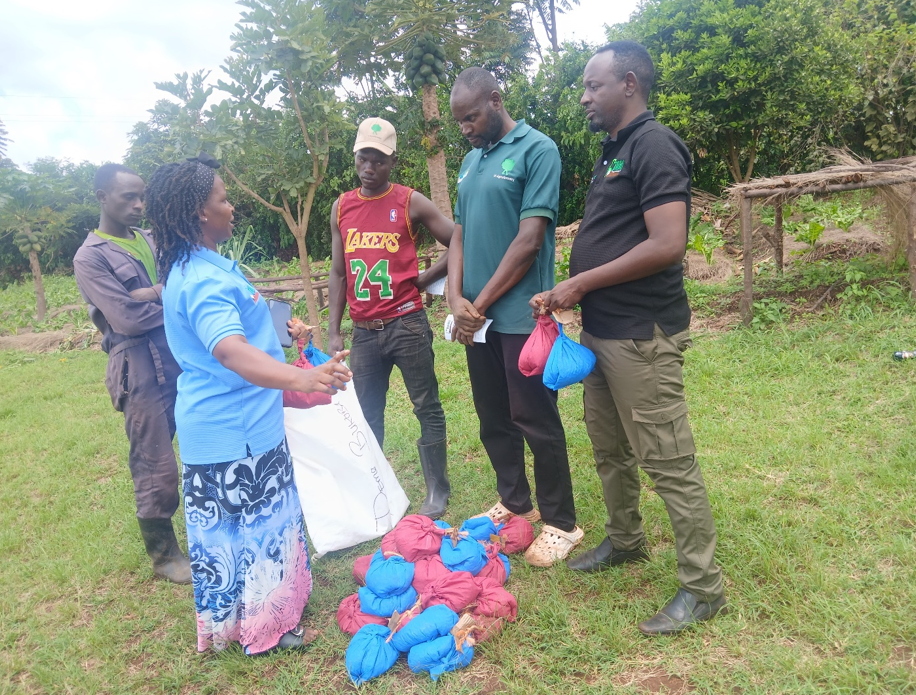
Photo 2: Demo giving to Mavuno production staff in Kagera
The company expressed a clear preference for groundnut varieties with high oil content, red or tan seed coat color, and suitability for direct consumption (chewing).
Through the ACCELERATE project, TARI introduced several candidate varieties that aligned with these quality and market specifications. Following field evaluation and assessment against the company’s processing standards, three varieties were selected: Naliendele 2016 and Tanzanut 2016 (both released in 2018), and Mnanje 2009. These varieties were chosen based on their strong conformity with Mavuno’s processing requirements and end-market preferences, ensuring both product quality and commercial viability. This coordinated approach enhances farmer access to quality seed, improves production, and strengthens market integration.
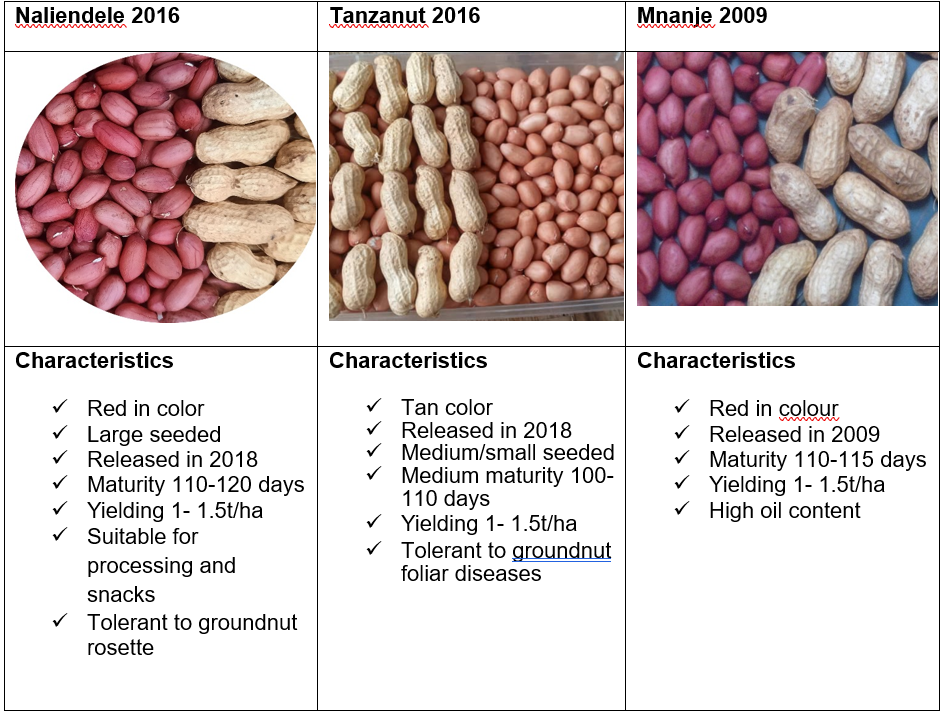
Table 1: Groundnut varieties selected by Mavuno based on market demand and quality criteria
Strengthening Multi-Stakeholder Platforms (MSP)
As part of its growth strategy, the company is leading a Multi-Stakeholder Platform (MSP) that brings together research institutions, seed producers, and local government authorities to improve farmers’ access to quality seed, technical knowledge, and other essential inputs for groundnut production (Table 1). ACCELERATE facilitated strategic linkages among these actors, ensuring more coordinated access to key technologies and services required by farmers.
Key components of the MSP include seed provision from institutions such as TARI, ASA, and DASPA; seed inspection and certification services provided by TOSCI; and extension support from Local Government Authorities. In addition, collaboration opportunities have been established with other groundnut grain producers, including Bora Food, Nteminsambo, and Seasoning Pallate, to strengthen market linkages and knowledge exchange across the value chain (Mwakatwila et al 2024; Radegunda et al 2024).
The company is also exploring the use of digital tools and online platforms to connect MSP actors more effectively and to collect data on technology adoption and remaining gaps. Through this MSP approach, Mavuno aims to strengthen the groundnut value chain for farmers in Kagera and beyond, support long-term business viability, and contribute to improved farmer livelihoods.
MAVUNO’s Key Profile
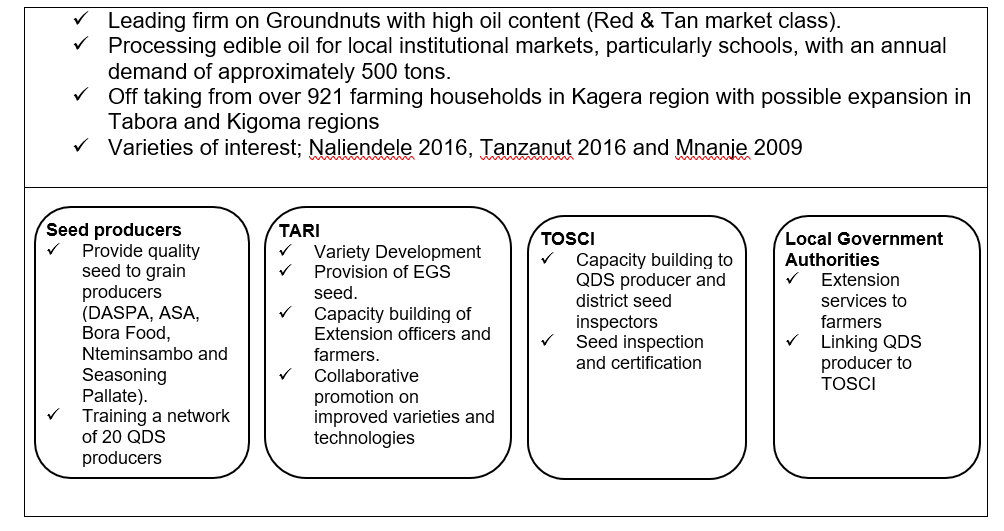
Table 2: Mavuno led Multistakeholder Platform (MSP)
Conclusion
Rising consumer awareness of groundnut oil’s health benefits presents a strategic opportunity for MAVUNO to expand and strengthen its position in Tanzania’s edible oil market. Accelerating adoption of improved varieties such as Naliendele 2016 and Tanzanut 2016 is essential to securing a consistent, high-quality raw material supply.
By creating stable grain demand, MAVUNO generates a seed demand-pull that:
- Incentivizes seed producers
- Encourages farmer adoption
- Increases productivity
- Expands employment opportunities
- Strengthens livelihoods across the groundnut value chain
This grain trader-led seed delivery model demonstrates how coordinated value chain actors can accelerate varietal adoption and transform seed systems sustainably.
References:
Mwakatwila, A.; Kimisha, J.; Ochieng, J.; Majambele, M.; Radegunda, K.; Mwanambuu, D.; Bujiku, A.; Alex, G.; Madeni, J.; Kibaraza, A.; Rubyogo, J.C.; Templer, N.; Gichuru, L.; Ojiewo, C.O. (2024) Demand led seed system accelerates adoption of improved bean, sorghum, and groundnut varieties in Tanzania. 8 p. https://hdl.handle.net/10568/162718.
Ngoma-Kasanda, E. and Sichilima, T. (2016). Gender and Decision Making in Agriculture: A Case Study of the Smallholder Groundnuts Sector in Zambia. MUSIKA Development Initiatives
Ochieng, J., Birachi, E., Radegunda, K., Rubyogo, J.C., Odhiambo, W., Masimane, J., Mbugua, M., Kitoto, V., Sperling, L., Mutua, M., Kasubiri, F., Kalemera, S., Steinke, J., Munguatosha, N., Daudi, H., Shida, N., Mwenda, E., Mbiu, J., Ndunguru, A., Kibaraza, A., Marenya, P., Rutsaert, P., Van Etten, J., Ojiewo, C., Bahitwa, R., Templer, N., Upendo, T., Kilango, M., Maganga, R., Mbapila, S., Mollel, S., Mdachi, M., Gerald, A., Bakari K., Devota M., Rahmna C., Kadege E., Kimisha, J. (2023) Accelerated varietal turnover for open-pollinated crops ( beans, sorghum, groundnuts) in Tanzania – seed sector stakeholders’ landscaping. Baseline Report. 134p.
Radegunda K.; Mwakatwila, A.;., Ochieng,J.; Majambele, M., Bujiku, A. & Rubyogo, J.C (2025) Exploring Impact of Ntemisambo Company’s New Groundnut Varieties in Katavi Region, Tanzania. https://www.pabra-africa.org/exploring-impact-of-ntemisambo-companys-new-groundnut-varieties-in-katavi-region-tanzania/
Reuben, F. M. and Meliyo, J. L. (2022). Unlocking Opportunities in Edible Oil Crop Production and Market Dynamics to Accelerate Agricultural Investment in Kagera Region, Tanzania. International Journal of Environment, Agriculture and Biotechnology Vol-7, Issue-3.
Rutsaert, P., J. Donovan, and H. Daudi. 2024. Value proposition for improved groundnut seed in Tanzania: Why and how to increase it. Market Intelligence Brief Series 14, Montpellier: CGIAR. CG Space Repository.
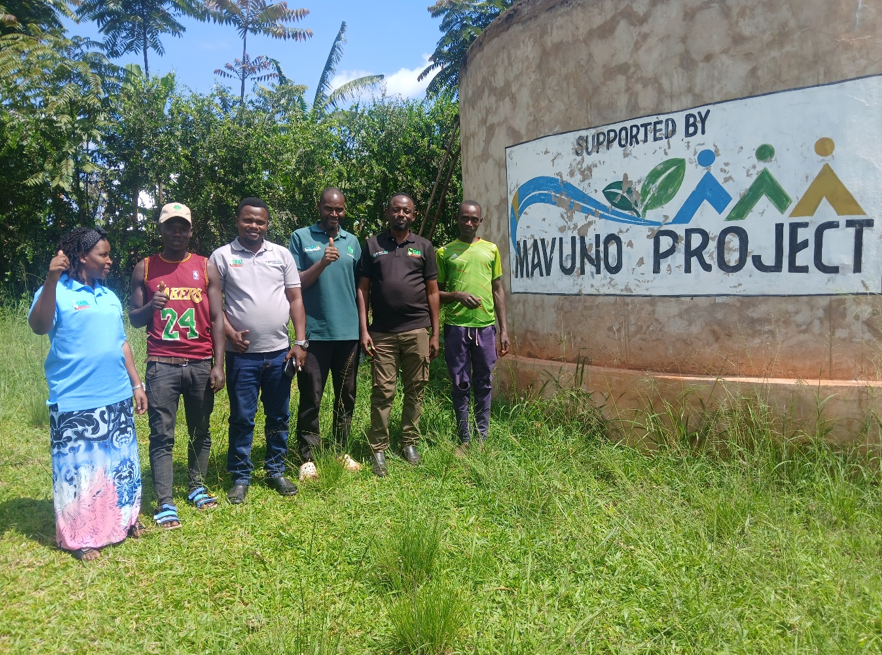
Cover Photo: 1 ACCELERATE led by TARI Team visiting Mavuno premises in Kagera region