
By Jeremiah Sigalla1, Napoleon Kajunju2, Adebola Awotide2, Jean Claude Rubyogo2
1World Vegetable Center
2Alliance of Bioversity International and CIAT/PABRA
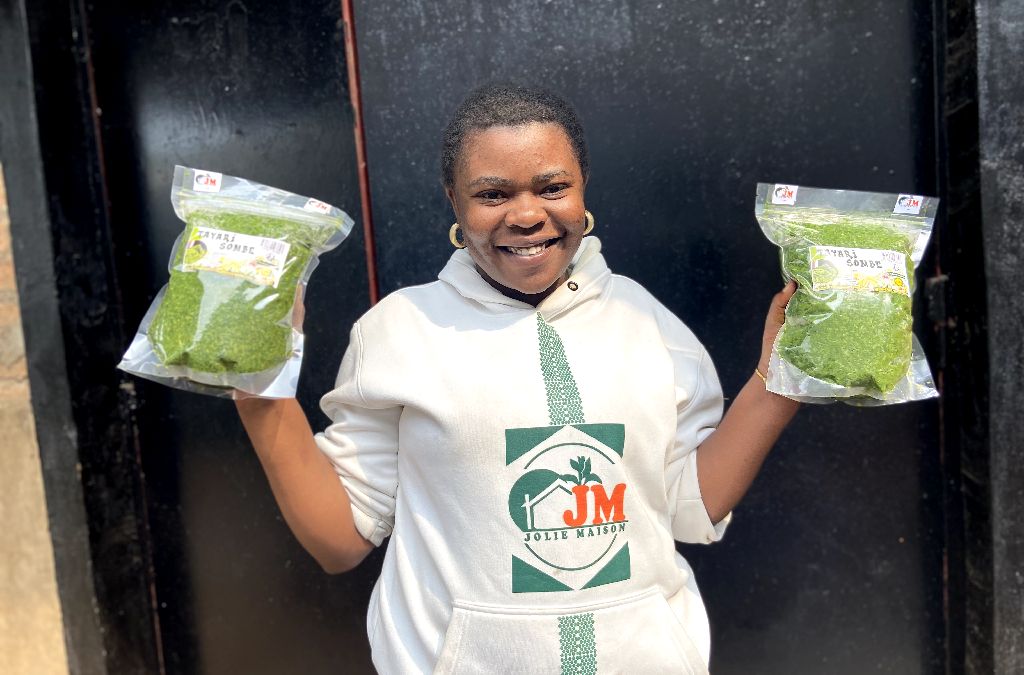
In Bukavu’s fast-moving, fragile market, leafy vegetables spoil quickly. For 30-year-old Julie Ishara, this reality shaped a simple rule: leafy vegetables don’t wait. Every morning, she washes, trims, cuts, and packs fresh vegetables into ready-to-cook bundles, delivering safe, high-quality produce to customers who value convenience.
Julie started selling vegetables in 2022 to support her three children and occasionally her extended family. Early growth was slow: monthly sales ranged from 150–400 kg, while post-harvest losses reached 20–40%. Limited packaging, no cold storage, and restricted market access meant spoilage often wiped-out daily profits.
A turning point came in late 2025 when Julie attended a Beans for Women Empowerment (B4WE) training, financed by Global Affairs Canada (GAC) and facilitated by the World Vegetable Center (WorldVeg). The training strengthened her skills in post-harvest handling, hygiene, packaging, entrepreneurship, and digital marketing. Julie quickly applied the lessons, improving sorting and hygiene, upgrading to sealed and branded packaging, managing heat exposure, and expanding her product range to include amaranth, pumpkin leaves, cabbage, and cassava leaves.
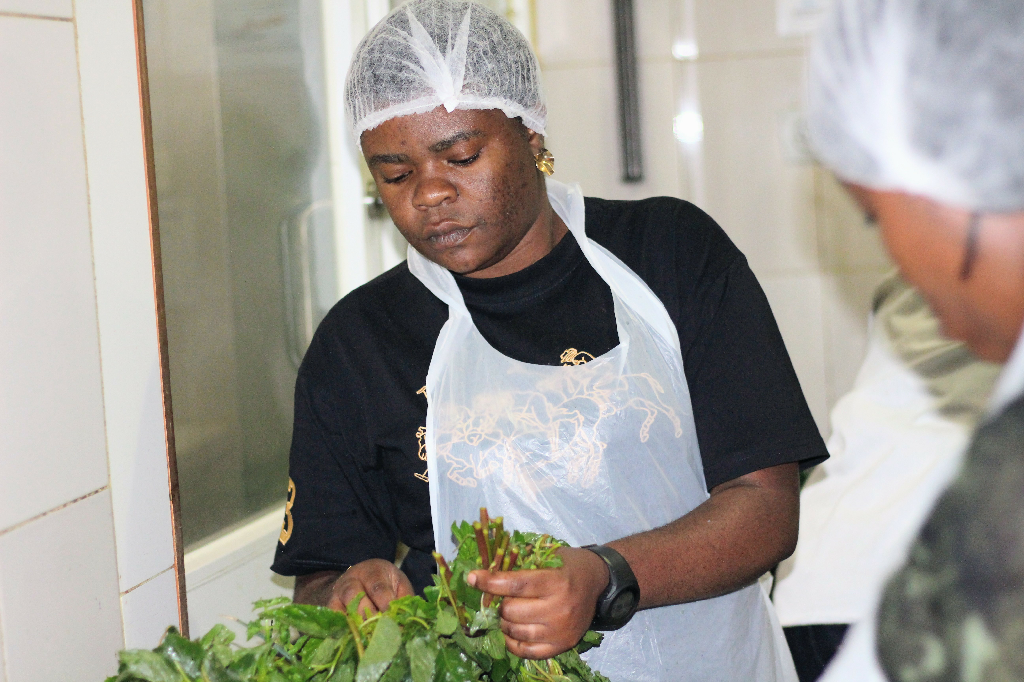
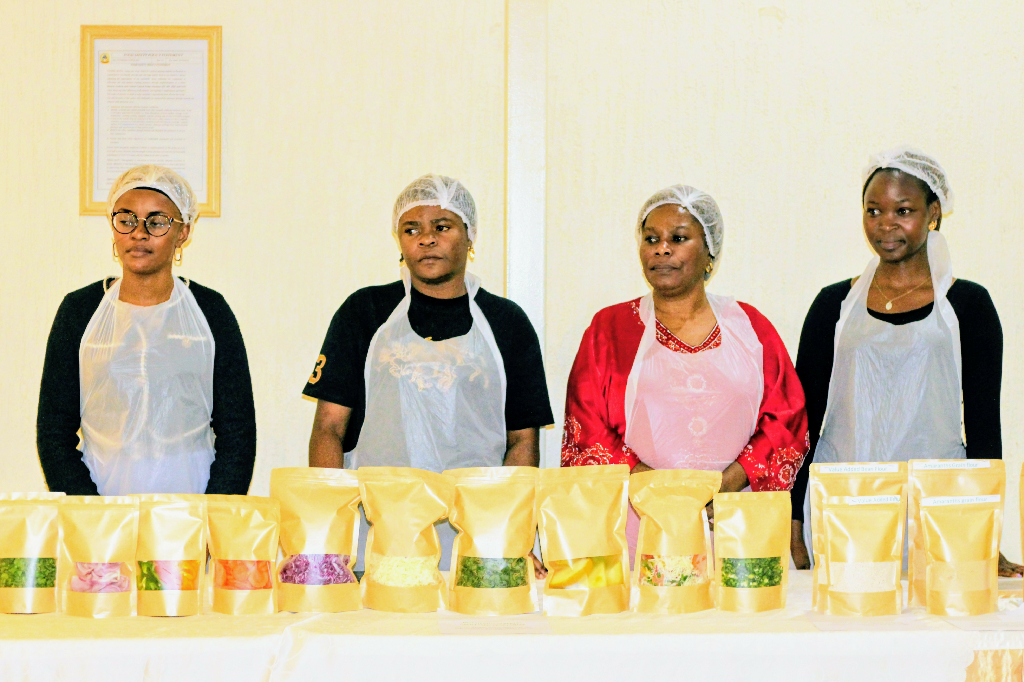
Julie displaying ready-to-cook packages of amaranth, onion, cabbage, and pumpkin leaves prepared during a hands-on demonstration of minimal processing. Photo credit: WorldVeg.
Julie leveraged digital marketing to transform her business. Shifting from walk-in sales to an order-based model via WhatsApp and Facebook with home delivery, she now receives 75% of orders in advance, enabling better volume planning, reduced waste, and faster stock turnover. She also strengthened her supply chain by training 15 suppliers linked to 300 smallholder farmers, improving quality at the source and stabilizing supply.
The results are remarkable. Julie’s monthly sales grew from USD 350–750, previously hampered by high post-harvest losses, to USD 1,750, while losses dropped dramatically to just 2–4%. She now sells 1 kg packs to households at USD 2.50 and 1.5 kg packs to hotels at USD 3.00.
“When I improved handling and packaging, customers trusted the quality. With WhatsApp orders, I can plan better and lose much less than before,” Julie says.
Having been made aware of the benefits of mobile money (Airtel Money) and microfinance services (SMICO), Julie now saves consistently and has reinvested in essential processing and marketing tools, including scales, knives, buckets, worktables, colanders, branded packaging, and a smartphone. These investments exemplify B4WE’s approach to empowering women by enhancing income, assets, decision-making, and resilience.
Demand for Julie’s ready-to-cook vegetables continues to grow. Her main limitation is cold storage. With a cool chamber, vacuum sealing, a solar dryer, and additional working capital, she estimates she could scale from 700 kg to 3–5 tons per month, further reducing losses, expanding markets, and benefiting hundreds of farmers and her household.
This activity is part of the Beans for Women’s Empowerment (B4WE) project, funded by the Government of Canada through Global Affairs Canada. The project is implemented by the Alliance of Bioversity International and CIAT, with technical contributions from the World Vegetable Center (WorldVeg).
Cover Image: Julie at her home-based processing facility in Bukavu, holding ready-to-cook leafy vegetable packs prepared for customers. Photo credit: Julie’s family.