
By Napoleon Kajunju, Lydie Mulonda, Jean Claude Rubyogo
In the eastern Democratic Republic of the Congo, life is often shaped by uncertainty. In the provinces of North Kivu, South Kivu, and Tanganyika, for instance, armed conflicts, chronic insecurities, and persistent gender inequalities have long silenced women’s ambitions. For many, producing beans, which is a staple food and a pillar of national food security, was less a pathway to opportunity than a struggle for survival. Unstable incomes, limited access to land, and the absence of structured markets left little room for hope.
Yet, at the heart of this landscape marked by despair, a quiet transformation has been unfolding. Funded by Global Affairs Canada (GAC) and implemented by the Alliance of Bioversity International and CIAT, through Pan-Africa Bean Research Alliance (PABRA), the Bean for Women Empowerment (B4WE) Project made the bold choice to turn a subsistence crop into a driver of dignity, autonomy, and hope. Now approaching the end of its third year, B4WE is no longer responds only to emergencies, but it is reshaping the rules of the game for the long term.
Where precarity and informality once prevailed, B4WE has planted skills, confidence, and vision. Women who were once invisible in local economies are now leading structured enterprises capable of negotiating, processing, and delivering. Through targeted training in business management, agro-processing, and access to financial services, 14 women-led enterprises have, for the first time, signed formal contracts with governmental and non-governmental institutions. For some women-led cooperatives, the adoption of certified seeds and structured brokerage mechanisms has tripled initial incomes. In the context of high inflation, these gains are far more than numbers, they mean secure meals, children staying in school, and dignity restored.
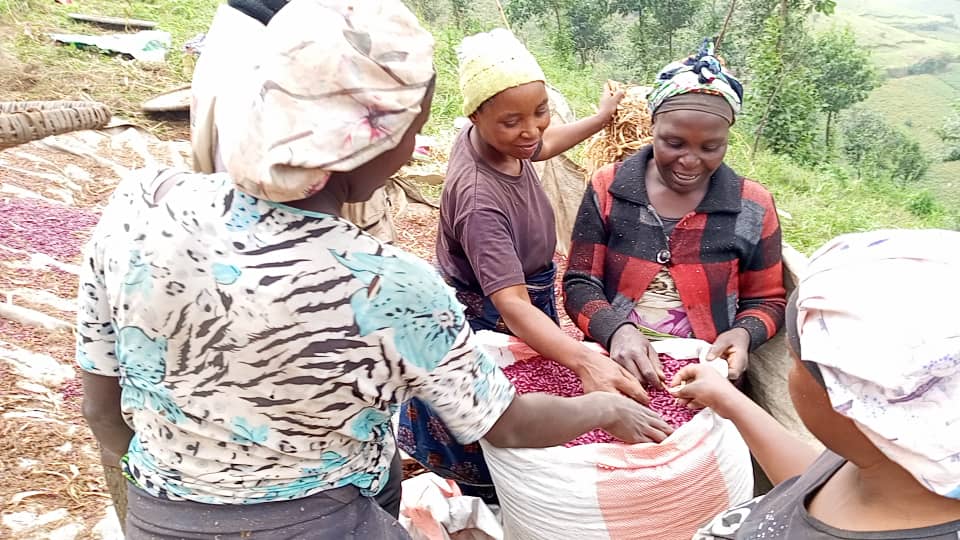
Farmer group under Cooperative Tuungana enjoying the fruit of their harvest. Photo credit: Zaina Cooperative Tuungana.
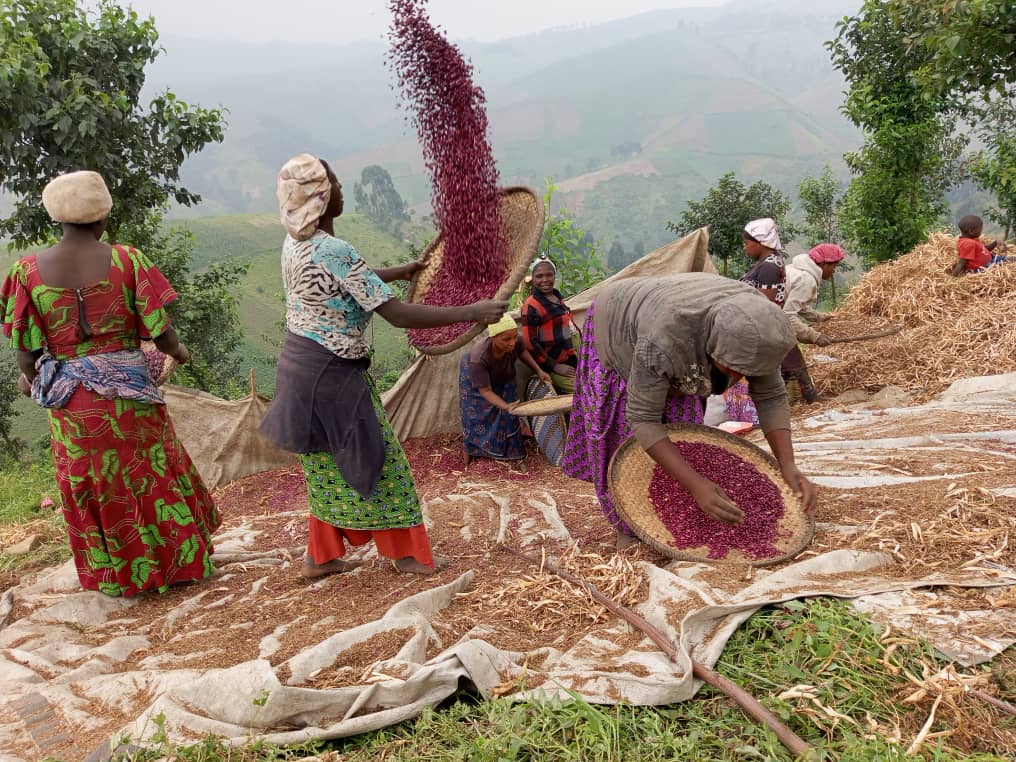
Despite ongoing insecurity, B4WE has successfully connected remote rural areas to urban centers through the bean corridor approach. As a result, more than 23,800 women have increased their profit margins by 10 to 15 percent, helping stabilize households that had long been vulnerable to economic shocks.
But hope is not measured by income alone, it is also reflected in improved health and nutrition. Confronted with climate disruptions and chronic malnutrition, B4WE has invested in innovation and science. More than 17,000 producers, including 10,500 women, now use certified biofortified seeds and climate-smart agricultural practices. The impact is tangible: average daily consumption of iron-rich beans has risen from 7.9 grams to over 60 grams per person. By the project’s second year, more than 417,000 people, 61 percent of them women, had access to nutritious beans. This year, an additional 470,000 people are expected to benefit from these iron-rich varieties. For thousands of families, these beans are more than food; they are a powerful weapon against anemia, chronic fatigue, and the nutritional deficiencies that undermine the future of mothers and children.
B4WE is grounded in a fundamental truth: without secure access to land, women’s empowerment remains fragile. In a country where land tenure is often a source of conflict, the project chose dialogue over confrontation. Through sustained engagement with customary leaders, 215.5 hectares of land have been secured for women’s use. This step, modest in appearance, is deeply transformative. It paves the way for more inclusive land governance and helps ease long-standing tensions. At the same time, leadership training and household budget management sessions have helped rebalance power dynamics within families. Women are no longer seen merely as agricultural laborers, but as decision-makers, investors, and full economic actors.
The road ahead remains long. The sustainability of these achievements will depend on the ability of farmer organizations and women-led enterprises to maintain and expand commercial networks beyond the life of the project. Yet one thing is now certain: change is underway. By investing in women and in the bean value chain, Global Affairs Canada, alongside CIAT and PABRA, has not merely funded a project. They have helped restore confidence, strengthen resilience, and rekindle hope in a region too often defined by conflict.
In eastern DRC, the bean has become far more than a crop. It is the symbol of a future made possible.
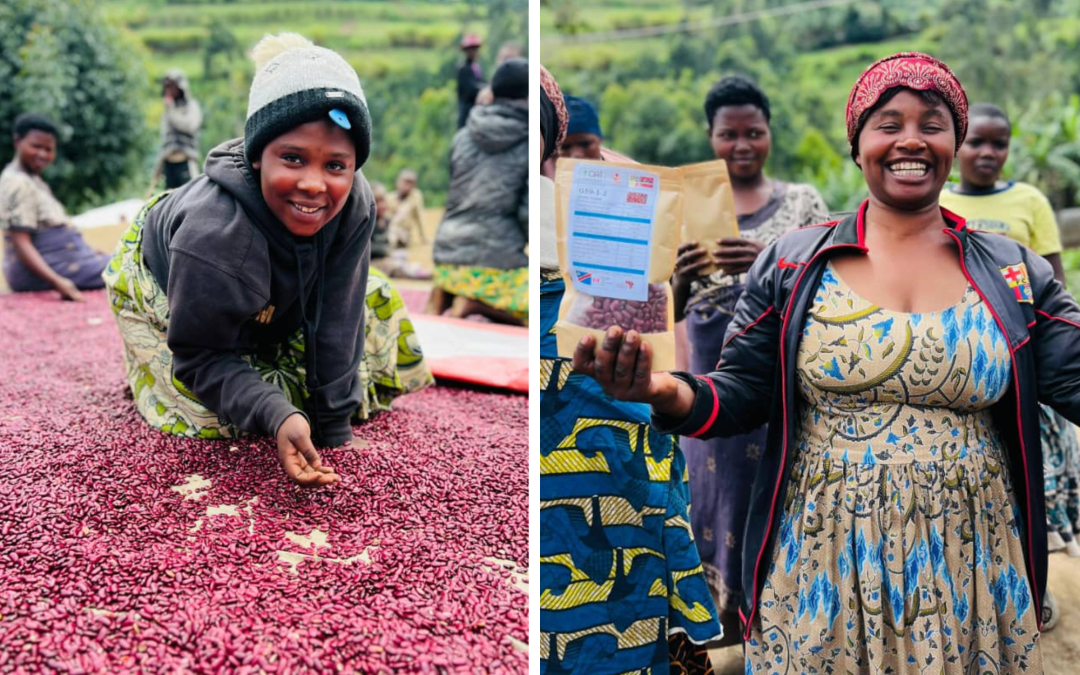
Cover image: Farmer group under Cooperative Tuungana sorting and drying their beans and receiving small packs of new beans varieties for testing in their home gardens. Photo credit: Zaina Cooperative Tuungana.