
By Justus Ochieng, Radegunda Kessy, and Atupokile Mwakatwila (Alliance of Bioversity International and CIAT/PABRA); Esther Majija (Fortlene)
When Esther Majija launched Fortlene Bakery Ltd in Babati township in 2022, her vision was simple but purposeful: to produce nutritious bread and cookies using locally available ingredients. She worked with wheat flour, orange-fleshed sweet potatoes (OFSP) and OFSP chips, roasted cashew nuts, roasted peanuts, and peanut butter. Her commitment to wholesome, locally sourced foods quickly caught the attention of customers across Babati. Yet from the beginning, Esther believed her idea could grow far beyond baking.
As her business expanded, Esther recognized the need to diversify and deepen her knowledge of food processing. A turning point came when she received hands-on training at Babati SDA Church through a program delivered by BIVAC Tanzania Company, a food processor based in Arusha. BIVAC specializes in producing nutritious flours from biofortified crops to combat malnutrition among women and children.
During the training, Esther learned how to process biofortified common beans into flour and how to formulate nutritious composite blends combining common beans, maize, and sorghum. The experience broadened her skills beyond baking bread and revealed the vast potential of agro-processing, particularly the production of nutritious flours using biofortified bean varieties such as TARI Bean 6 and JESCA.
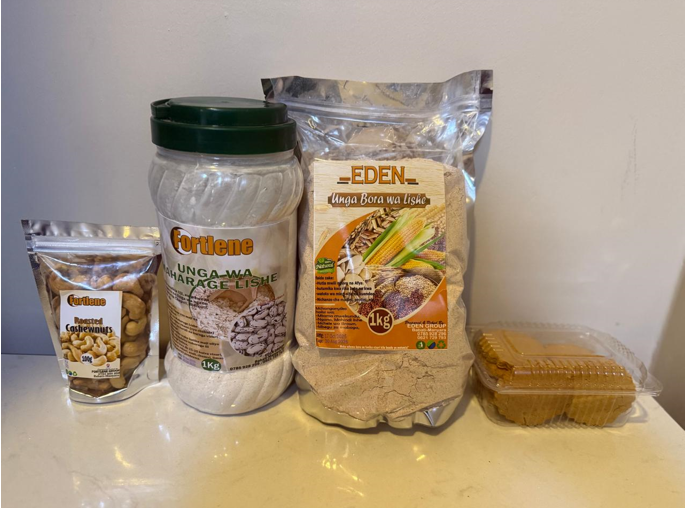
A selection of Fortlene Company products, roasted cashew nuts, high-iron bean flour, sorghum-based flour, and bean-based cookies, showcasing the company’s growing product range
Her encounter with the CIAT/PABRA-led Initiative
Esther’s next milestone came in May 2024, when she joined the ACCELERATE Project—an opportunity that connected her to new partners, markets, and improved varieties of sorghum, groundnuts, and common beans. Through the project, she was linked to the Tanzania Agricultural Research Institute (TARI), as well as seed producers Dodoma Agricultural Seed Production Association (DASPA), and CBS. These partnerships laid the foundation for a multi-stakeholder platform (MSP), bringing together a farmer group in Babati comprising 26 members, who now supply her with high-iron bean grain, primarily the TARIBEAN 6 variety.
These partnerships proved transformative, granting Esther access to improved, high-quality, and climate-resilient crop varieties essential for producing premium flours and value-added products. Through these institutions, she obtained certified seed of TARISOR 1 sorghum, preferred for producing flour suitable for ugali – a local staple food; TARISOR 2 sorghum, valued for its good taste and widely used for porridge and school meals; TARIKA 2 and Tanzanut 2016 groundnuts, both high-yielding, high-quality varieties; and TARIBEAN 6 common beans, a biofortified variety rich in iron and zinc and strongly demanded by the market. TARIBEAN 6 beans contain much higher levels of zinc and iron than ordinary beans. One kilogram of TARIBEAN 6 provides about 36-41 milligrams of zinc and 64-72 milligrams of iron, making it an important ingredient for producing nutritious food products.
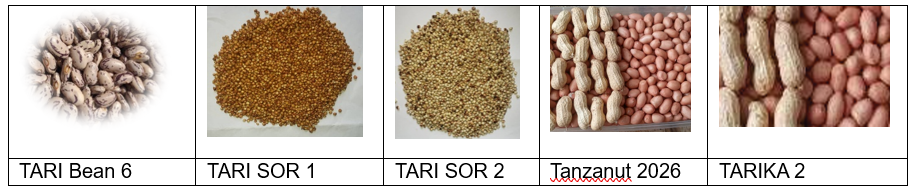
Fortlene’s preferred varieties
During the 2025/2026 season, these improved seeds were distributed to the farmers Esther works with – enabling them to produce high-quality grain that she later purchases for processing. This model is building a dependable and mutually beneficial value chain for both farmers and the enterprise.
In less than a year, Esther’s company has grown into a promising agri-processing business, processing 1–1.5 metric tons of common beans, 1 metric ton of sorghum, and 2 metric tons of groundnuts. To ensure a steady supply of grain for processing, particularly sorghum and groundnut, the ACCELERATE Project team also linked her with Mwakiseyo Traders and Chilingo Traders from the Mpwapwa Town in Dodoma.
These volumes reflect not only rapid business growth—starting from zero in January 2024—but also strengthened partnerships with local farmers, who now benefit from steady demand and better market prices for their produce. Farmers further benefit from access to improved seed varieties provided through TARI, DASPA, CBS, and Quality Declared Seed producers introduced through the project, enabling them to increase both yields and incomes.
Market reach and product acceptance
Esther’s products are increasingly recognized for quality and nutritional value. Most are sold in Babati Town, where her brand has gained trust of both rural and urban households. Additionally, she has secured supply agreements with eight schools, providing them with composite flour blends made from sorghum, maize, and biofortified beans. Demand from these schools ranges between 40 and 60 kgs per month, with the flour mainly used to prepare porridge and ugali, helping to improve the nutritional intake of schoolchildren.
Beyond Babati, Esther expanded her market reach in 2024 after identifying a sales agent in Dar es Salaam through the National Agricultural Show (NaneNane). This connection has opened new urban market opportunities for her products.
The preference for TARISOR 1 as a superior ugali flour and TARISOR 2 for good taste demonstrates how customer feedback and varietal qualities shape product portfolio. Schools especially appreciate TARISOR 2 because its blended taste, color and texture appeal to children.
A vision rooted in growth, partnerships, and transformation
Esther’s vision for the next two years is bold and focused: to expand her product range, increase processing capacity, and reach new markets through a reliable supply of high-quality raw materials from farmers. With strong partnerships and a steady flow of improved seed, her business is well positioned to grow.
Her journey goes beyond profit, contributing to a future where farmers have access to quality seeds and stable markets, helping to reduce hunger and poverty. By producing affordable, nutritious foods for households and schools, she supports better health and well-being. Her enterprise also creates opportunities for women and youth in farming and agro-processing, while strengthening local value chains and keeping more income within the community. In doing so, Esther’s work touches on key global goals for ending hunger, improving health, promoting equality, fostering economic growth, and building sustainable local industries.
From a small bakery to a rising agri-food enterprise, Esther Majija represents the power of opportunity and determination. Supported by partnerships through Alliance of Bioversity International and CIAT/PABRA’s ACCELERATE Project, she is creating a model where business success and community wellbeing grow hand in hand.
Her story is still unfolding—a story of innovation, resilience, and a vision big enough to lift both her enterprise, unlocking potential of a vibrant seed system of Open Pollinated Varieties and the farmers who walk this journey with her.
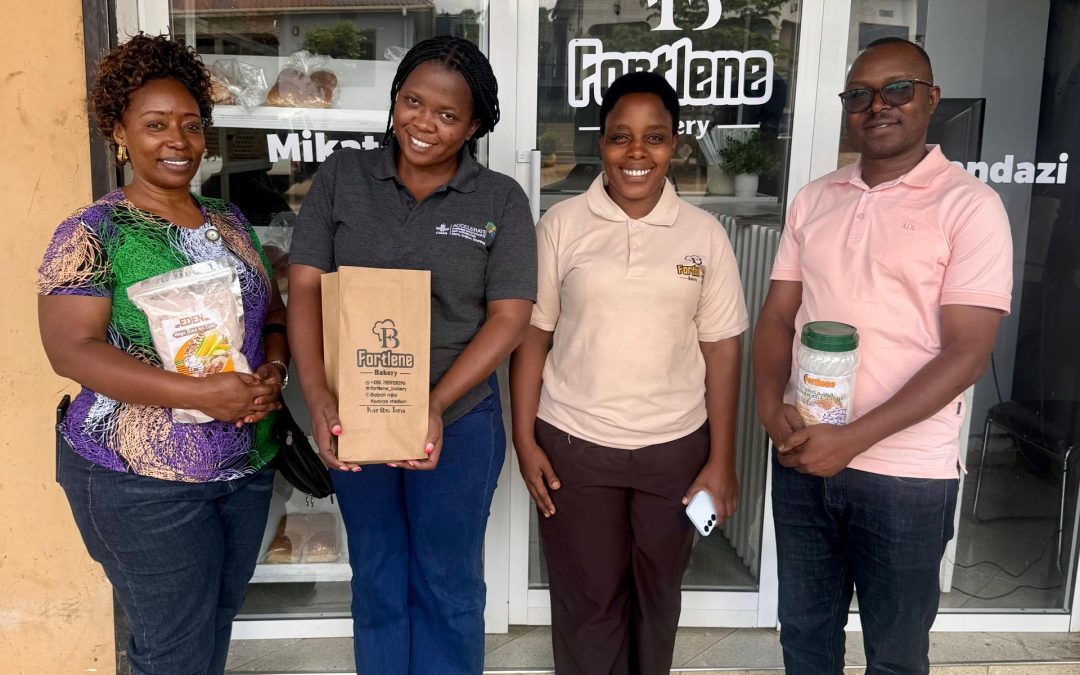
Cover Photo: Esther Majija, second from right with CIAT Scientists at her shop in Babati town
📷: CIAT/Justus Ochieng