
By Emmanuel Mwenda, Eliud Kongola, Joachim Madeni (Tanzania Agricultural Research Institute, Dodoma), Juma Kapiligi, Radegunda Kessy, and Justus Ochieng (Alliance of Bioversity international and CIAT, Arusha, Tanzania)
Transforming Seed Access in Tanzania’s Drylands
In the semi-arid landscapes of Mpwapwa District in Dodoma, farming is often a gamble against unpredictable weather and challenging growing conditions. Yet amid these uncertainties, BESTO Enterprises & General Supplies Ltd is helping smallholder farmers gain access to improved seed varieties that can withstand local conditions and deliver better yield.
Founded by an energetic Ayubu Luhunga, has emerged as a key player in expanding access to open-pollinated varieties (OPVs), particularly newer varieties released within the last decade, and better suited to local conditions. Through its work, BESTO is directly contributing to the goals of the Accelerated Variety Turnover (ACCELERATE) Initiative by ensuring that improved seeds reach farmers faster, more affordably, and at scale.
Driving Innovation Through ACCELERATE
BESTO operates within the ACCELERATE Initiative, led by Alliance of Bioversity International and CIAT, in collaboration with Tanzania Agricultural Research Institute (TARI), International Maize and Wheat Improvement Center (CIMMYT), and Tanzania Official Seed Certification Institute (TOSCI). The Initiative promotes innovative seed delivery models that connect grain traders and processors directly with seed producers and farmers.
A standout approach is the grain off-taker model, where traders like BESTO work closely with farmers and seed producers, particularly through TOSCI-supported Quality Declared Seed (QDS) production. Under this, seeds are produced and distributed with a built-in market pathway. Farmers produce grains using improved seeds and sell back through structured channels, creating a cycle in which access to quality seed, higher productivity, and reliable markets access reinforce one another.
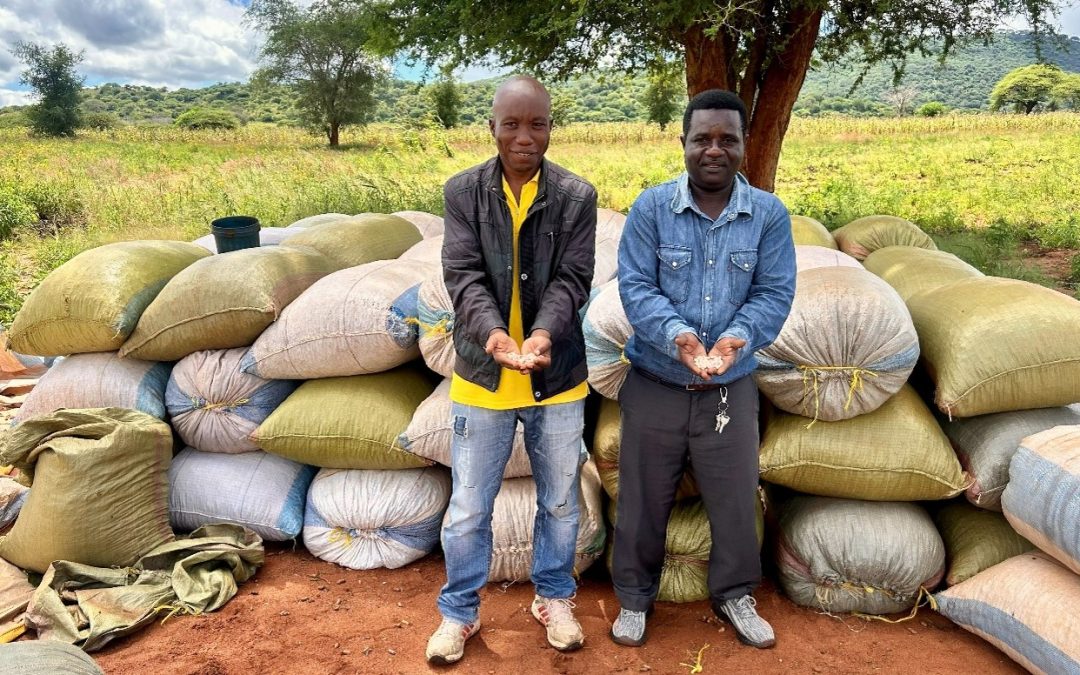
A key factor behind BESTO’s success has been its partnership with Mwakiseyo Traders, another ACCELERATE project collaborator. Together, the two companies are multiplying QDS seed of improved sorghum variety TARI SOR 2 and the groundnut variety TARIKA 2 for distribution to more than 700 farmers in Mpwapwa District. To ensure seed quality and genetic purity, TARISOR 2 seed was sourced from Kibaigwa Flour Supplies (KFS), where eight acres were established for seed multiplication. TARIKA 2 seed was sourced from TARI Hombolo in Dodoma, with 10 acres planted during 2025/2026 season. The partnership is strengthening local seed availability, while accelerating farmers’ access to TARI’s newly released improved varieties of open pollinated crops.
From Grain Trading to Seed Production
BESTO’s evolution reflects the power of knowledge and initiative. Ayubu’s entry into the seed sector was inspired by Geoffrey Mwakiseyo, owner of Mwakiseyo Traders company in Mpwapwa, an early ACCELERATE Project collaborator trained at Kibaigwa Flour Supplies (KFS) as QDS producer. Encouraged by the opportunities in the seed sector, Mr. Ayubu pursued formal training at TOSCI in Morogoro, where he acquired the technical knowledge and certification needed to produce seed. What started as a small grain trading business gradually evolved into a structured enterprise focused on improving farmer productivity through quality seed.
The company has since moved away from older varieties such as NACO Mtama 1 and MACIA, focusing instead on newer, publicly bred varieties. Today, BESTO promotes TARI SOR 2, released in 2021, and TARIKA 2, released in 2024. TARI SOR 2 is valued for its high yields, resilience to harsh conditions, resistance to Striga weed, and ability to withstand bird damage—two major challenges for sorghum farmers. TARIKA 2, meanwhile, is attracting farmers because of its early maturity, strong yields, and resistance to rust disease, making it particularly well suited to local production systems.
A Farmer-Centered approach
A key strength of BESTO lies in its deep engagement with farmers. The company organized and supported three farmer groups across Lupeta, Chitemo, and Iwondo wards, reaching approximately 700 farmers. These groups serve as platforms for training, seed distribution, and production coordination, and grain aggregation. Farmers receive guidance on Good Agricultural Practices (GAPs), while mechanization services help farmers improve efficiency in both seed and grain production.
To overcome seed affordability barriers, BESTO introduced a seed credit scheme. Farmers receive improved seeds at planting and repay after harvest, eliminating the need for upfront cash. This approach has enabled many farmers to transition from recycled seeds to certified and QDS seeds, significantly increasing adoption rates.
Expanding QDS Production and Adoption
Over the past three years, BESTO has expanded its QDS production across sorghum, groundnuts, and sunflower. Current production covers eight acres of sorghum, ten acres of groundnuts, and ten acres of sunflower. Sorghum, particularly TARISOR 2, has become the company’s flagship crop. Farmers appreciate the variety’s resistance to bird damage, consistent performance, and strong market demand. Compared to older, mixed varieties, it offers greater reliability and produces the white grain preferred by many buyers. In its inaugural seed production cycle, BESTO projects a successful 2025/2026 harvest, with expected yields exceeding seven tons of sorghum seed and more than three tons of clean groundnuts seed.
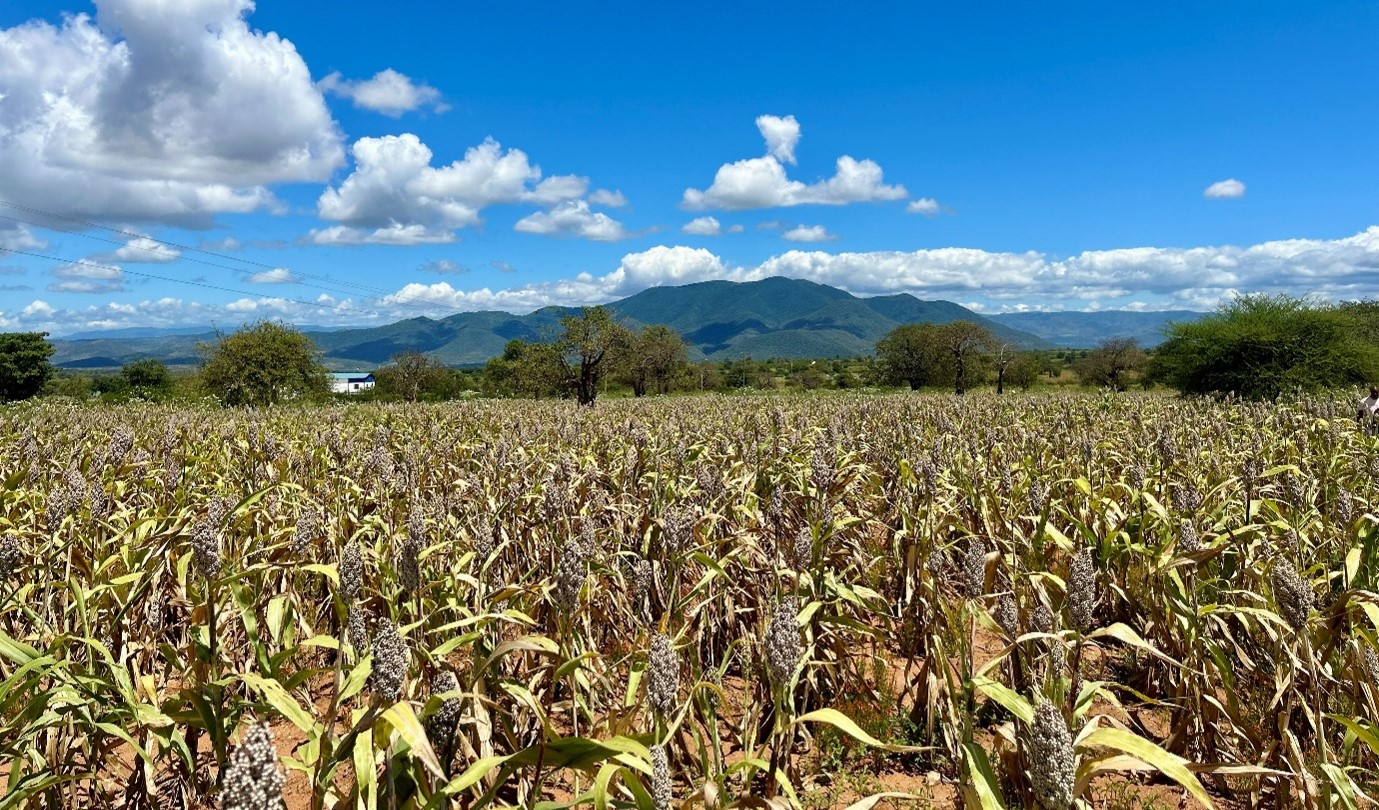
TARISOR 2 sorghum grown under Quality Declared Seed (QDS) production by BESTO Enterprises and Mwakiseyo Traders in Mpwapwa District.
Photo credit: CIAT
Connecting Farmers to Markets
Reliable markets have been central to BESTO’s success. Through business-to-business linkages facilitated by the ACCELERATE in 2025, the company has secured buyers in Dodoma and expanded into cross-border markets, including Uganda and Rwanda.
In 2024, BESTO facilitated the supply of thousands of tons of sorghum to both domestic and international markets, demonstrating the scalability of its model. Groundnuts are also gaining traction, with strong demand from informal export markets. During the 2025/2026 season alone, traders sourced approximately 69 tons of groundnuts from Mpwapwa, highlighting the growing economic value of improved varieties and organized systems.
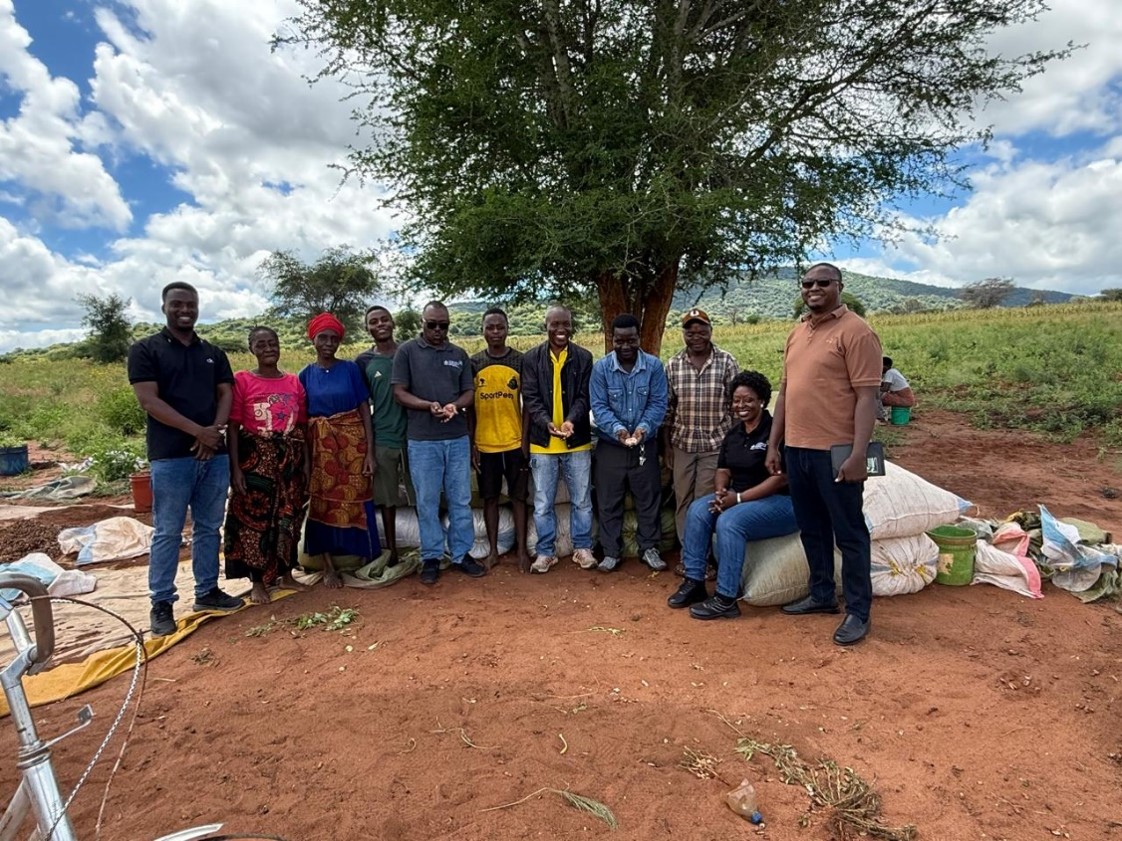
Ayubu (4th from right), and Mwakiseyo (5th from right) with ACCELERATE research team during their visit to groundnut seed production site.
Photo credit: CIAT
Launch of the QDS Outlet in Mpwapwa District
July 20, 2026, marked a historic milestone with the launch of the first QDS outlet in Mpwapwa District. This achievement represents another significant step in the institutional change journey driven by BESTO Enterprises and Mwakiseyo Traders.
The event was led by the TOSCI in collaboration with BESTO Enterprises, Mwakiseyo Traders, the Alliance of Bioversity International and CIAT, and TARI. The establishment of a formal QDS outlet is expected to improve farmers’ access to quality seed by ensuring seed availability closer to their communities whenever needed. This development will also contribute significantly to the acceleration of improved variety adoption in the district.
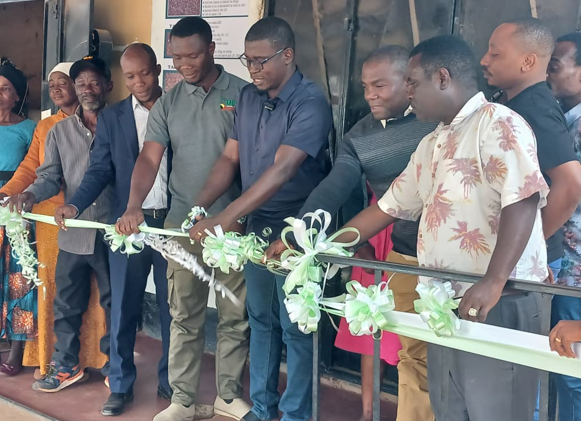
Official launch of the QDS outlet in Mpwapwa District by TOSCI. From left: Ayubu Luhunga (dark blue suit), Jonathan Kazungu (TARI), Areth Kibaraza (TOSCI), Said Illah (TOSCI) and Geoffrey Mwakiseyo (Mwakiseyo Traders) participate in the ribbon-cutting ceremony to officially inaugurate the first QDS outlet in Mpwapwa District
By bringing seed services closer to farmers, the outlet will reduce transportation costs and enhance farmers’ willingness and ability to access and adopt improved seed varieties. Furthermore, the involvement of TOSCI provides assurance on seed quality standards, helping to strengthen farmers’ confidence in the seeds available through the outlet.
The launch of the QDS outlet demonstrates the commitment of all partners to strengthening local seed systems, increasing the availability of quality seed, and improving agricultural productivity and resilience among farming communities in Mpwapwa District.
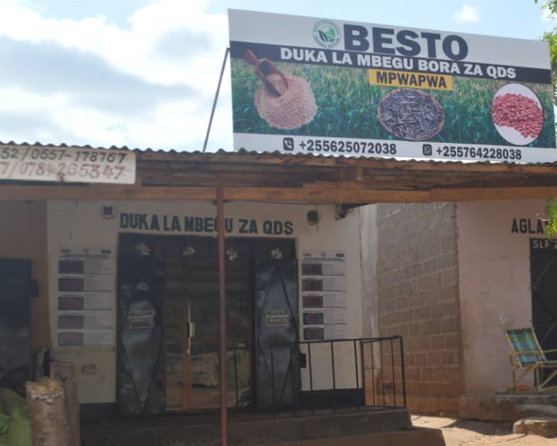
The new QDS Outlet in Mpwapwa District owned by Besto enterprises
Challenges and Forward Strategy
Despite its progress, BESTO faces several challenges. Limited access to finance, loan payment defaults by farmers, and weak collaboration with government extension services constrain growth and affect cash flow. Nonetheless, Ayubu remains committed to expanding seed production and serving over 700 farmers with QDS. The company is exploring partnerships with financial institutions, including commercial banks, to strengthen its capital base and support future expansion.
BESTO is also investing in learning and capacity development. Planned activities include exchange visits with established seed companies, staff training in QDS production, and stronger engagement with district-level platforms to improve access to certification and regulatory support.
A practical model for Accelerating Variety Turnover
BESTO Enterprises demonstrates how locally driven agribusinesses can play a transformative role in accelerating the adoption of improved open-pollinated varieties. By combining QDS production, farmer organization, seed credit schemes, mechanization support, and market linkages, the company has built an integrated system that connects research institutions, seed suppliers, farmers, and grain markets. This approach has enabled improved varieties such as TARISOR 2 and TARIKA 2 to move more rapidly from research into farmers’ fields and commercial markets.
Its partnership with Mwakiseyo Traders further illustrates the value of collaboration in strengthening local seed systems. Together, the two enterprises are improving the availability of quality seed while helping over 700 farmers access improved sorghum and groundnut varieties.
As Tanzania continues to pursue agricultural transformation and food system resilience, BESTO offers a practical example of how innovative seed delivery models can accelerate variety turnover, increase productivity, and create stronger market opportunities for smallholder farmers. Sustained investment in financing, extension support, seed production capacity, and structured markets will be critical to sustaining and scaling this impact.
Learn more at: https://alliancebioversityciat.org/projects/accelerate.
Watch more on the Launch of the QDS Outlet in Mpwapwa District: https://youtu.be/YYzomJ_8bX8?si=xBZOCLjQG3Rw6n29
Ayubu Luhunga (right), Founder of BESTO Enterprises, and Geoffrey Mwakiseyo of Mwakiseyo Traders pose beside bags of freshly harvested groundnuts seed at a harvest site in Mpwapwa District. Photo credit: CIAT