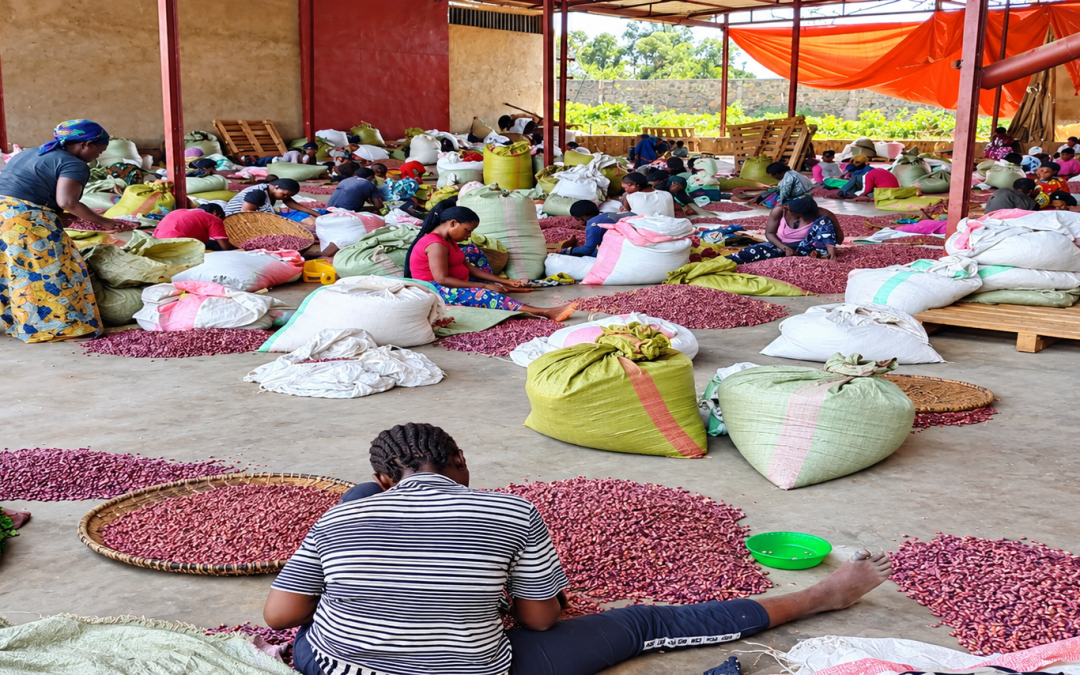
For women bean farmers in Rutshuru, Eastern Democratic Republic of Congo (DRC), producing more crops has not always meant earning more money. Despite improvements in agricultural production, limited access to profitable markets has continued to affect their ability to earn a decent income. Through the Beans for Women Empowerment (B4WE) project, however, new partnerships and collective marketing are helping women turn their harvests into better economic opportunities.
Women belonging to the AMADEJO, AMDA and ODR cooperatives, supported by AJECEDEKI, have benefited from training in improved agricultural production techniques. These include the use of improved seeds, integrated soil fertility management and other agricultural innovations. According to AJECEDEKI’s report, their production increased by around 45%. Yet, for a long time, the women continued selling their beans in local markets for just $0.70 per kilogram, limiting the financial benefits of their increased productivity. The challenge was not simply producing more but finding better markets for their harvests.
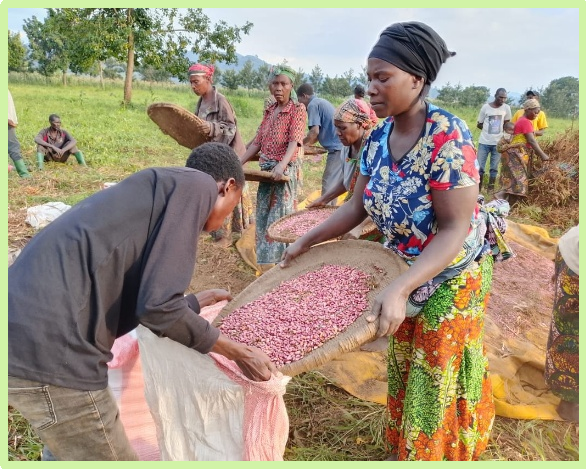
“This sector, vital for food security and economic resilience, faces several challenges caused by conflict and market instability. There is a real need for the small-scale producer sector to receive sufficient support to empower women in the DRC,” says Bola Awotide, B4WE Project Lead, highlighting the need to connect women farmers with opportunities that can strengthen their livelihoods.
During one season, the women collectively sold 160 tons of beans, generating $160,000 in revenue. This collective approach has helped them gain more value from their harvests while demonstrating the benefits of cooperation.
The partnership with International Potato Center (CIP) has also created opportunities beyond bean production. By receiving quality sweet potato cuttings, together with training and technical guidance on producing healthy cuttings, the women attracted buyers interested in their planting material. One client purchased approximately 1.5 million apical cuttings at $0.02 each, representing a transaction worth $30,000.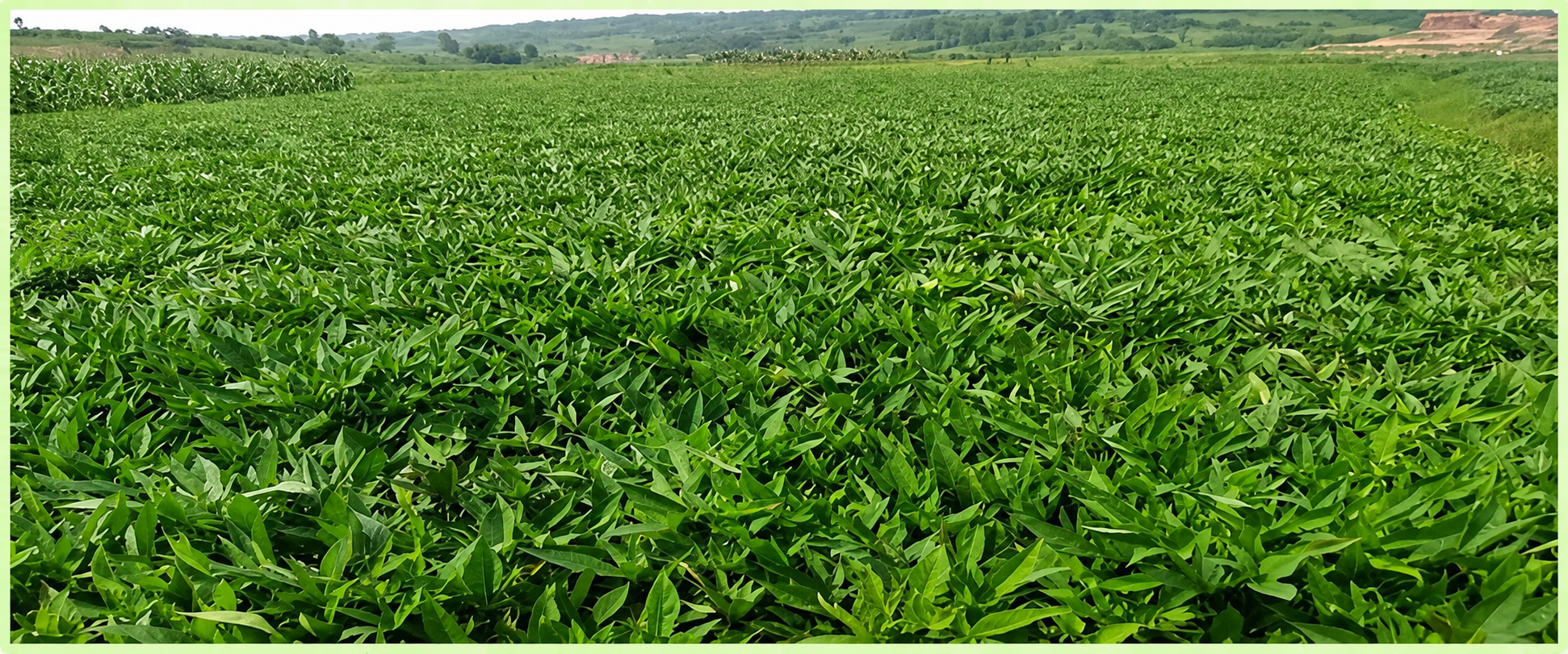
For Georgine Hitimana, the changes have been tangible. She explains that the project helped her improve production, sell beans through her cooperative and find a market for sweet potato cuttings that were previously shared with neighbors or left in the field after planting needs had been met.
“This project has allowed us to do things we could not do before. In our village, everyone grows beans and sweet potatoes. But we had never earned money like we did this year with this project,” she says.
She contributed 157 kilograms of beans, which the cooperative sold for $157. She also earned $120 from sweet potato cuttings. Together, these earnings helped her address the challenge of paying her children’s university tuition. Her experience illustrates how improved production, collective marketing and access to new buyers can translate into meaningful benefits for families.
For the women of Rutshuru, the results go beyond higher sales. Their experience shows how agricultural training, strong cooperatives and strategic partnerships can help women farmers overcome market barriers and make better use of their hard work. By connecting producers to more profitable opportunities, the B4WE project is helping women build stronger livelihoods and improve their families’ financial prospects.