By Bola Amoke Awotide, Julie Ntamwinja, Lucky Kalisya, Hosny Dunia, Theodore Bigaba, Tresor Andy, Valeri Wasso, Fidele Bahati Banywesize, Jean Claude Cirhuza Makendi, and Jean Claude Rubyogo
In eastern Democratic Republic of Congo (DRC), the Beans for Women Empowerment (B4WE) Project partners are bringing together different experiences and perspectives to strengthen how gender transformation is understood, taught and put into practice.
“This workshop enabled me to acquire new skills in facilitating sessions on gender-related topics. It also provided a valuable opportunity for partners to share their experiences. Finally, the psychosocial value added by this training is worth highlighting,” says Fidele Bahati Banywesize from the Commission diocesaine Justice and Peace (CDJP) in Bukavu, after taking part in the three-day workshop organized by Alliance of Bioversity International and CIAT in Kamembe.
His reflection captures something at the center of B4WE: changing the circumstances that limit women’s participation and opportunities requires more than addressing one issue at a time. A woman may receive improved bean seed, for example, but her ability to benefit from it can still depend on whether she can access land, decide how the harvest is used, control income from its sale and participate in household decisions. Violence and discrimination can create further barriers. These issues are connected, and for B4WE, they need to be addressed together.
Finding a common language
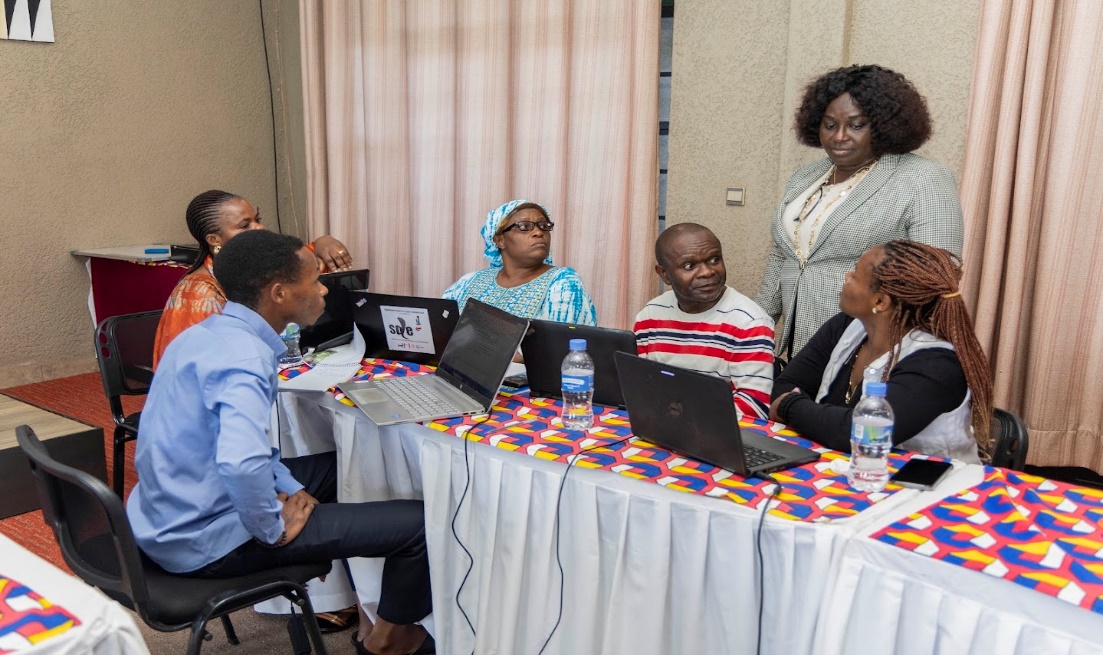
Partners work together to strengthen women’s empowerment under B4WE
B4WE works with partners across North Kivu, South Kivu and Tanganyika. Under the Project’s gender component, 12 implementing partners are responsible for cascading training to households and communities. Over time, different partners and technical experts brought their own knowledge, experiences and perspectives into the gender training materials. The diversity strengthened the materials, but it also created a need for greater consistency in how gender concepts were understood and delivered. That brought the partners together for a three-day training manual harmonization workshop.
The task was not simply to edit documents or put different modules into one format. It was to develop a shared understanding of gender transformation and ensure that partners were working from consistent messages and practical approaches when engaging women, men, households, communities, leaders and customary authorities.
The manuals cover issues ranging from gender equality and gender-based violence to leadership and decision-making, joint management of household income, financial empowerment, land rights, human rights, advocacy and communication, positive masculinity and responsible femininity. However, as the discussions unfolded, it became clear that these were not separate subjects.
Seeing the connections
Participants were divided into three working groups to review the different thematic areas. The sessions created space for partners to share experiences from the field, challenge assumptions, clarify concepts and identify where the manuals could be strengthened. They also gave participants an opportunity to step outside their own areas of expertise.
Each group presented its proposed changes and improvements, allowing participants to examine the different modules together. In the process, facilitators gained greater exposure to issues they might not normally handle in their own work.
For Yvette Bisimwa, the process reinforced the importance of mainstreaming gender across B4WE. She highlighted the role of the gender approach not only in implementation, but also in achieving the project’s wider objectives and expected outcomes. Valerie Wasso of maison de la femme concurs with Yvette one of the strongest lessons was the interdependence of the different training modules. If the ultimate goal is to empower women within the bean value chain, she noted, the issues cannot be treated in isolation.
“These gender training modules are interdependent and collectively contribute to the effective empowerment of women in the bean value chain,” says Valerie Wasso,
Another participant, Clementine Zita similarly came away with a broader understanding of gender-related issues, including leadership, land disputes management, psychosocial support, Village Savings and Loan Associations, advocacy, decision-making and the bean value chain. Together, their reflections point to a simple but important lesson.
A woman’s inability to access land can affect her ability to farm. Limited control over household income can restrict her ability to invest. Exclusion from decision-making can limit her influence over productive activities. Gender-based violence can affect her wellbeing, productivity and participation. Limited access to savings and credit can constrain her ability to develop an enterprise. These are not separate challenges, but different parts of the same picture of women’s empowerment.
More than a training exercise
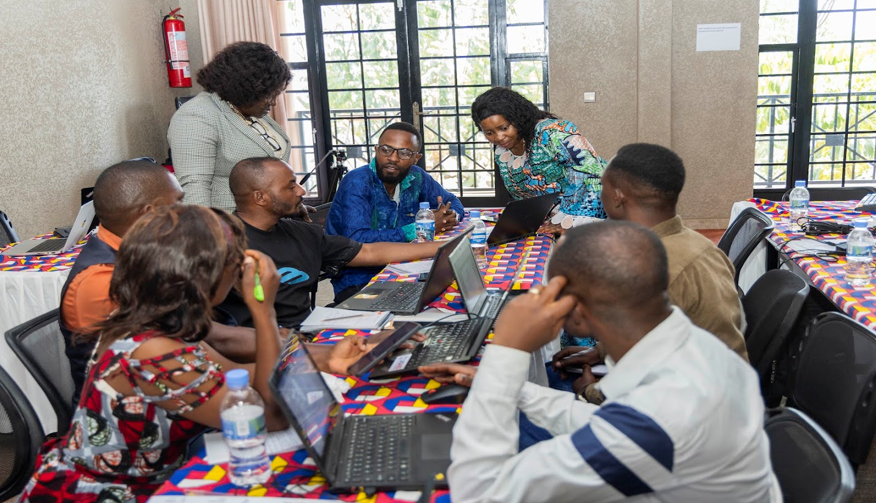
B4WE partners turn collaboration into action for women’s empowerment
This is why harmonisation went beyond aligning, and validating the manuals. B4WE’s gender-transformative approach seeks to challenge the norms, cultural practices and traditions that sustain gender inequality, contribute to gender-based violence and limit women’s access to and control over productive resources. Through social and behavioural change communication, the project is also creating space for women’s voices, encouraging men to become partners in change and fostering more equitable relationships within households and communities.
For that change to last, however, the messages have to travel beyond the training room and fit into everyday life. They need to make sense at household and community level, connect with the realities on the ground, and, most importantly, speak to the people expected to act on them. This shaped the discussion around making the manuals more practical and accessible, with participants calling for stronger visuals, simpler language, clear key messages and practical examples that can work for people with different levels of literacy.
They also highlighted the need for examples, terminology and communication approaches that reflect local realities, languages and dialects, alongside age-appropriate ways of engaging younger audiences. Additional materials on gender-based violence and a dedicated leaflet on early marriage were identified as important areas for strengthening. The goal is that the messages should not stop at the pages of a training manual or end when a training session is over, but they should be clear, relevant and useful enough to become part of everyday life.
Taking the lessons into communities
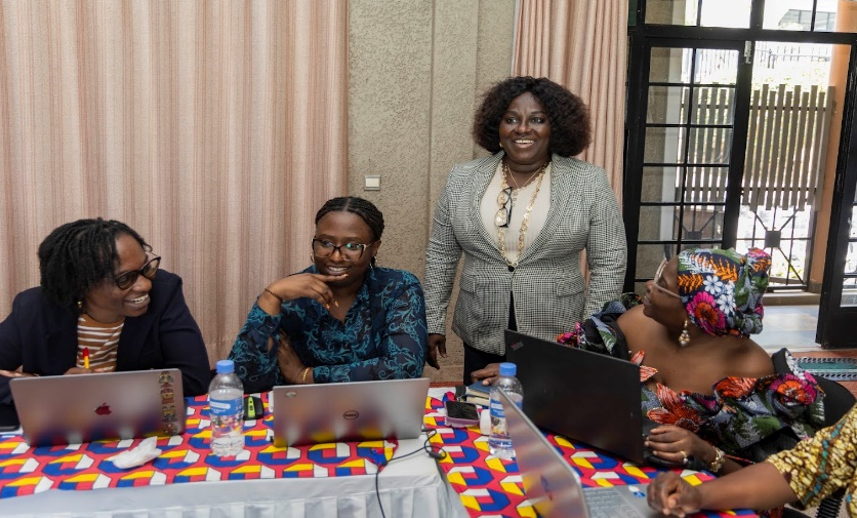
Women’s voices at the heart of B4WE’s work
The workshop may have ended with revised training materials, but for B4WE, that is where the next chapter begins. During the 2026–2027 fiscal year, partners will take the revised manuals into households and communities across the project’s intervention areas, using them to cascade training and turn the ideas discussed in Kigali into practical action.
That is where the real test begins. The value of the workshop will not be measured by how polished the manuals look, but by what happens when their messages reach people’s everyday lives, whether attitudes and behaviours begin to change, whether relationships become more equitable, and whether women gain greater access to resources, a stronger voice in decisions and more control over the benefits of their work.
For Fidele and the other facilitators, the workshop has also left them with more than updated materials. It has broadened their understanding of the realities behind the issues they will be helping communities navigate and given them a stronger foundation from which to have those conversations.
Ultimately, bringing the manuals together is about bringing people together around a shared vision: communities where women are not simply participants in the bean value chain, but have the resources, voice and influence to shape decisions, benefit from their work and help shape the future of their households and communities.
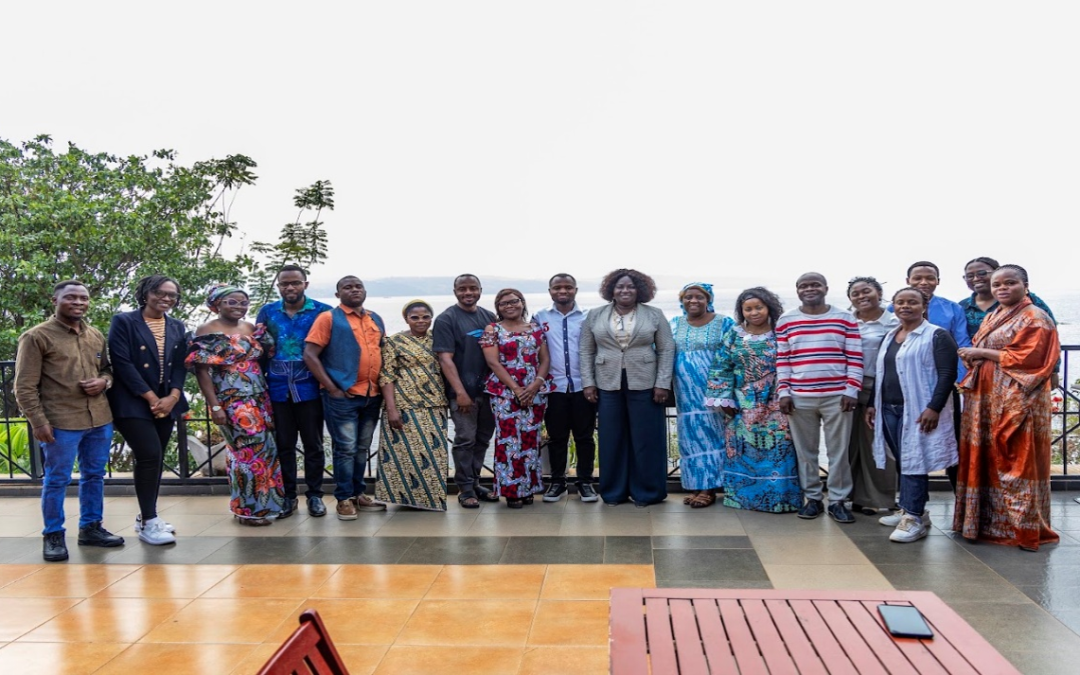
Cover Image: A shared commitment to advancing women’s empowerment through B4WE