
By Bola Amoke Awotide, Paulin Njingulula, Espoir Kubuya Tshombo, Amadou Coulibaly, Tresor Andy, and Jean Claude Rubyogo
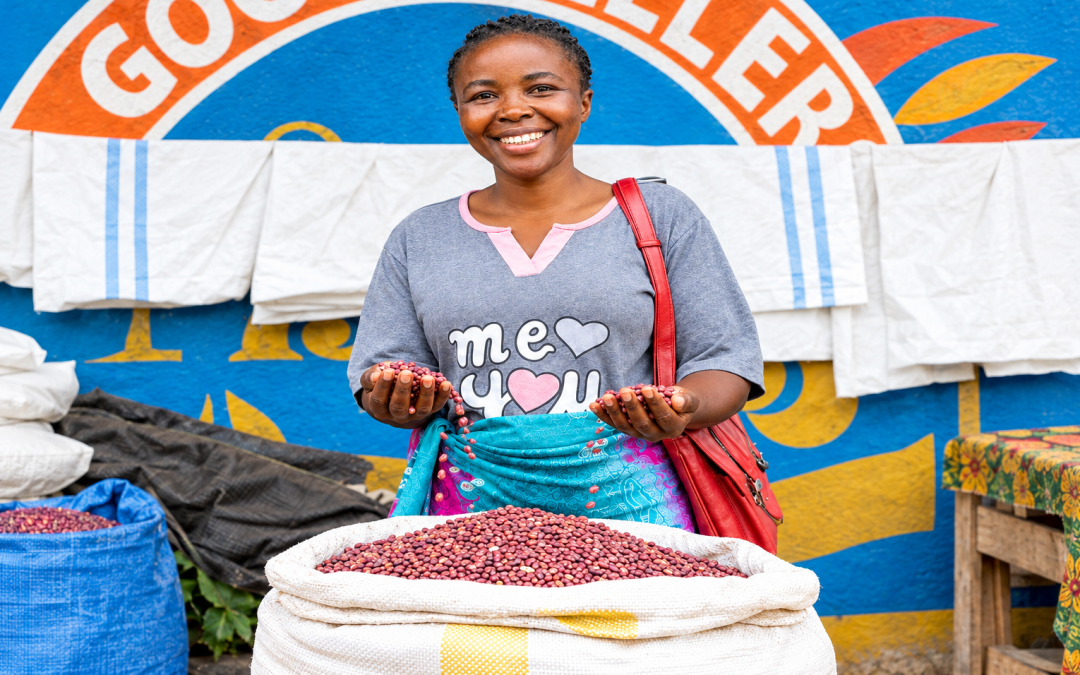
“I struggled to keep my bean business stocked and would often run out before the day ended. Today, I have almost tripled my daily sales. I can provide better for my children, and I am even able to save through my savings group,” Deborah Kavira says with a smile. A bean entrepreneur in North Kivu, in eastern Democratic Republic of Congo (DRC), has seen her small business begin to take on a new life.
Not long ago, Deborah’s bean business was a precarious affair. She bought what she could, sold what she had, and often watched her stock disappear before the day was over. There was little room to grow, let alone save. Today, the picture is different. With more stock and better business skills, Kavira sells nearly three times as much each day. The extra income is helping her provide for her children while putting something aside for the future through her savings group. For her, the change is not simply about selling more beans but having a business she can begin to rely on and have a little more control over what comes next.
Even for Katale Bahati, the most important change has been what she has learned to do with her business. Before the training, fluctuating bean prices could easily turn a sale into a loss. Today, she understands her margins, keeps closer track of her business and makes more deliberate decisions about when and how to sell. Her confidence has grown with her business.
“I used to sell without really knowing whether I was making a profit. Now I can calculate my margins and make better decisions, even when bean prices change,” she explains.
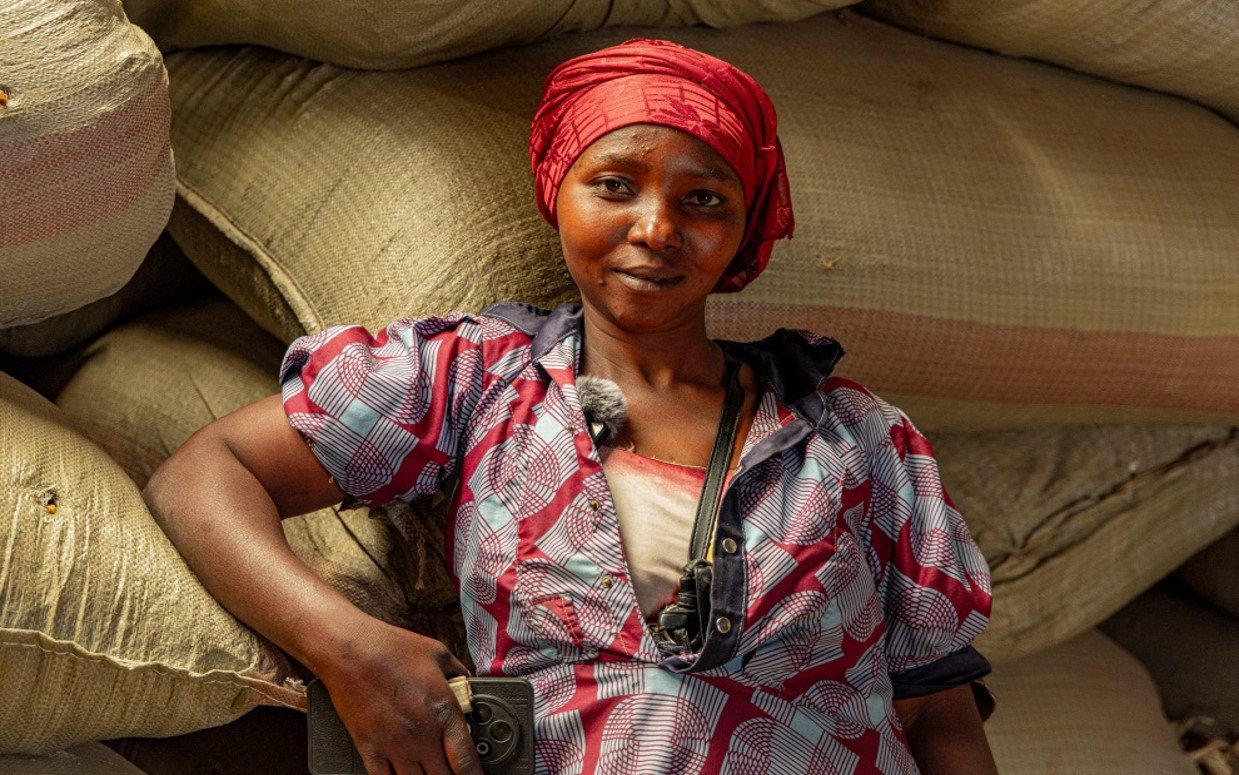
Bahati showcasing her Beans stock at Birere Market
Kavira and Bahati are among 13 young women in North Kivu whose experiences point to a broader shift taking place in the bean trade. In a region where conflict has repeatedly disrupted livelihoods and narrowed economic opportunities, bean trading is becoming more than a way to earn enough for the day. For these women, it is becoming a route towards resilience, independence and a more secure livelihood. Their progress is being supported through the Beans for Women Empowerment (B4WE) project in eastern DRC, financed by Global Affairs Canada (GAC).
The women were selected to participate in the CHEMCHEM YA BYASHARA Business Incubator at the University of Goma, where they spent three months learning the practical skills needed to run a business. The training covered entrepreneurship, business planning and management, marketing, accounting, bean value chains, and gender and development.
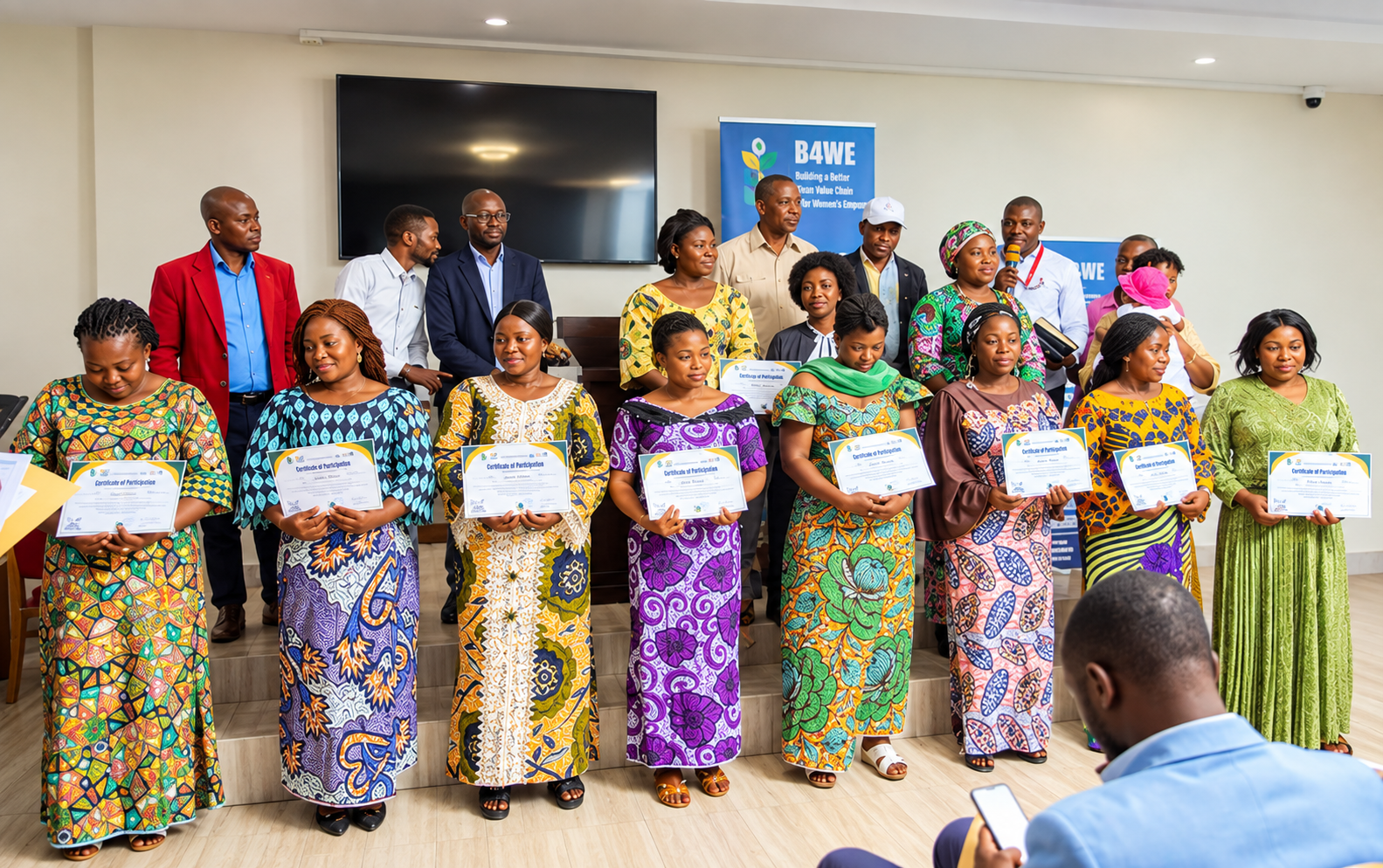
Certificate Award Ceremony for Graduates of the Incubation Platform
The lessons arrived at a difficult moment. Persistent insecurity in the region had already made everyday commerce uncertain. Then violence disrupted the women’s businesses directly. Markets where some traders stored their beans came under attack, destroying stocks and leaving businesses that had taken years to build suddenly exposed.
For women already operating with limited capital, losing stock can mean losing the business itself. B4WE responded with practical support aimed at helping them get back on their feet. Each woman received about 250 kilograms of beans for resale, together with assistance for transportation and packaging. The training has given them tools to understand their costs, calculate margins, and make better decisions. The support – stock to sell, resources to move it and the means to put the business back into motion – has given them working capital to put those skills into practice. Together, the two have helped turn knowledge into action.
The results are beginning to show. The most visible change can be measured in bags of beans sold, and income earned. But the deeper shift is harder to count. The women are increasingly describing themselves not simply as traders trying to get through another day, but as micro-entrepreneurs with businesses they can manage, improve and grow.
Additionally, a quiet sense of solidarity is growing among the women. They support one another by helping to source beans and take turns running their market stalls, making it a little easier to navigate the uncertainties of daily trading. For women trying to build businesses in a fragile environment, such support matters because resilience is rarely built alone.
Progress, however, has not erased the difficulties. Bean prices continue to fluctuate, squeezing already narrow profit margins. Competition in the Birere market is growing, making it harder for traders to retain customers. With many of the women still lacking permanent, sheltered spaces from which to sell, it is exposing their businesses to the disruption of heavy rains.
The gains remain fragile, but with continued support, experience-sharing, group purchasing and better stock-management skills, the women can strengthen their businesses and protect their earnings. Their experience shows that training creates knowledge, but opportunity turns that knowledge into lasting change.
When entrepreneurship skills are paired with practical business support, women in fragile economies can begin to rebuild not only their businesses, but also their confidence and sense of possibility. For Deborah, Katale and the other young women in eastern DRC, that change means putting more food on the table, providing more for their families, saving for tomorrow and making informed decisions about when a sale will bring a profit rather than a loss. For the 13 women trading beans in North Kivu, the journey goes far beyond selling beans. It is about building businesses they can depend on, creating more secure livelihoods for their families, and gaining the confidence and independence to shape a better future.
______________________________________________________________________________________________________________________________________________
Cover Image: Deborah Kavira displays her bean stock at Birere Market in Goma.