
By Bola Amoke Awotide, Theodore Bigaba, Joseph Lulu Lwamba, Hosny Dunia, Lucky Kalisya, Lydie Mulonda, Tresor Andy Kongbu, Patience Kisangani, Julie Ntamwinja, Amadou Coulibaly and Jean Claude Rubyogo
Globally, women constitute approximately 43 percent of the agricultural labour force in developing countries, yet they own less than 20 percent of the world’s agricultural land. This imbalance goes beyond inequality, as it also a major constraint to agricultural productivity, food security, and rural development.
In the Democratic Republic of the Congo (DRC), where agriculture remains the backbone of rural livelihoods, women’s limited access to land continues to undermine both household welfare and national agricultural development. Although the country possesses nearly 80 million hectares of arable land, only about 10 percent is currently cultivated. Unlocking the productive potential of this land requires addressing one of agriculture’s most persistent challenges: ensuring that women have equitable access to productive resources.
Why women’s access to land matters
In Eastern DRC, long-standing customary practices and social norms continue to restrict women’s access to and control over land. Conflict and displacement have further deepened these inequalities, limiting women’s ability to invest in agriculture, access finance, and strengthen their livelihoods. Therefore, improving women’s land rights is not only a matter of gender equality but also an investment in food security, nutrition, economic resilience, and sustainable rural development. Evidence shows that closing the gender gap in access to productive resources could increase women’s farm yields by 20–30 percent, raise agricultural production in developing countries by 2.5–4 percent, and reduce hunger by 12–17 percent.
A transformative approach under the B4WE Project
The Beans for Women Empowerment (B4WE) Project is addressing these challenges through an innovative and community-driven approach under its Gender Equality and Land Access component. Rather than confronting customary systems, the project works alongside them. Traditional chiefs, village leaders, community members, and women themselves are engaged in dialogue to remove customary barriers that limit women’s access to productive land. Through this participatory process, village authorities allocate land where groups of women can establish community bean production gardens.
Once access to land is secured, the project supports the women’s groups by providing improved biofortified bean seed of different varieties, training on good agricultural practices, demonstration plots for practical learning, and continuous technical support throughout the production cycle. Working collectively allows women to share labour, exchange knowledge, strengthen social cohesion, and improve their collective bargaining power while increasing agricultural productivity.
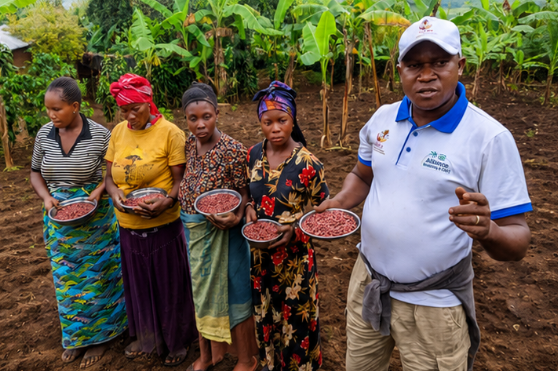
Bean farming has been empowering women’s lives in Eastern DRC
Results that are changing lives
The B4WE land access intervention is already delivering tangible results across the three project provinces. To date, it has established 21 women’s groups in 17 villages, secured 32 hectares of cultivable land for women, distributed more than 2,230 kilograms of improved biofortified bean seed, benefited 1,049 households, and reached 7,343 people. Beyond these achievements, the initiative is transforming the lives of women, their families, and their communities. The leader of Réseau des Gagneurs d’Ames (RGA), one of the women’s groups in the territory of Nyiragongo, North Kivu province, Asia Kalombo, described the intervention as a turning point for the community.
“Participating in the community garden has enabled us to better meet our families’ needs. Beyond higher yields, the initiative has strengthened women’s agricultural knowledge and production skills and improved household food security. Income from bean sales has also enabled members to invest in vegetable production, diversifying livelihoods and improving household nutrition,” she says.
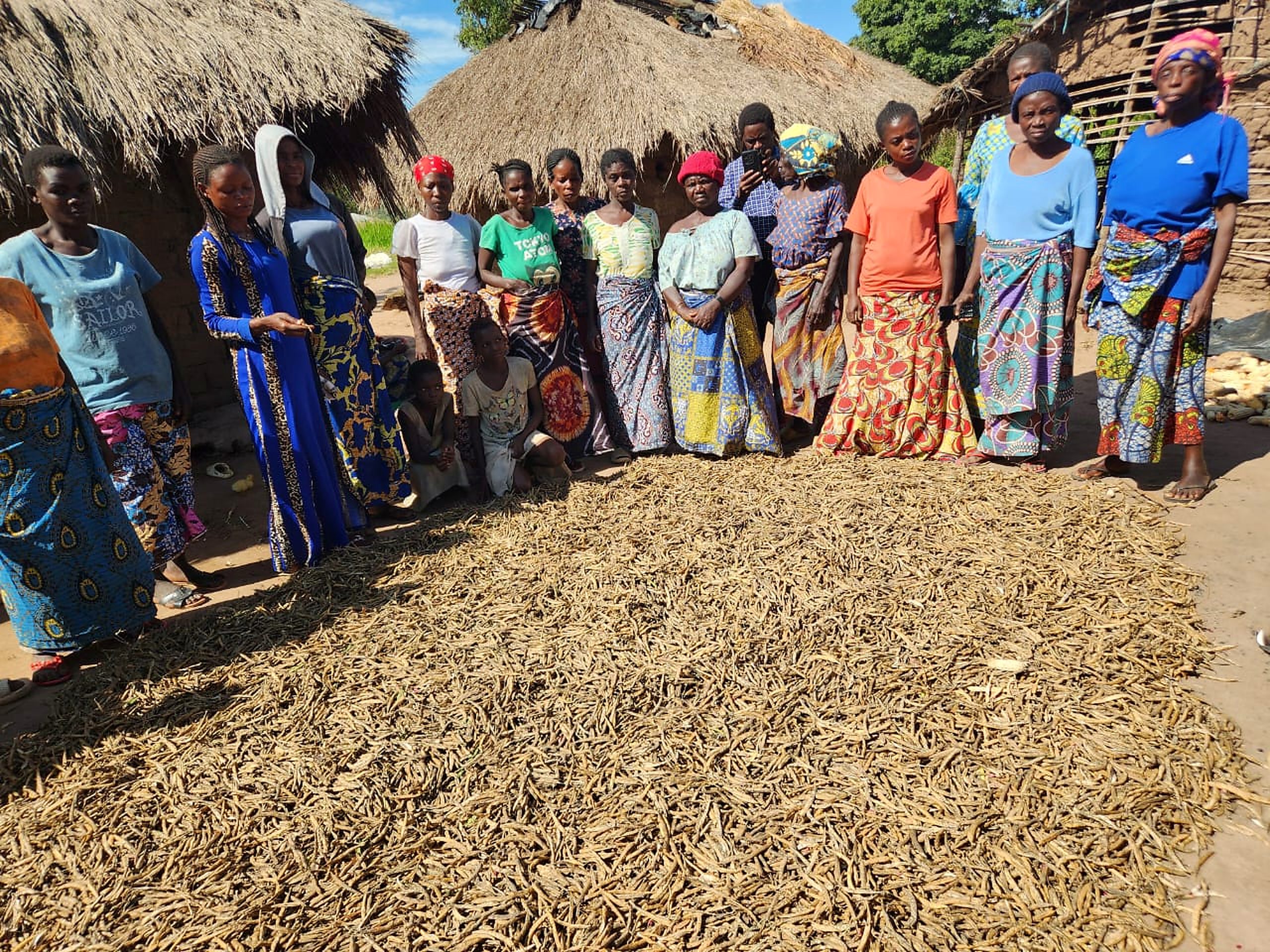
Women working together in community gardens are strengthening solidarity, cooperation and collective action
For Fréderic Ndezimana, a representative of the Tuinuwane farmer organization in North Kivu, the project’s greatest achievement goes beyond bean production. Working together in community gardens has strengthened solidarity and cooperation among women. Income from bean sales has enabled members to collectively pay land rental fees and pool resources to secure additional land for vegetable production, diversifying household incomes while improving family nutrition.
A similar positive impact was reported by Nyarushumba Magayane Liberatrice, leader of a 60-member women’s farmer organization in North Kivu. Through the project’s engagement and advocacy with customary authorities, the group secured two hectares of land from the village head of Buhumba and received 160 kg of improved biofortified bean seed for cultivation. The group harvested 1,550 kg of beans, which they allocated among household consumption, seed for the next season, savings, and income generation.
“The support helped us overcome some of our financial difficulties and improve food security for our families. We sold part of the harvest, used some of the income to rent additional land, and saved some through our Village Savings and Loan Association (VSLA),” says Liberatrice
The women also invested part of the proceeds in small businesses, including the sale of potatoes, cooking oil, sugar, chickens, and sheep, further diversifying their livelihoods and strengthening household resilience.
The intervention has also enhanced household resilience. Jeanne Kabuo Mbayahi, a focal point for one of the women’s groups in South Kivu, explained that the project successfully improved access to quality seed while increasing household income. According to her, the bean production allowed families to improve household food consumption, strengthen nutrition through increased bean consumption, generate income from bean sales, save through VSLAs, meet essential household expenses, and preserve seed for subsequent planting seasons.
Perhaps one of the most compelling stories comes from Gloria Amasale M’mihitimana. In her words, despite difficult weather conditions characterized by excessive rainfall followed by prolonged sunshine, access to land and improved seed enabled her household to significantly increase bean production. After harvest, part of the beans was sold to generate income, and some part was consumed to improve household nutrition. The income obtained transformed her family’s future. She used part of the proceeds to contribute to the payment of her child’s school fees for an entire academic year, ensuring uninterrupted education while reducing the financial burden on her household. Her experience illustrates how improved access to productive resources creates benefits that extend far beyond agriculture, contributing directly to education, poverty reduction, and long-term family well-being.
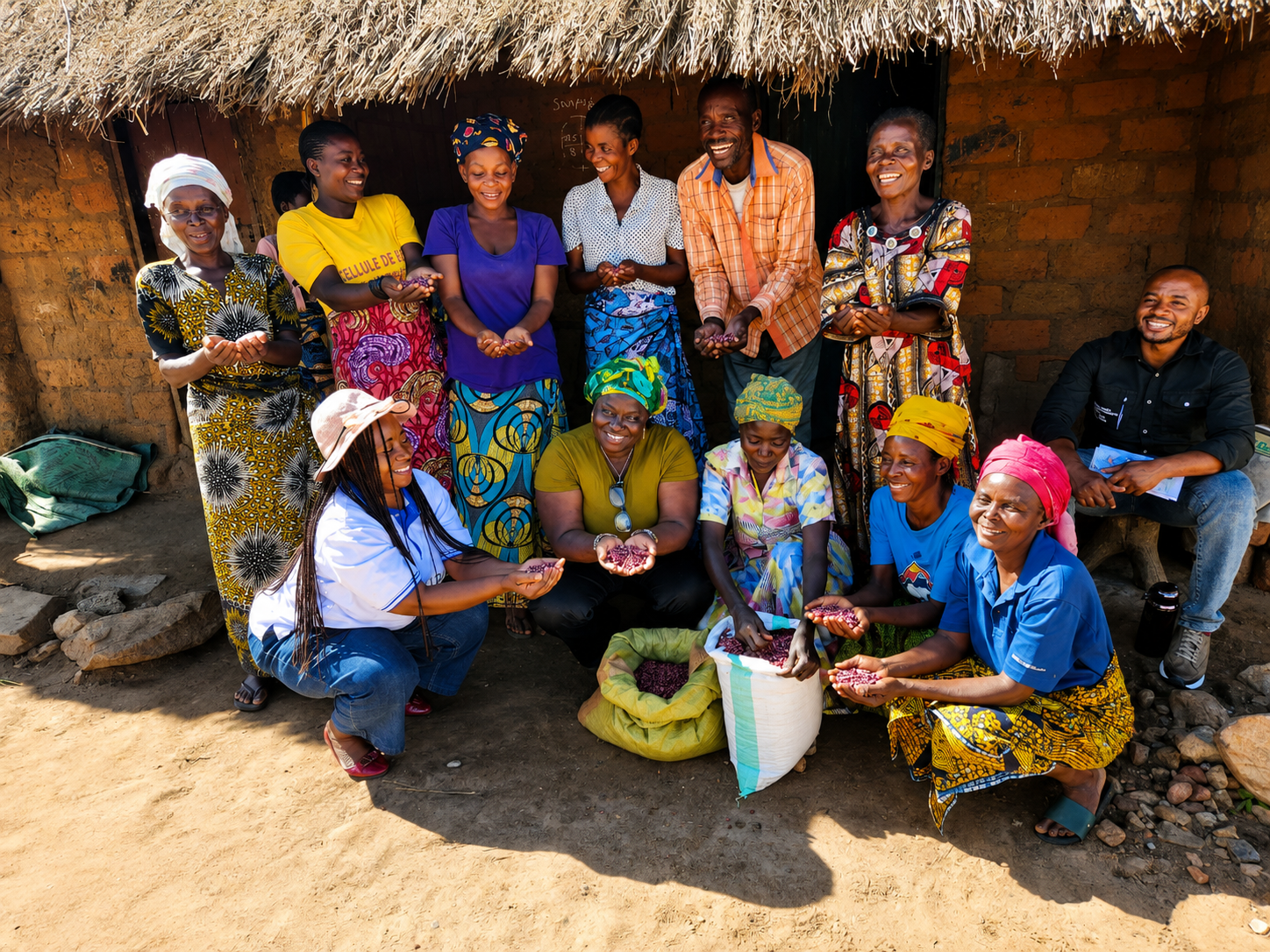
Through the B4WE Project, beans are helping women ease the financial burden on their households
Lessons for development practice
The experience of the B4WE Project demonstrates that improving women’s access to land requires more than simply allocating land. Success depends on combining secure access to productive resources with quality inputs, technical training, community ownership, and institutional support. Equally important is engaging customary authorities as partners rather than adversaries. By building consensus within communities, the project has shown that long-standing social norms can evolve while preserving local governance structures. The initiative also highlights the importance of integrating agricultural production with nutrition, savings, women’s leadership, and livelihood diversification. The project created a virtuous cycle in which access to land and improved seed led to higher yields, which in turn generated income, savings, improved food security, and greater capacity for future production.
Looking ahead
While significant progress has been made, important challenges remain. Demand for improved seed continues to exceed supply. Women have also identified the need for stronger post-distribution technical support, more regular field visits by agronomists, improved access to agricultural equipment, and continued capacity building. Addressing these challenges will be critical to sustaining the gains already achieved. Nevertheless, the evidence emerging from eastern DRC is encouraging.
When women gain secure access to land, they do far more than cultivate beans. They strengthen household food security, invest in their children’s education, build community solidarity, increase household incomes, and create pathways toward lasting economic empowerment. Breaking barriers to women’s land access is therefore not simply about providing land, but about unlocking the potential of women to transform agriculture, strengthen communities, and contribute to sustainable rural development.
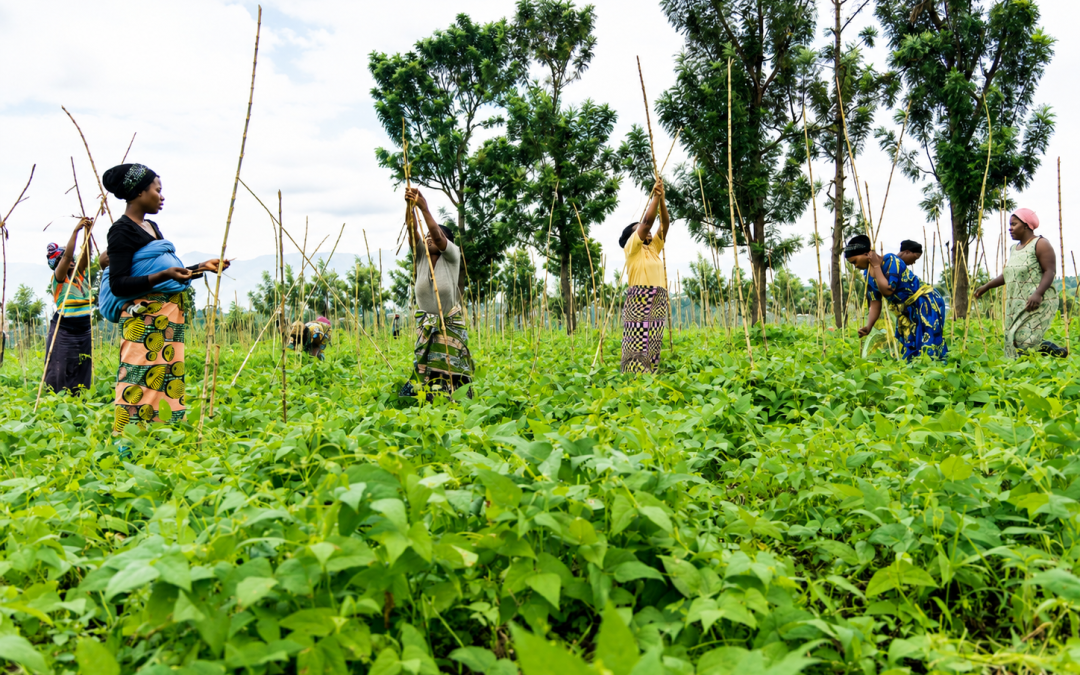
Cover image: Thanks to beans, a significant number of women in the DRC are gaining access to land for cultivation