
By Yohane Chideya, Radegunda Kessy, Justus Ochieng, Sylvia Kalemera, Jean Claude Rubyogo
The harvest had always been the hardest part. For countless farming families across Tanzania, bringing crops from the field was only half the battle. The real struggle began after harvest, when women spent hours, sometimes days, threshing beans by hand. The work was physically exhausting, often leaving them with chronic back pain, while poor post-harvest handling led to significant grain losses and reduced incomes. For many young people, agriculture offered little promise beyond hard labor.
Today, that picture is fast changing, thanks to a youth-led enterprise whose journey began with a simple idea and the support of the Pan-Africa Bean Research Alliance (PABRA) Program of the Alliance of Bioversity International and CIAT.
From selling just six machines, Imara Technology Ltd has grown into one of East Africa’s leading manufacturers of Multi-Crop Threshers, with more than 1,000 machines now working across Tanzania, Kenya, Uganda, Rwanda, Burundi, Malawi and the Democratic Republic of Congo. Behind that remarkable growth lies a story of research, innovation, entrepreneurship and partnerships working together to improve lives.
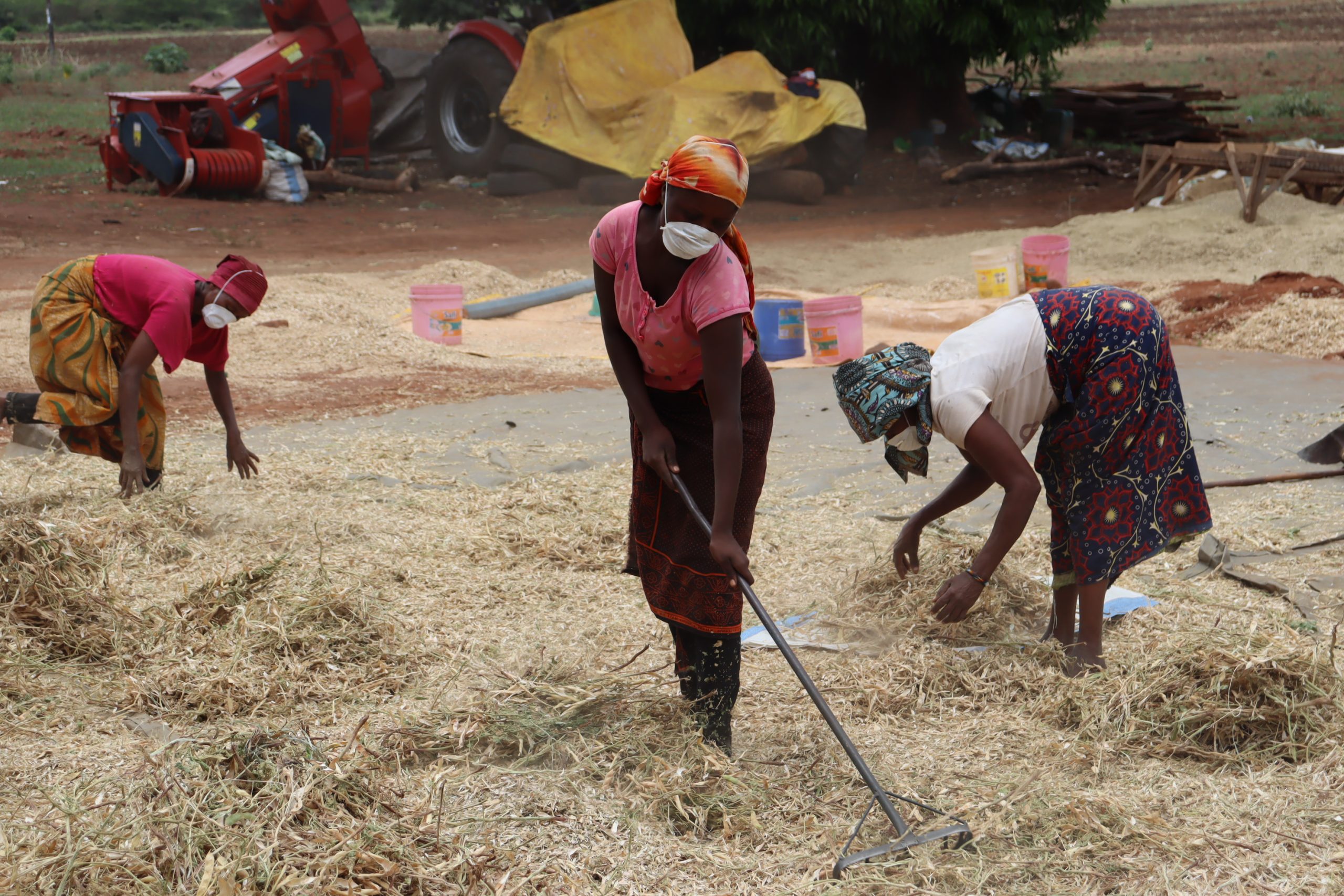
Multi-Crop Threshers are reducing women’s workload during post-harvest handling
The journey traces back to 2018, when PABRA set out to solve one of the most persistent yet overlooked challenges in bean production: post-harvest drudgery. Threshing alone accounted for nearly 20 percent of bean production and post-harvest costs, and the work was almost exclusively carried out by women. Determined to find a practical solution, PABRA partnered with the USAID Feed the Future Soybean Innovation Lab, the Tanzania Agricultural Research Institute (TARI), and other collaborators to train local artisans in manufacturing Multi-Crop Threshers.
Among the 20 young Tanzanians selected for the program was Alfred Chingula. While many saw the training as an opportunity to learn a new skill, Chingula saw something bigger. He used it as a chance to build a business that could solve real problems for farmers.
The early threshers worked well but were bulky, expensive and designed to be pulled by tractors, making them inaccessible for many smallholder farmers. Chingula and his team believed they could do better.
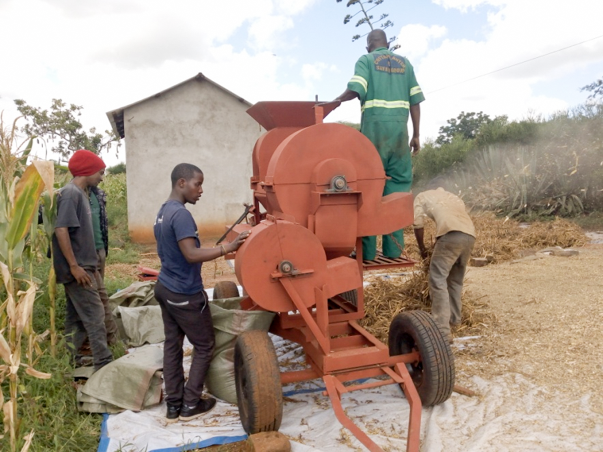
The earlier big machine before the prototyping
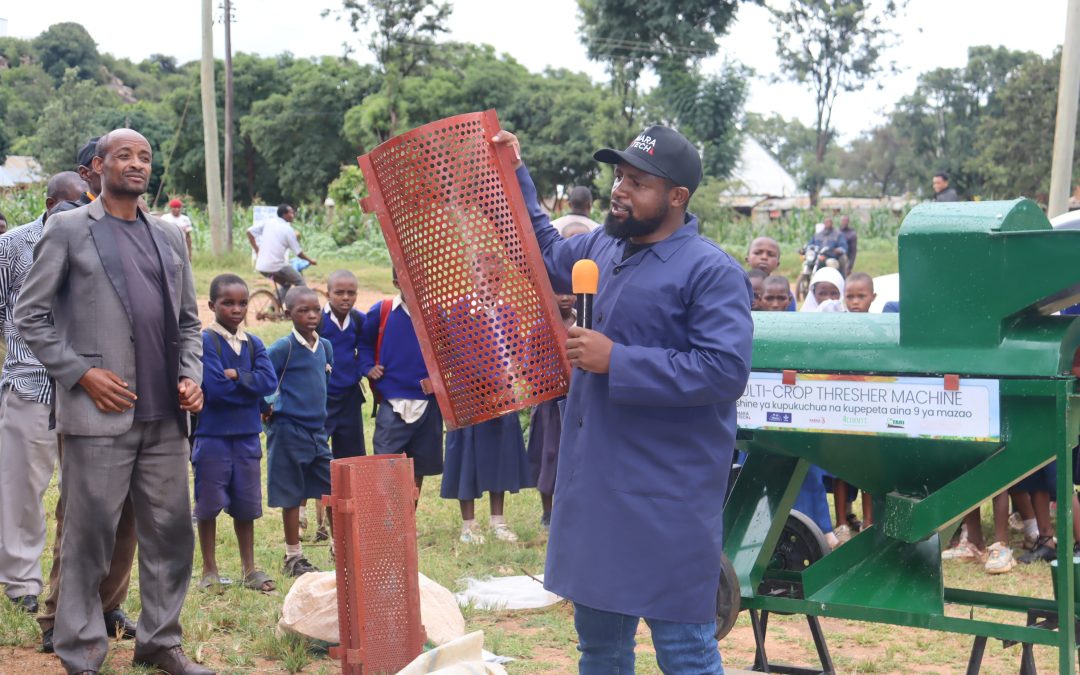
They redesigned the machine, making it smaller, more affordable and portable enough to be transported by motorcycle from one village to another. They also expanded its capability beyond beans, enabling it to thresh and clean nine crops, including maize, sunflower, sorghum, finger millet, pigeon pea, green gram, rice and lablab.
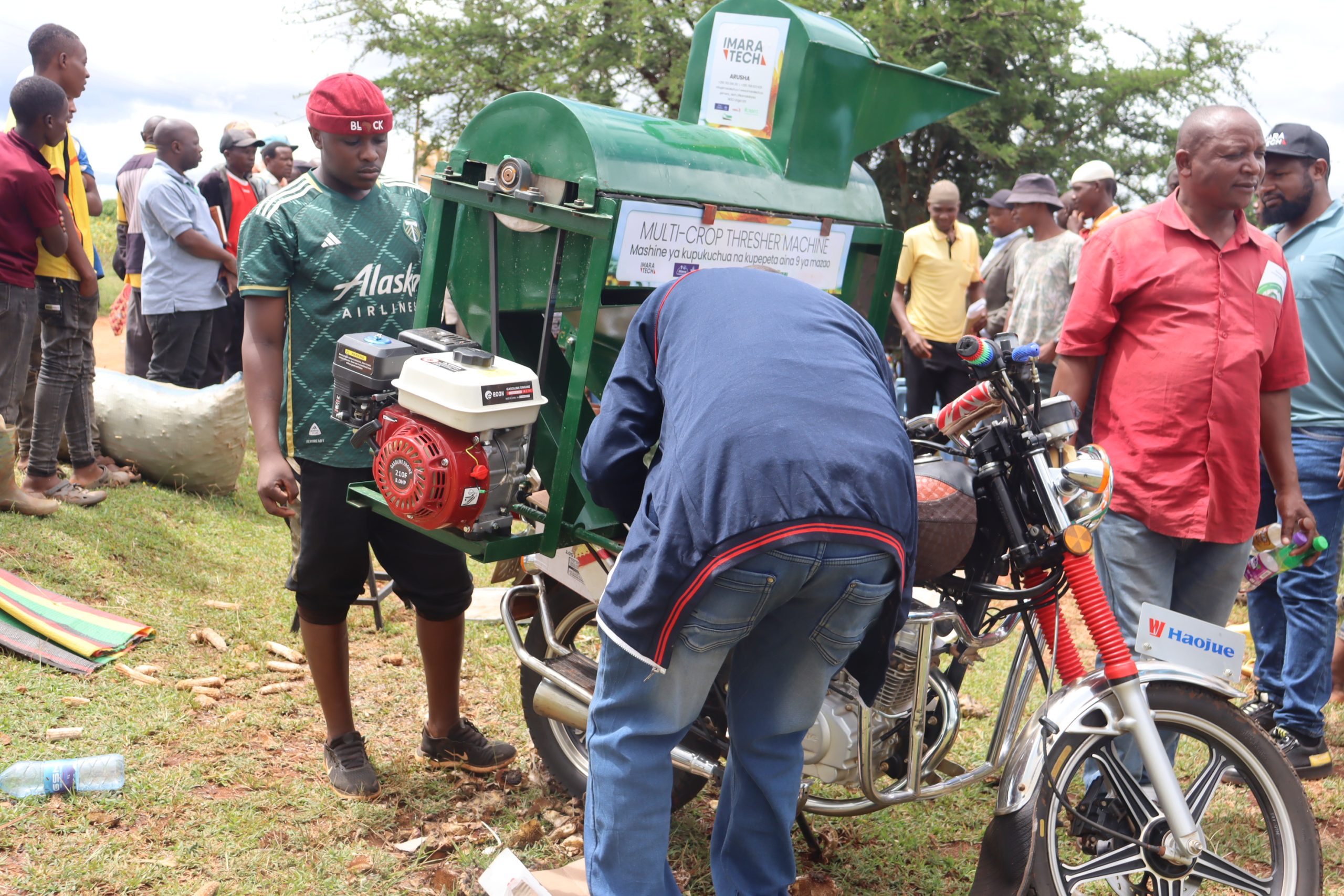
On the move: The smaller machine can easily be transported using a motorcycle
That innovation transformed not only the machine but also the future of the company.
“The Alliance through PABRA gave us the initial idea for the threshers and supported us from the very beginning,” said Chingula. “They helped us develop the prototype, connected us with partners for testing and refinement, and opened doors to regional markets. Through CIAT and PABRA, we have expanded beyond Tanzania and reached farmers across Eastern and Central Africa.”
Today, Imara Tech manufactures between 350 and 400 threshers every year, directly employs about 50 young people and supports hundreds of additional livelihoods through machine operators, mechanics, dealers and service providers.
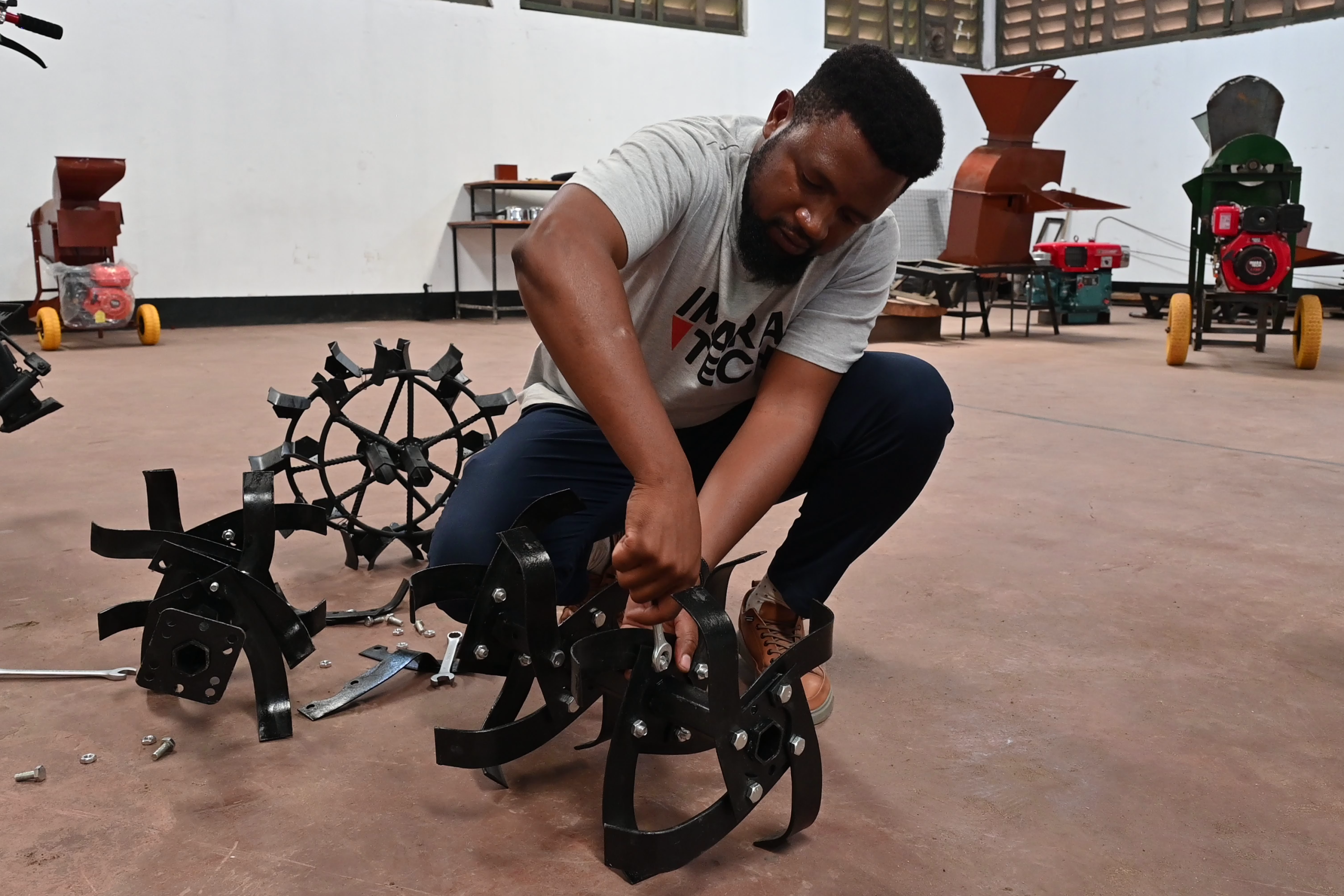
Chingula in one of his workshops in Arusha, Tanzania
For farming communities, however, the greatest transformation is happening in the fields. A task that once took nearly three hours can now be completed in less than five minutes. The machines reduce post-harvest losses by up to 40 percent while improving grain quality and allowing farmers to reach markets faster. Just as importantly, they have dramatically reduced the physical burden placed on women.
In Dodoma, farmer and machine owner Amina Nyange says the technology has changed her life.
“With the machine, I have improved my harvests and earned additional income by providing threshing services to other farmers,” she said. “I have reinvested those earnings by buying maize storage sacks, paying my machine operator and supporting my grandchildren.”
The impact is equally visible in Morogoro’s Gairo District, where a farmers’ group of 30 members—23 of them women—acquired a Multi-Crop Thresher through group savings and partner support. Since then, the group has processed hundreds of bags of maize and sunflower while earning additional income by offering threshing services to neighbouring communities.
For Jean Claude Rubyogo, Director of PABRA and Global Bean Program Leader at the Alliance of Bioversity International and CIAT, Imara Tech represents what happens when scientific innovation is deliberately connected with entrepreneurs.
“They are employing around 50 people directly, while many more earn a living operating the machines,” Rubyogo said. “They manufacture hundreds of machines every year and sell them across the region. But beyond the business itself, these machines are reducing drudgery, creating employment and improving livelihoods for thousands of farming families. That is exactly the kind of impact we hoped to achieve.”
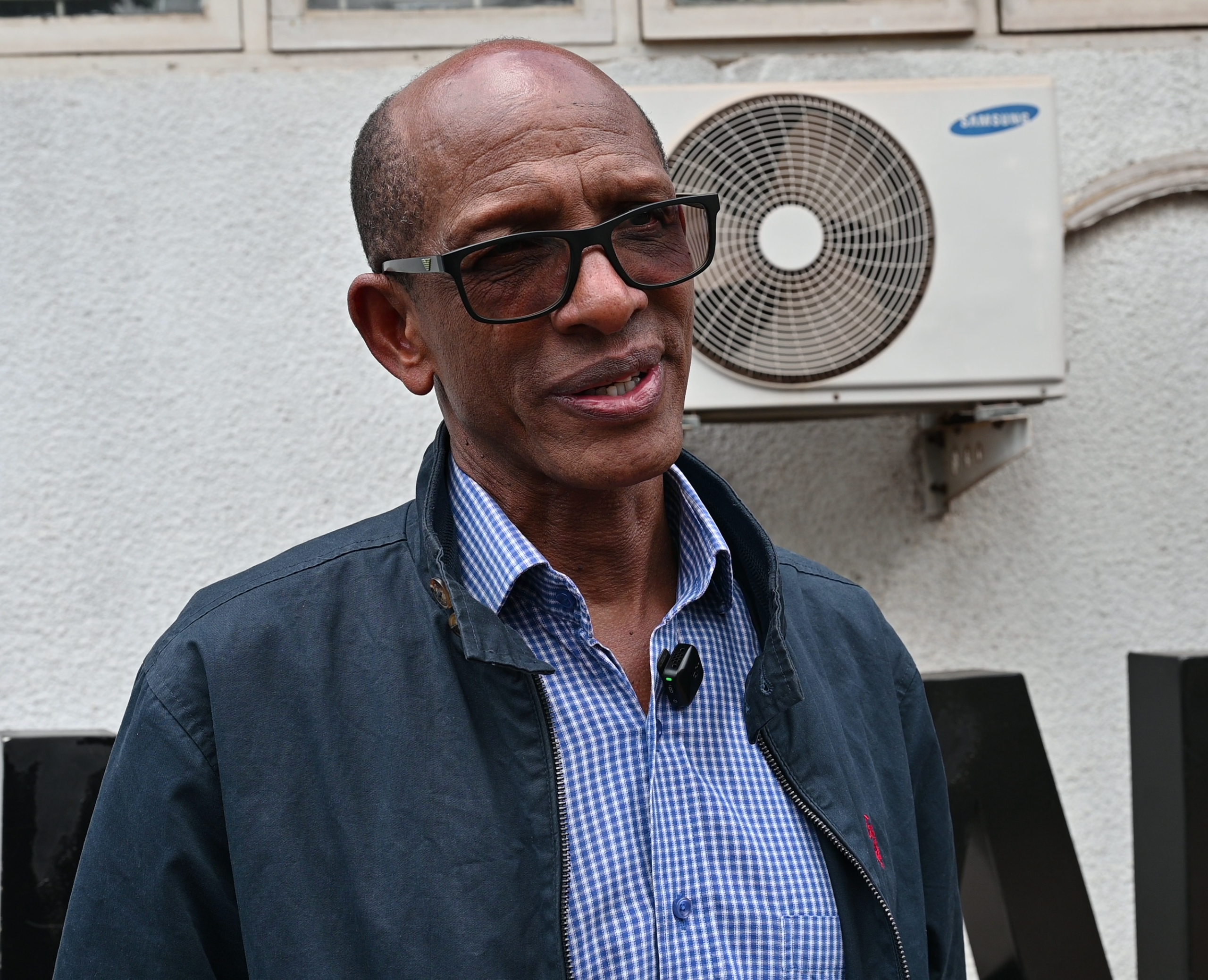
I feel joy: Rubyogo
Imara Tech’s growth is more than a business success story. It demonstrates how investments in research, local manufacturing and youth entrepreneurship can unlock opportunities that extend far beyond a single enterprise. Every machine leaving the workshop carries the promise of less labour for women, new income for young entrepreneurs, lower post-harvest losses for farmers and stronger rural economies.
What began as PABRA’s effort to solve a stubborn post-harvest challenge has evolved into a thriving regional enterprise that is helping reshape agriculture across Africa. From six machines to more than 1,000, Imara Tech’s journey stands as a powerful example of how investing in young innovators can deliver lasting impact for farmers, communities and Africa’s agricultural future.
Watch the full story here: https://youtu.be/Ghl-AcDypiY?si=XrDHmVdSAmo0G3l2
Cover image: Chingula demonstrating how the machine works. Photo Credit: CIAT