By Justin Mabeya, Alain Mudumbi, and Daniel Lunze
In the territory of Kaniama, Haut-Lomami Province, in the Democratic Republic of Congo, a silent but profound transformation is underway. Under the Project to Support the Development of Agricultural Value Chains in Six Provinces (PADCA-6P), funded the African Development Bank through the Ministry of Agriculture of the Democratic Republic of Congo and implemented by the Alliance of Bioversity International & CIAT (Alliance) in partnership with INERA, there is a marked and decisive turning point for local food security. Between November 2025 and February 2026, the project concentrated on hands-on field activities aimed at capacity building of smallholder farmers in bean grain production. On-farm demonstrations were established, where farmers received practical training on grain production. In addition, biofortified bean seeds, both pre-basic and basic, were produced and at the same time, training sessions and assessments on compliance to environmental standards were done with encouraging results.
Building a strong foundation
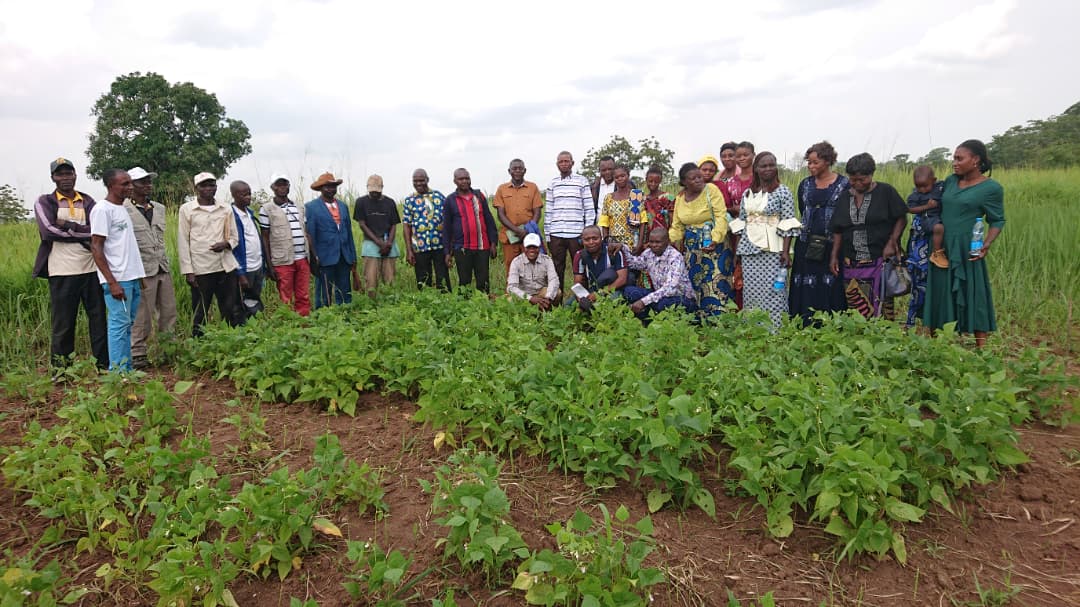
In early November 2025, the PADCA- team (Alliance and INERA) set up a second round of on-farm demonstrations and training local farmers. The goal was simple: to find out which biofortified bean varieties perform best under local conditions. To do this, they used a hands-on “learning by doing” approach. Trials were conducted at two sites, the INERA research station and the Tshitengu farming community. Five bean varieties (D6 Kenya, Uvira, Uyole, White Bean, HM 21-7) were tested using different fertilizer treatments in well-organized plots and with strict adherence to quality. During the demonstrations, 30 participants (including 7 women) received practical training on key farming practices, from land preparation and planting to proper use of fertilizers and organic inputs.

Learning by doing: Five common bean varieties planted in experimental plots using a split-plot design at the INERA Kaniama Research Station
January 2026: Seeing the results in the field
About six weeks later, on January 15, 2026, the project team organized a major field day to showcase progress and results. The event brought together 33 participants, including local leaders, researchers, and farmers, providing an opportunity to observe the outcomes firsthand. Since the project’s launch in 2024, a total of 833 people (23 percent women), have received training.
Trials conducted at both the INERA research station and the Tshitengu farmer site offered important lessons. The D6 Kenya variety emerged as the top performer, demonstrating high adaptability and strong yields even with minimal inputs, generating significant interest among farmers. The Uyole variety proved resilient, showing good tolerance to water stress, while the HM 21-7 variety, though promising, was less suited to the challenging local conditions.
The field day also featured a hands-on harvesting exercise, where farmers weighed the pods themselves, allowing them to directly observe the differences in yield achieved through improved practices.
Beyond Agronomy: Environmental and Social Safeguards Commitment (E&SS)
The PADCA-6P Initiative is going beyond increasing crop yields. It is also focusing on protecting people and the environment. Alongside the field activities, the project rolled out a strong Environmental and Social Safeguards (E&SS) approach.
Community consultations were held to ensure local voices were heard and their concerns included in project decisions. Staff at INERA Kaniama also received targeted training on risk management and meeting environmental and social standards. In addition, field visits were carried out to assess working conditions and practices at key sites, including the drying facility and demonstration plots. This comprehensive approach led to an open day, where transparency was strengthened through the review and validation of key tools, such as the project’s grievance (complaints) management system.
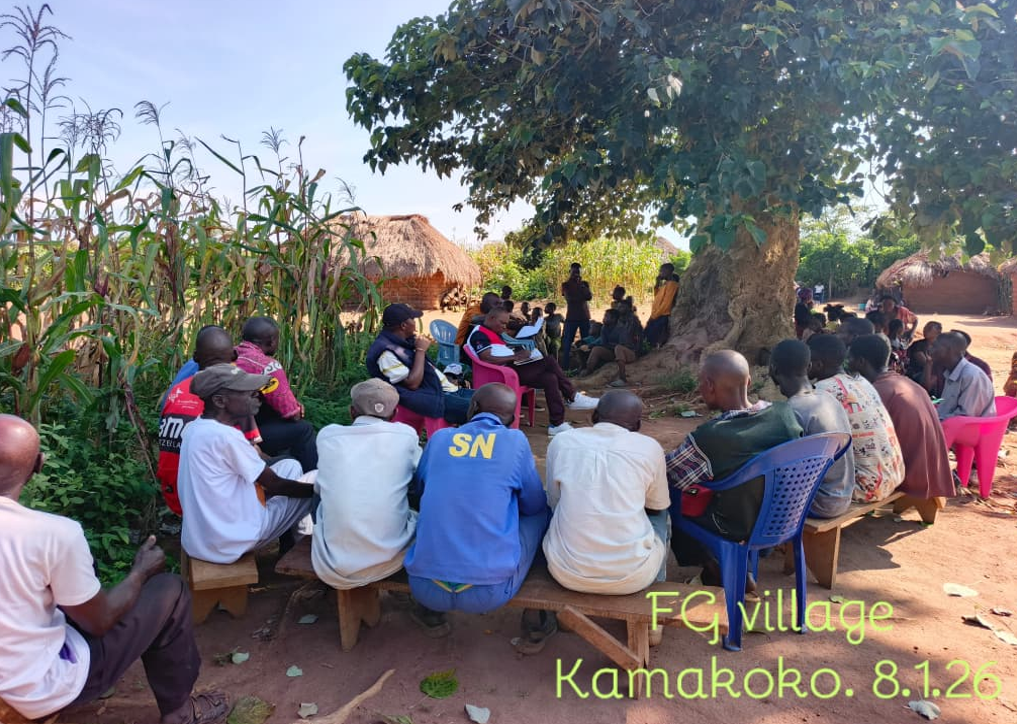
Dialogue and transparency: Community consultations for agriculture that respects social and environmental standards
Pre-basic seed and basic seed production
In Kaniama, Hout Lomami Province, The PADCA-6P set out to produce 5.2 metric tons of pre-basic seed and 32 metric tons of basic seed of biofortified beans between 2024 and 2026. So far, the project has successfully produced 2.7 metric tons of pre-basic seed and 18.3 metric tons of basic seed across six biofortified varieties, including D6 Kenya, Uyole, HM 21-7, Uvira, White Bean, and Trapezia.
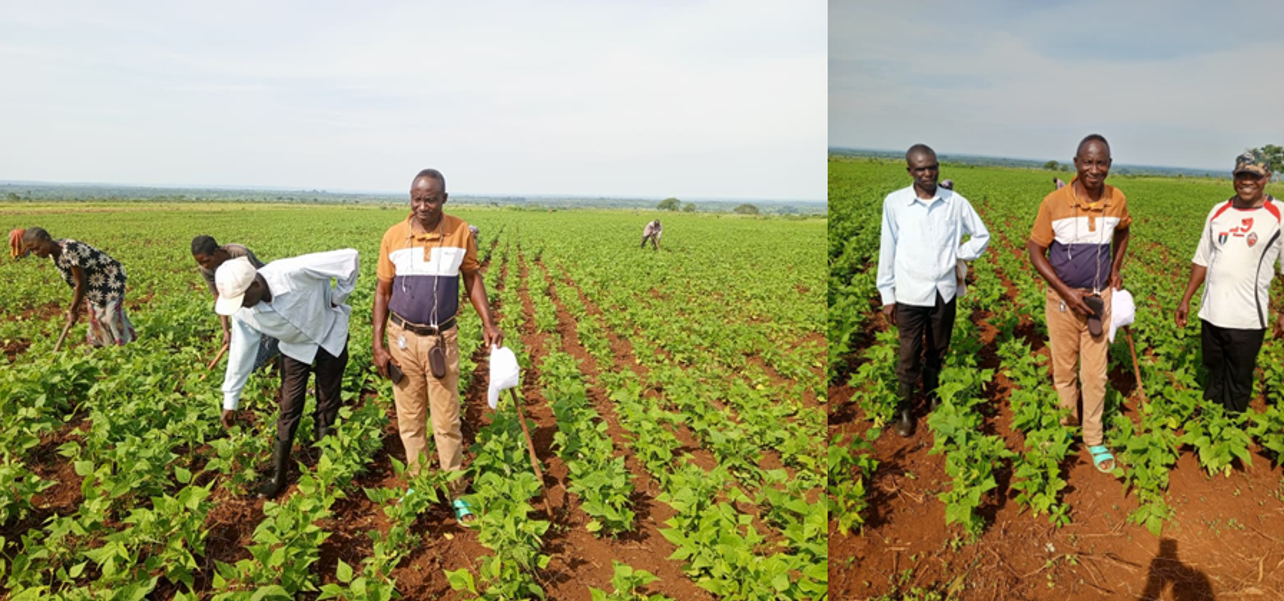
Seed production in Kaniama
Conclusion
These milestones in Kaniama demonstrate that agricultural innovation is continuous process that combines scientific research, practical training, and community engagement. The promising performance of the varieties in both seed production and field trials points to real potential for improving food security and increasing incomes in the region. Looking ahead, the project will continue rigorous monitoring, support the accreditation of seed multipliers through SENASEM to enhance access and distribution of quality seed, and strengthen local support systems, which remain a cornerstone of the project’s success.
Photos: Alain Mudumbi