
By Warren Arinaitwe1, Ayuka Fombong2, Emmanuel Peter2, Dennis Ongor1, Eileen Nchanji1, Anastacia Wanjiru1, Sunday Ekesi2, Jean Claude Rubyogo1
1 Alliance of Bioversity of International and CIAT
2 International Centre for Insect Physiology and Ecology (icipe)
Over three days in Nakuru, Nairobi, and Kiambu, partners and funders of the BRAINS Project observed how research, markets, and finance are aligning to improve livelihoods, strengthen value chains, and build climate resilience for farmers and enterprises.
Impact is often reported in numbers but sometimes it stands beside you, lifts the lid of a new water tank, and says quietly, “This is from beans.”
“Synergy” has become one of the development’s most overused words. It will appear either in proposals, strategy decks, funding briefs as tidy, abstract, and frictionless.
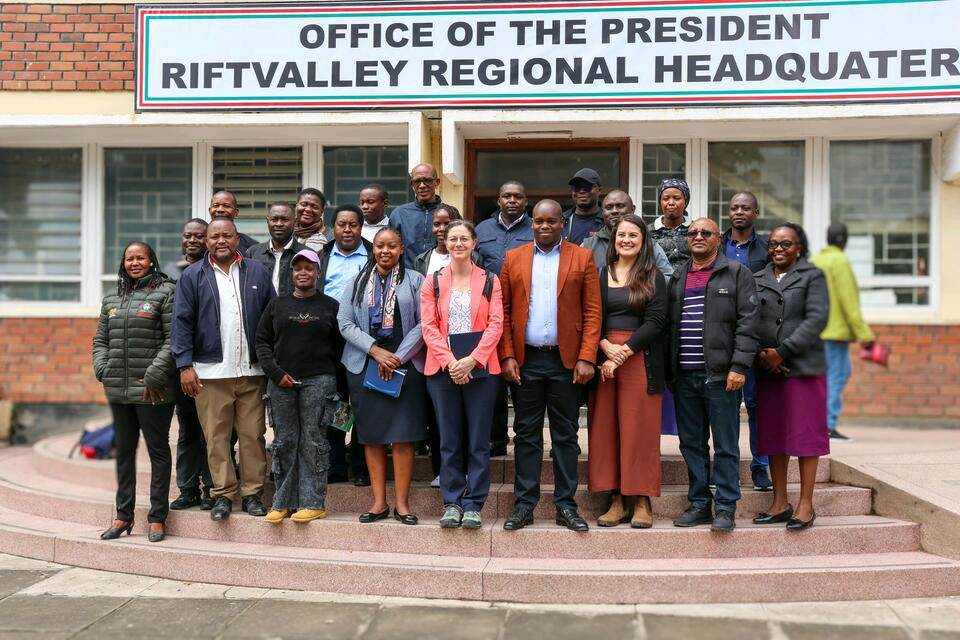
Over three days in Kenya, synergy became something tangible, visible in 90-kilogram bags stacked and ready for market. Representatives from Global Affairs Canada visited the BRAINS project to assess whether two years into a five-year investment are beginning to translate into meaningful, on the ground impact for farmers and enterprises.
BRAINS (Building Equitable Climate-Resilient African Bean & INsect Sectors) implemented by the Kenya Agricultural and Livestock Research Organization (KALRO), the Alliance through PABRA, and the International Centre of Insect Physiology and Ecology (icipe) as a co-implementor is an ecosystem.