
By Janviere Umurungi, David Muhawenimana, Yvonne Munyangeri, Eliud Birachi
Rwanda joined other African countries to celebrate African School Feeding Day, reaffirming the country’s commitment to improving children’s nutrition, education, and wellbeing through school feeding programs.
The national celebration took place at GS St. Paul School in Bugarama Sector, Rusizi District, on 6th March 2026, bringing together government leaders, development partners, researchers, teachers, parents, and students.
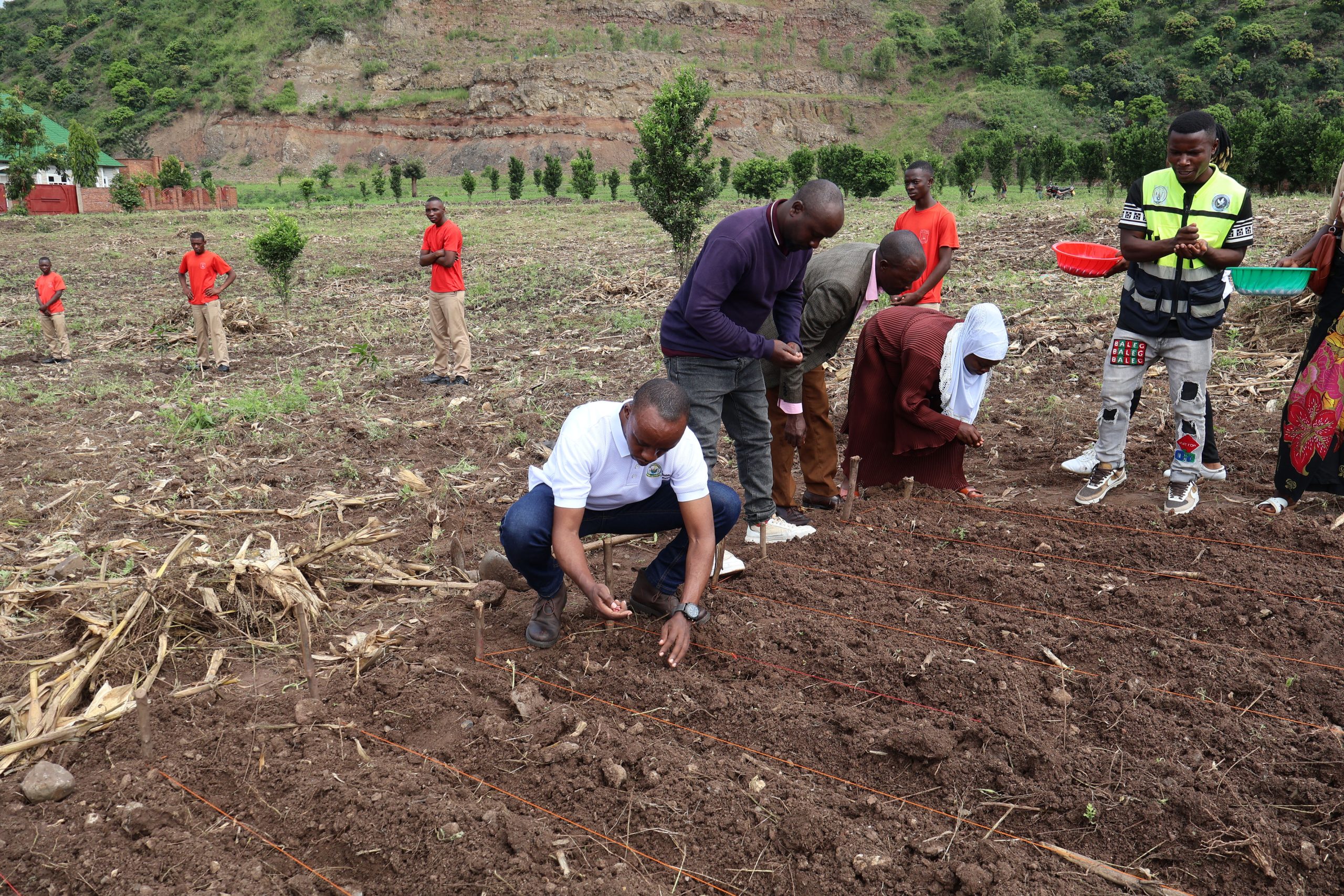
Participants test and apply guidance during practical demonstrations at the celebrations
The event was presided over by the Western Province Governor Jean Bosco Ntibitura and attended by representatives from key government institutions including the Ministry of Education of Rwanda (MINEDUC), Ministry of Local Government (MINALOC), and the Rwanda Agriculture and Animal Resources Development Board (RAB), as well as partners such as the World Food Program (WFP), The Pan-Africa Bean Research Alliance (PABRA) of the Alliance of Bioversity International and CIAT among many other.
PABRA is supporting nutrition in Rwandan schools through projects supported by The Swiss Agency for Development Cooperation (SDC) and Swiss Embassy in Rwanda, through a project Scaling Sustainable School Feeding Innovations (3SFI Project) in three districts of Rusizi, Nyamasheke and Karongi. The project enhances the capacity of schools to use the available school lands to grow biofortified beans and vegetables to enhance availability of nutrient rich foods in the schools, said the Project’s Principal Investigator Dr. Eliud Birachi. More than 500 schools and 1000 school staff across the three districts will build their capacities to grow and use high iron beans and nutritious vegetables. Previous efforts were implemented in Kigali with support from Clifford Chance.
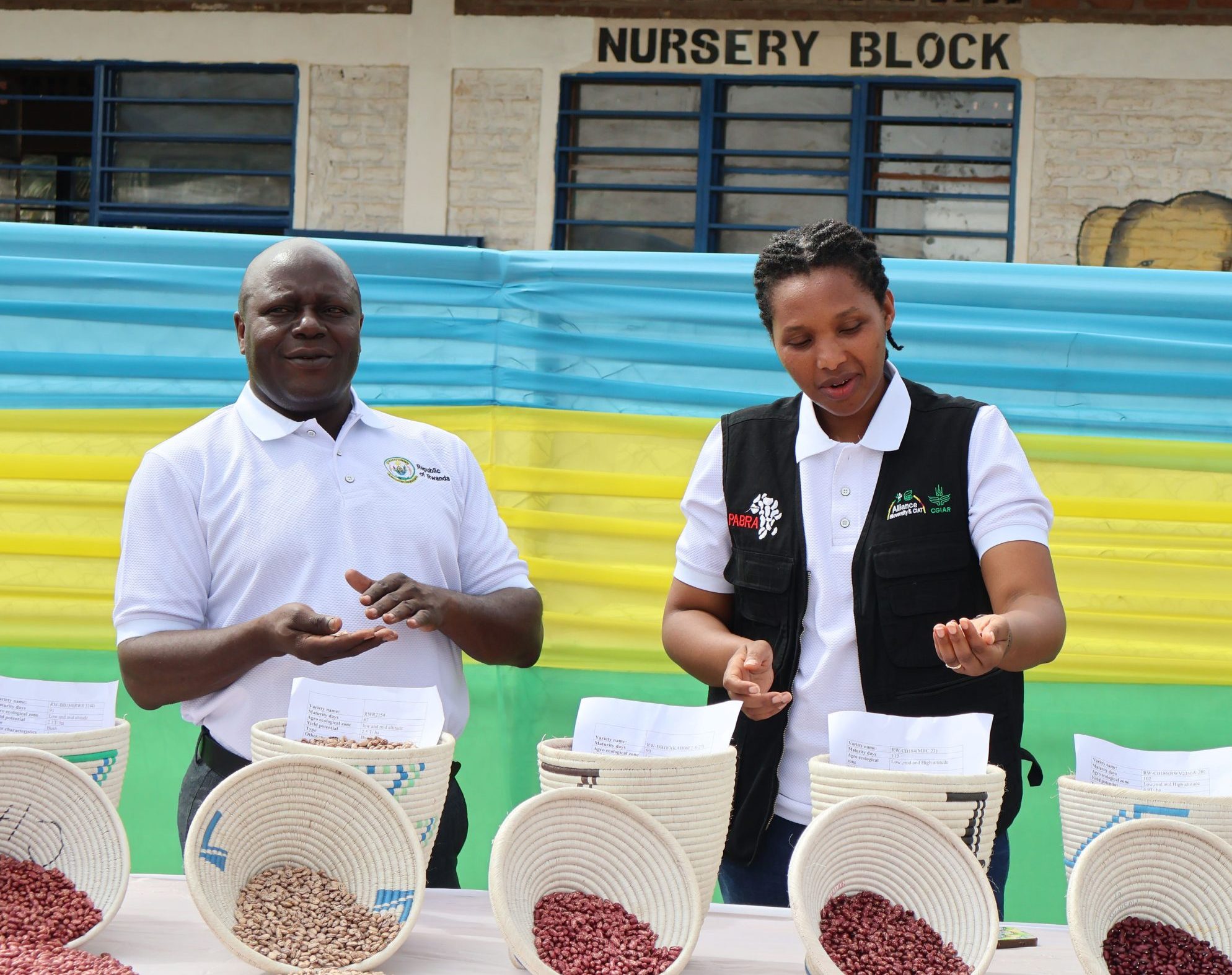
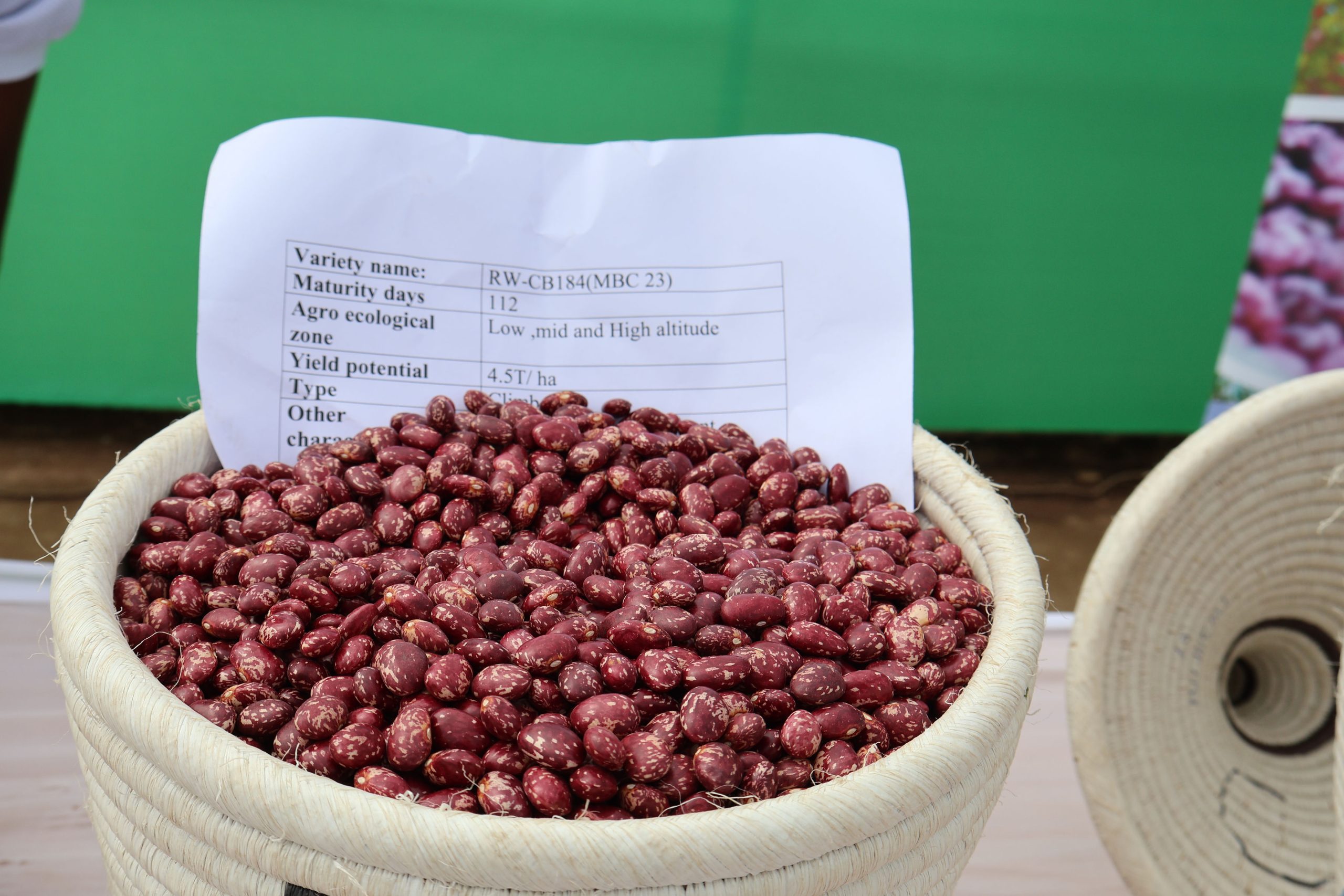
Beans: A nutritious cornerstone of Rwanda’s School Feeding Program
Government commitment to children’s future
According to the Government, about 4.5 million learners in Rwanda benefit from school feeding programs, helping improve attendance, learning outcomes, and overall health. The guest of honor, Western Province Governor Jean Bosco Ntibitura, reaffirmed Rwanda’s commitment to ensuring every child has access to nutritious food.
He noted that the government has built 3,282 school kitchens and installed 7,174 cooking stoves across the country to support meal preparation in schools. The government also contributes by covering water and electricity costs, while parents support the program through community contributions.
“Children are the hope of Rwanda’s future,” he said. “Investing in their nutrition today helps build a stronger nation tomorrow.”
School feeding transforming education
GS St Paul School has seen significant changes since implementing the school feeding program. Father Emmanuel Uwingabire, the school’s head teacher, explained that the initiative has helped attract and retain learners, particularly vulnerable children.
“Through this program, we have brought 4,039 street children back to school,” he said.
Students at the school receive meals even during weekends and holidays, ensuring that children remain healthy and motivated to learn. The school also prioritizes the nutritional quality of meals, supported by school gardens and guidance from an agronomist to improve agricultural production.
The celebration demonstrated how collaboration between schools, communities, government institutions, and development partners continues to strengthen school feeding programs. Through the promotion of nutrient-rich beans, fruit trees and vegetables, partners including Pan- Africa Bean Research Alliance, Swiss Agency for Development and Cooperation, Ministry of Education of Rwanda, and Rwanda Agriculture and Animal Resources Development Board are helping ensure that school meals provide the nutrition children need to grow, learn, and thrive.
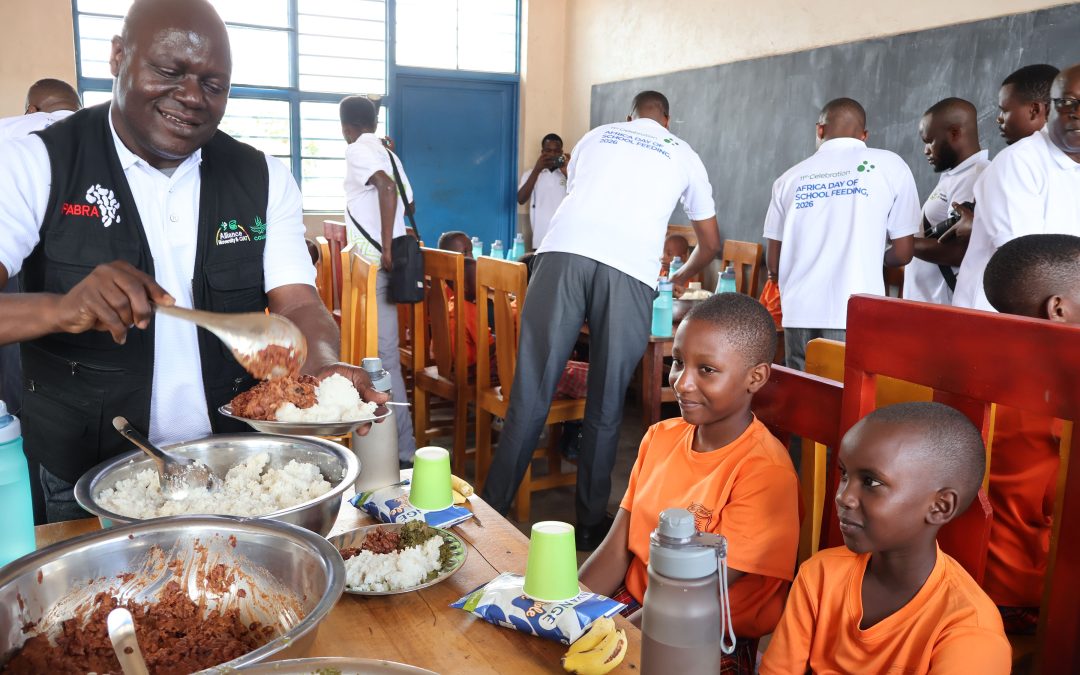
Cover Image: Feeding the future: Country Representative for Alliance of Bioversity International and CIAT in Rwanda Eliud Birachi filling up the plate for the learners
Photos by Janviere Umurungi