
By Martin Majambele, Victor Lesedy, Atupokile Mwakatwila, Chima Rickards, Radegunda Kessy, Edith Kadege, Joachim Madeni and Justus Ochieng
Tanzania is set to roll out the Research Business Management System (RBMS), a landmark digital platform designed to modernize how breeder data, seed catalogues, and research outputs are managed and shared across the country. The milestone marks a significant leap forward in digitizing the nation’s agricultural research and seed systems, offering a centralized solution to streamline data flow from research institutions to farmers.
This was formalized during a high-level inception meeting hosted in Arusha by the Tanzania Agricultural Research Institute (TARI), in collaboration with the Alliance of Bioversity International and CIAT (The Alliance), through the ACCELERATE Initiative. Held at Forest Hill Hotel, the meeting brought together TARI Selian and the Alliance leadership, crop leads, plant breeders, as well as Information Technology specialists, to finalize the system’s design and rollout strategy.
The system comes at a time Tanzania’s seed sector continues to grapple with systemic challenges such as fragmented data storage, manual record-keeping, limited access to information, and weak traceability of seed varieties. These obstacles have significantly hampered efforts to deliver high-quality, traceable seeds to farmers. The RBMS is designed to tackle these issues by fully digitizing the seed ecosystem, from breeding and varietal development to cataloguing and institutional reporting, within a single, integrated, and user-friendly platform.
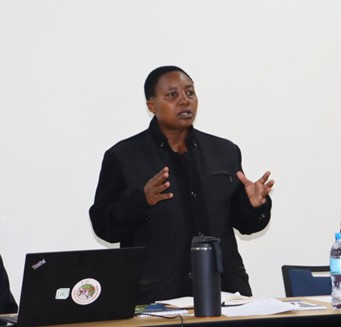
Dr. Chuwa of TARI Selian highlights the importance of delivering quality, improved seeds to farmers
Dr. Caresma Chuwa, Centre Director for TARI Selian, underscored the urgency of providing farmers with reliable, improved seed varieties.
“Farmers were once asked about the difference between traditional seed varieties and improved ones,” she said. “They responded that traditional seeds do not meet quality standards, but those developed under TARI in collaboration with CIAT were seen to meet the standards. Our main goal is to serve the farmers.”
The RBMS platform will enable researchers across TARI stations to access and manage breeder data, research findings, and seed profiles in real time. By standardizing data templates and improving the traceability of varietal information, the platform supports national efforts to strengthen food security and increase transparency within the seed system.
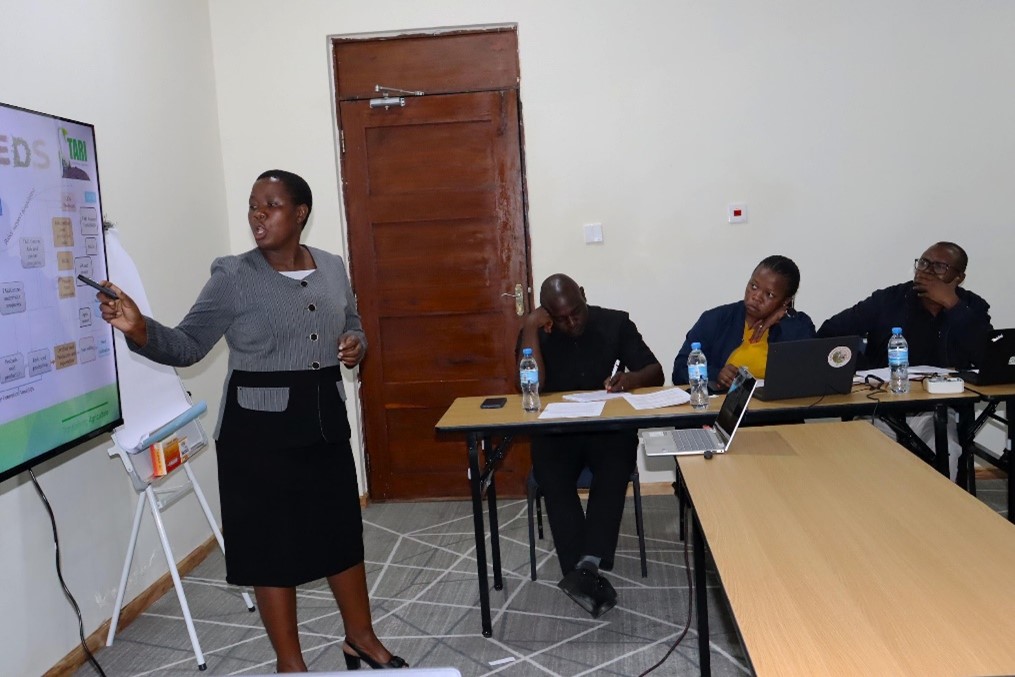
Hangambage presenting on the dynamics of RBMS
Stella Hangambage, a Researcher at TARI Headquarters, described this as a “strategic digital backbone” that aligns with the institute’s broader goals for digital transformation. Over the course of the two-day meeting, participants engaged in system demonstrations, technical presentations, and working group sessions to finalize the RBMS implementation framework. Mr. Festo Tullo, TARI Information and Technology Manager, presented a detailed cost-benefit analysis comparing manual versus digital systems, revealing the long-term efficiencies that RBMS is expected to generate.
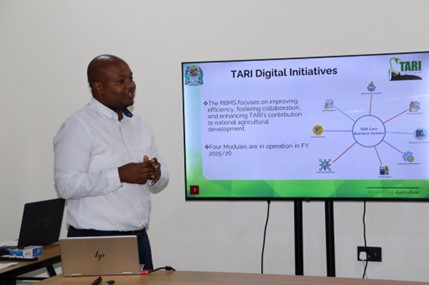
Tullo presented on a cost-benefit comparison of manual vs. digital systems and outlined the RBMS development timeline
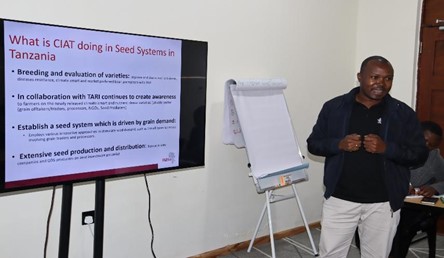
Ochieng highlighted CIAT’s role in driving digital transformation and stakeholder engagement
The Alliance, a key partner in the development of the RBMS, played both strategic and technical roles in shaping the system. Dr. Justus Ochieng’, ACCELERATE Project Coordinator, emphasized the importance of building digital infrastructure that is rooted in local needs and stakeholder input. “CIAT’s support is not just about technology, it’s about co-creating sustainable systems with the people who will use and benefit from them,” he noted.
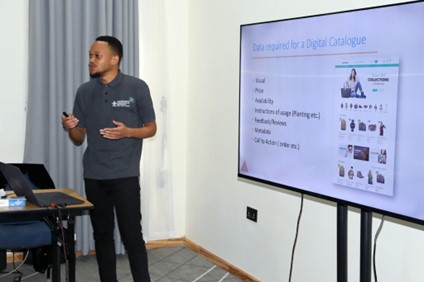
Lesedy shared insights on digital catalogue design and user-focused system development
Victor Lesedy, a digital consultant supporting the initiative, provided expert insights on global best practices in catalogue design, metadata standards, and user interface development. He stressed the importance of developing a system that is not only technically sound but also intuitive for end users such as breeders and data managers.
The meeting concluded with a clear roadmap for RBMS rollout, including assigned responsibilities and firm deadlines. The CIAT and TARI Funding Group will share the system’s development costs and present a joint funding model. The TARI IT team will then finalize the development timeline, while TARI crop leads and breeders are tasked with estimating the cost and quantity of seed varieties and submitting standardized data templates by later this year.
The inception of the RBMS marks a decisive turning point for Tanzania’s agricultural research and seed delivery system. By digitizing and centralizing critical breeding and seed data, the platform sets the stage for a more transparent, efficient, and farmer-focused future. With continued collaboration among research institutions, technical partners, and funding stakeholders, RBMS is poised to become a model for data-driven agricultural transformation across the region.
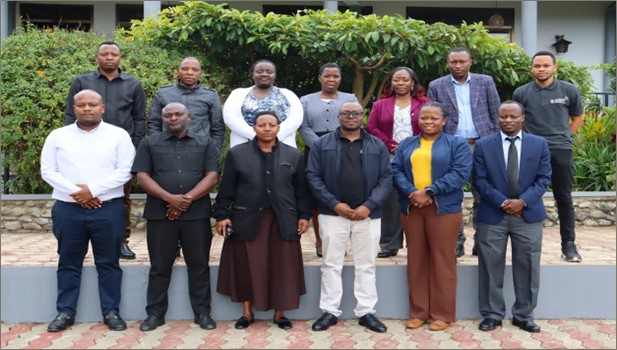
Cover Image: Stakeholders after strategizing on Tanzania’s seed system through innovation and collaboration